NIST CSF Assessment Explained for Mid-Market Companies

NIST CSF Assessment Explained for Mid-Market Companies
A NIST CSF assessment is a structured review that measures your cybersecurity program against the outcomes in the NIST Cybersecurity Framework, function by function, so you can see where you actually stand and where you need to go next. It's one focused type of cybersecurity risk assessment. The framework is the map. The assessment is the honest look at where you are on it.
Table of Contents
Most mid-market companies meet this process the hard way. A large customer sends a security questionnaire. An insurer asks for proof of governance before renewing the policy. A board member reads about a competitor's breach and wants to know if you'd survive the same thing. Suddenly you need a defensible answer to a simple question, and you don't have one. That's usually the moment a NIST CSF assessment moves from "someday" to "this quarter."
This guide explains what the assessment measures, how it works, what it costs, and where companies your size tend to get it wrong. No jargon for its own sake. Just what a decision-maker needs to scope the work and judge the output.
What a NIST CSF assessment actually measures
The assessment measures outcomes, not tools. That distinction matters more than it sounds. You're not being graded on whether you bought a particular product. You're being graded on whether a specific result is reliably achieved, like "the organization knows what assets it owns" or "incidents are contained and reported."
NIST released version 2.0 of the framework on February 26, 2024, the first major update since the original came out in 2014. The current version organizes cybersecurity into six high-level functions, broken into 22 categories and 106 subcategories, according to the official NIST CSF 2.0 publication. A good assessment walks through each of those outcomes and answers two questions: are you doing this, and how consistently?
The result is captured in two pictures. A Current Profile describes what your program achieves today. A Target Profile describes what it should achieve given your risk, your industry, and your obligations. The gap between the two is the assessment's real product. Everything else is supporting detail.
The six functions, in plain language
Version 2.0 added a sixth function, Govern, and put it at the center rather than treating cybersecurity as a purely technical concern. For mid-market leaders, that change is the whole point. Here's what each function asks of your business.
- Govern (GV): Who owns cyber risk, how is it funded, and how does it connect to business decisions? This is the function most mid-market companies have never formally addressed.
- Identify (ID): Do you know what you have? Assets, data, systems, vendors, and the risks attached to each. You can't protect what you haven't counted.
- Protect (PR): What safeguards keep those assets secure? Access controls, training, data protection, and the day-to-day defenses.
- Detect (DE): Would you know if something was wrong? This covers monitoring and the ability to spot anomalies before they become incidents.
- Respond (RS): When an incident hits, can you contain it, analyze it, and communicate? This is your incident response lifecycle in practice.
- Recover (RC): Can you get back to normal operations, and how fast? Backups, restoration, and the plan to use them under pressure.
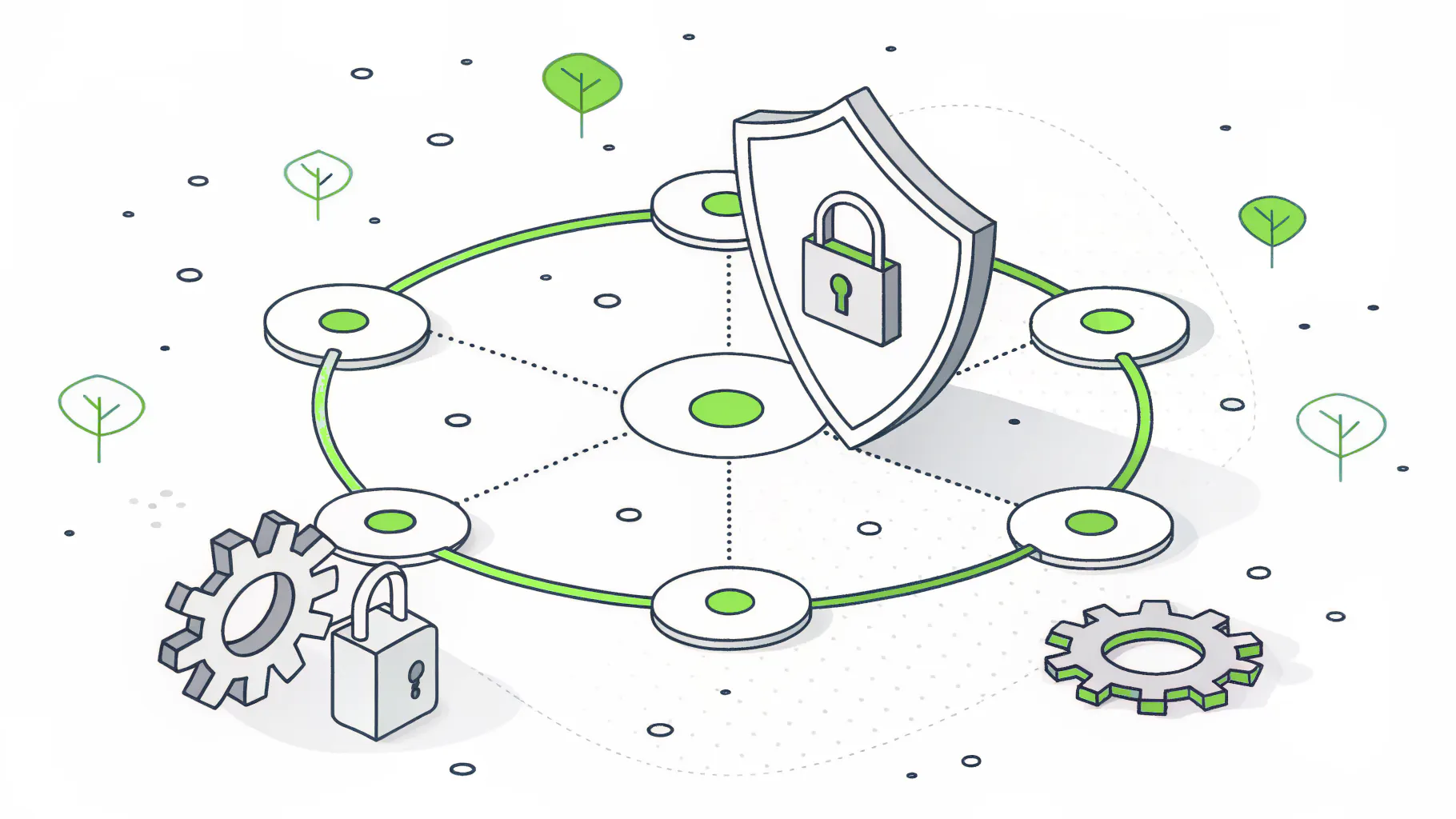
Read those six again and notice something. Only three are about technology in the narrow sense. The rest are about decisions, ownership, and process. That's why an assessment run purely by an IT vendor often misses the most important gaps.
Tiers and profiles: two scores that get confused
People hear "NIST CSF assessment" and assume there's a single grade at the end. There isn't. There are two separate measures, and conflating them is a common error.
A Profile is about coverage. It tells you which outcomes you achieve. Tiers are about rigor. They describe how disciplined and integrated your risk management is, on a scale of four:
- Tier 1, Partial: Cybersecurity is reactive and informal. Risk is handled case by case.
- Tier 2, Risk Informed: You consider risk, but practices are inconsistent across the business.
- Tier 3, Repeatable: Practices are documented, applied consistently, and updated as conditions change.
- Tier 4, Adaptive: Risk management is data-driven, agile, and woven into business strategy.

Here's the part most vendors won't say out loud. NIST is explicit that the tiers are not a maturity model, and Tier 4 is not the goal for most organizations. For a mid-market manufacturer or distributor, a well-run Tier 3 is usually the right target. Chasing Tier 4 burns budget on rigor your risk profile never required. The right answer is the tier that fits your business, not the highest number on the chart.
How a NIST CSF assessment works, step by step
The mechanics are more grounded than the framework's documentation makes them sound. A competent assessment follows roughly five stages.
1. Scope and prepare
Decide what's being assessed and why. The whole company, one business unit, a specific system. This is also where the assessment team gets defined, typically a mix of internal IT, a security lead, and an outside assessor for objectivity. NIST's own risk methodology, SP 800-30, frames this as setting purpose, scope, assumptions, and sources before any judgment is made.
2. Build the Current Profile
This is the evidence-gathering phase. Interviews with stakeholders, document review, control testing, and a hard look at what actually happens versus what the policy says. The output is an honest snapshot of where each of the 106 subcategories stands today.
3. Score and analyze the gaps
Each outcome gets scored, usually on a 0 to 4 scale that mirrors the tiers, then rolled up by category and function. Now you can see the pattern. Maybe Detect is strong and Govern is nearly empty. Maybe you have great tools and no documented ownership. The gap analysis is where the assessment earns its fee.
4. Set the Target Profile
Define where you need each function to be, based on your obligations and risk tolerance. This is a business decision, not a technical one, which is why leadership belongs in the room.
5. Build the roadmap
Translate the gaps into a prioritized, budgeted plan. What gets fixed first, who owns it, and what it costs. A report that lists problems without a sequence to fix them is half a deliverable. For a fuller breakdown of how the evaluation runs end to end, see our cybersecurity risk assessment process guide.
What it costs and how long it takes
Cost and timeline track with size and complexity, and the honest answer is a range, not a number. Independent assessment providers generally quote somewhere between $15,000 and $75,000, with fieldwork running anywhere from 2 weeks to roughly 10 depending on how many systems and sites are in scope.
A 50-person single-site company sits at the low end. A 500-employee operation with multiple locations and a mix of cloud and on-premise systems sits at the high end. The variable that moves the number most is not headcount. It's how scattered your environment is and how much documentation already exists. Companies that have never inventoried their assets pay more, because step two takes longer.
One thing worth saying plainly. The assessment is not the expensive part. The remediation that follows is. A good assessor will help you sequence that spend so you fix the highest-risk gaps first instead of buying tools you don't yet need.
Why mid-market companies are getting asked for this now
Five years ago, the NIST framework was something large enterprises and federal contractors worried about. That has changed, and the pressure is coming from three directions at once.
First, insurance. Cyber insurers now reference CSF functions directly in their applications, and they price premiums against your answers. A clean assessment is an advantage at renewal. Second, customers. If you sell to larger enterprises or anywhere near a government contract, you'll face vendor security questionnaires that map straight to the framework, and a CSF-aligned summary answers most of them in one document. Third, regulation. Whether you fall under CMMC, PCI, or state data laws, the CSF works as the umbrella that organizes the specific controls each rule demands. If you're weighing which standard actually applies to you, our comparison of ISO 27001 vs. NIST vs. CMMC is a useful next read.
The stakes behind all of this are not abstract. IBM's 2025 Cost of a Data Breach report put the global average breach at $4.44 million, and the U.S. average at $10.22 million, the highest of any region. For a mid-market company, a number in that range isn't a line item. It's an existential event.
Where mid-market companies get the NIST CSF assessment wrong
The framework is sound. The way companies use it often isn't. A few mistakes show up again and again.
Treating it as a checklist. NIST is clear that the outcomes are not a list of boxes to tick. Two companies can achieve the same outcome through completely different actions. An assessor who hands you a generic checklist and calls it done has missed the point.
Skipping Govern. This is the new function, and it's the one most mid-market companies fail. They have firewalls and backups but no documented owner for cyber risk and no link between security spending and business decisions. You can't buy your way out of a governance gap.
Chasing the highest tier. Tier 4 looks impressive on a slide and wastes money in practice. Pick the tier your risk actually requires, then get there reliably.
Running it as a one-time event. An assessment is a photograph, not a portrait. Your environment changes, so the assessment has to repeat. Most mid-market companies should reassess annually or after any significant change to systems or operations.
The companies that get real value from this almost always share one trait. They treat the assessment as the start of a program, not the end of a project. The thinking that drives that, connecting risk to business decisions, is the same judgment a vCISO brings to mid-market companies that can't justify a full-time security executive.
The bottom line
A NIST CSF assessment turns "are we secure?" into a question you can actually answer, with evidence, in front of a board, a customer, or an insurer. For a mid-market company, that clarity is worth more than any single tool you could buy. Run it well, target the tier that fits your risk, and treat the result as a roadmap rather than a report card.
If you're scoping one for a California business, Consilien runs managed cybersecurity and vCISO services built around exactly this kind of structured, business-aligned evaluation. Everyone's counting on you to get the answer right.