ISO 27001 Certification Cost and Timeline: What It Really Takes in 2026
ISO 27001 certification cost runs $15,000 to $50,000 in year one for a small organization and $50,000 to $150,000 for a mid-sized one, then $10,000 to $25,000 a year to maintain. Most companies get there in 6 to 10 months. Those are the numbers. Here's the part the quote never shows you.
Table of Contents
The auditor's invoice is the smallest line item in this project.
In 2024, the number of valid ISO 27001 certificates nearly doubled, from 48,671 to 96,709. Your buyers noticed. The certificate went from a nice-to-have to the thing that decides whether you clear procurement. So the real question is not what ISO 27001 costs. It is what drives the cost, because almost every dollar is a decision you control before an auditor ever walks in. Get your security and compliance program scoped right and the number is manageable. Get it wrong and you pay for the whole thing twice.
This is a decision guide, not a brochure. Below is what the certificate actually costs, what makes that number move, and how long the whole thing takes when you plan it like an operator instead of a fire drill.
How much does ISO 27001 certification cost?
For most companies with 20 to 500 users, ISO 27001 certification costs $15,000 to $150,000 in the first year and $10,000 to $25,000 a year after that. The spread is wide because your size, scope, and how you staff the work move the number more than the auditor's rate ever will.
Every quote breaks into three buckets. Miss one and your budget is wrong before you start.
- Implementation. Building the information security management system, or ISMS. This is policies, controls, and the evidence that proves they work. Biggest and most variable bucket.
- Certification audit. The accredited body runs Stage 1 and Stage 2 and issues the certificate. In the US, accredited auditors charge $1,500 to $2,200 per audit day, and a small org needs roughly 5 days (ISO27001Cost.com).
- Maintenance, forever. A surveillance audit in years two and three, plus a full recertification in year three. The certificate is a three-year cycle, not a one-time purchase.
The standards themselves are almost free. The ISO 27001 document runs $125 and ISO 27002, the implementation guide, runs $225 (Secureframe). Everything expensive is labor and proof, not paperwork you buy.
Here's the honest range by company size.
- Under 50 users. Year one runs $15,000 to $50,000, with annual maintenance of $6,000 to $12,000.
- 50 to 250 users. Year one runs $50,000 to $150,000, with annual maintenance of $10,000 to $25,000.
- 250 to 500 users. Year one runs $100,000 to $200,000 or more, with annual maintenance of $20,000 to $40,000.
Those tiers come from current 2026 vendor data (Sprinto, Vanta). Notice something. The published numbers assume you make good decisions. They don't price in a failed Stage 2 or a scope you have to rip up and redo. Those happen, and they aren't cheap.
The part that gets forgotten, one-time versus recurring
People budget for year one and stop. That's the mistake. Year one is your heaviest spend because you're building from nothing. But the certificate expires, and staying certified has its own bill.
Plan for three things on repeat. A surveillance audit in year two, usually one third to one half the length of your Stage 2. A second surveillance audit in year three. And a full recertification, roughly every three years, to keep the certificate live. Skip the maintenance math and your third-year budget review turns into a surprise. Not a good one.
What actually drives your ISO 27001 cost?
Four decisions set your number. Get them right and you land at the low end of your tier. Get them wrong and you drift toward the high end, or off the chart entirely.
Scope. This is the single biggest lever. Scope is what you include in the ISMS, which systems, which locations, which teams, which cloud accounts. A tight scope means fewer audit days and less to prove. A sprawling one means the opposite. The trick is drawing it small enough to be affordable but broad enough that the customers asking for your certificate actually accept it. Draw it wrong and you either overpay or hand a buyer a certificate that doesn't cover the thing they care about.
Security maturity. If you already run access controls, logging, and a real risk process, you're closing gaps. If you're starting from a spreadsheet and good intentions, you're building from the studs. A gap analysis up front tells you which one you are, and it's the cheapest money you'll spend on this whole project. It runs around $5,700 for a company under 250 people (Secureframe) and it stops you from budgeting for a sprint when you're actually facing a marathon.
How you staff it. Three paths, three prices. Do it yourself with a toolkit is cheapest on paper. Run it through a compliance automation platform costs more but moves faster. Hire a full-service consultant or managed partner costs the most in fees and the least in your team's time. There's no universally right answer. There's only the right answer for how much of your staff's calendar you can actually give up.
Your certification body. Use an accredited one. Accredited certificates cost 10% to 20% more, and it's worth every dollar, because unaccredited certificates get rejected by enterprise procurement. A cheaper certificate that your biggest prospect won't accept isn't a saving. It's a redo.
The hidden cost nobody quotes you
The largest cost of ISO 27001 is your own team's time, and it never shows up on a quote. Expect 200 to 1,200 hours of internal staff effort for implementation, documentation, and evidence gathering (ComplyJet).
Run the math on that. At a blended $75 an hour, 600 hours is $45,000 of work your people do instead of their actual jobs. That's often larger than the audit fee and the consultant fee combined. And it's the number every vendor page quietly leaves out, because it makes the sticker price look small.
Who absorbs those hours? Your IT lead, writing policies. Your engineers, wiring up evidence collection. Your managers, sitting in approval loops. A risk assessment is the anchor of the whole ISMS, and someone on your side has to own it. If nobody has the bandwidth, the project stalls, and a stalled project is the most expensive kind. You keep paying the platform, keep paying the consultant, and the clock keeps running while the certificate doesn't arrive.
This is where a managed partner earns its fee. Not by buying you a certificate, but by absorbing the hours your team doesn't have, so the internal cost you can't see stops quietly wrecking your timeline.
How long does ISO 27001 certification take?
ISO 27001 certification takes 6 to 10 months for most companies, with a realistic range of 3 to 12 depending on scope and how ready you already are (Vanta). A small company with a tight scope and a decent security baseline can move fast. A larger one starting cold can't, no matter how much it wants to.
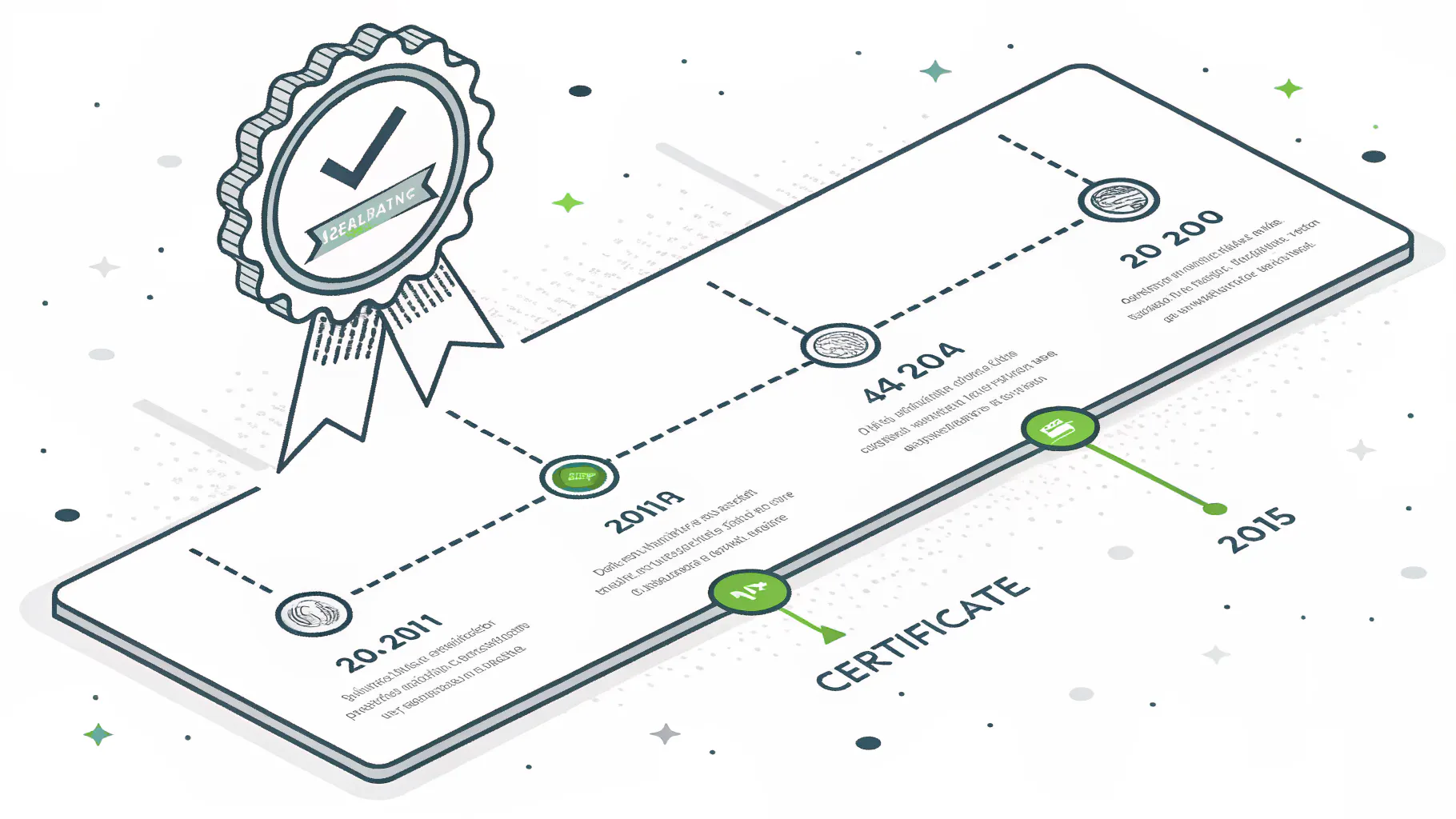
Here's where the months actually go.
- Scoping and gap analysis, weeks 1 to 8. Define the ISMS boundary and find what is missing.
- Documentation and controls, months 3 to 5. Write policies, implement the 93 Annex A controls, and set up evidence collection.
- Internal audit and fixes, months 6 to 8. Test your own ISMS and close the findings before the real audit.
- Stage 1 and Stage 2 audit, months 9 to 10. The external auditor reviews, then decides on the certificate.
Two things stretch this. The documentation and controls phase is always the longest, running 2 to 6 months on its own (ComplyJet). And there's a built-in 4 to 8 week gap between Stage 1 and Stage 2, because you need time to fix whatever Stage 1 surfaced. That gap isn't wasted time. It's the buffer that keeps you from failing Stage 2.
Now the part competitors skip. Rushing the timeline usually raises the cost. Compress the documentation phase, skip the internal audit, and you walk into Stage 2 with gaps the auditor finds for you. A failed Stage 2 means a re-audit, more auditor days, and a second round of your team's hours. The fastest path to certification isn't the shortest one. It's the one where you do the unglamorous work in order, once.
ISO 27001 vs SOC 2, which should you budget for first?
If most of your revenue and pipeline sits in the US and Canada, budget for SOC 2 Type II first. If you sell into the EU, UK, or APAC, start with ISO 27001. Follow the market that pays you, not the framework that sounds more impressive.
The cost gap is real. First-time ISO 27001 tends to run 1.5 to 2 times a SOC 2 Type II, because the scope and depth of an ISO audit are broader (SOC2Auditors.org). Here's the rough shape of it.
- First-time cost. ISO 27001 runs $40,000 to $180,000 or more. SOC 2 Type II runs $30,000 to $150,000 or more.
- Timeline. ISO 27001 takes 9 to 18 months. SOC 2 Type II takes 6 to 15 months.
- Best first if. Choose ISO 27001 when you sell into the EU, UK, or APAC. Choose SOC 2 when most of your revenue is US or Canada.
The good news if you need both. Because 65% to 75% of the controls overlap, the second credential costs far less than the first. You're not building two programs. You're extending one. Lead with the framework your biggest open market demands, then add the second inside 18 to 24 months while the evidence is still fresh. If you want the full breakdown, our SOC 2 compliance work maps the overlap directly.
How to control the cost without cutting corners
You can't make ISO 27001 cheap. You can keep it from getting expensive. Three moves do most of the work.
Draw the tightest scope your customers will accept. Every system and location you pull in adds audit days and evidence. Start narrow, cover what your buyers actually ask about, and expand later if you need to. Scope discipline is the closest thing to free money in this whole project.
Get ready before the auditor shows up. Most cost overruns are readiness failures wearing a different hat. Know where your controls actually stand before Stage 1, run a real internal audit, and close the obvious gaps on your own schedule instead of the auditor's. Findings you fix yourself are cheap. Findings the auditor writes up are not.
Reuse what you already have. If you're chasing NIST 800-171, CMMC, or SOC 2, a large share of those controls feed straight into your ISMS. Don't build the same control twice. Map the overlap once and let one body of evidence carry more than one framework. That's how you turn a compliance cost center into an advantage.
The takeaway
ISO 27001 certification will cost a small company $15,000 to $50,000 in year one and a mid-sized one $50,000 to $150,000, and it will take most of a year. But the sticker price is not the story. Your scope, your readiness, and your team's hours decide whether you land at the bottom of that range or blow through the top.
The companies that certify cleanly share one habit. They do the scoping and the gap work first, before they spend a dollar on audits, so the auditor confirms what they already know instead of finding surprises. That's the whole game.
If you'd rather not spend 600 of your team's hours learning this the hard way, that's exactly the kind of thing a partner can carry for you. Consilien runs compliance as a standalone service, from gap analysis to managing the whole program for you. Speak to a Compliance Expert and get a scoped number instead of a range.