SOC 2 Compliance & Readiness Services

Stop losing enterprise deals to a SOC 2 report you do not have. We scope the controls, close the gaps, and build the evidence so the audit is a formality, run by a security-first California team.

SOC 2 compliance means proving, through an independent CPA audit, that your company protects customer data against the AICPA Trust Services Criteria. Consilien gets you audit-ready: we scope the controls, close the gaps, and build the evidence so the audit is a formality.

What is SOC 2 compliance?

SOC 2, short for System and Organization Controls 2, is an audit framework created by the American Institute of Certified Public Accountants (AICPA). It measures how well a service company protects the data it handles for its customers. Unlike a checklist standard, SOC 2 is examined and attested by an independent, licensed CPA firm that issues a formal report.

The report is built on the Trust Services Criteria: Security, Availability, Processing Integrity, Confidentiality, and Privacy. Security is required in every engagement and is often called the Common Criteria. The other four are included only if they matter to what you do, so a SOC 2 report is scoped to your business rather than copied from a template.

For SaaS and mid-market technology companies, the SOC 2 report has become the price of admission. Your prospects ask for it during procurement, your enterprise customers require it in their vendor reviews, and your renewals can stall without it. At Consilien, SOC 2 readiness is part of security-first managed IT, run from our team in Torrance, California. We get your controls and evidence in order; the licensed CPA firm performs the audit, and we work alongside them so nothing stalls.
Type I or Type II, and which criteria you scope in

A SOC 2 report is not one fixed thing. Two choices shape your entire engagement: which report type you need, and which of the five Trust Services Criteria are in scope. Most companies start with a Type I to show design, then move to a Type II because that is what enterprise buyers actually want to see. Get these two decisions right and the rest of the work falls into place.

The five Trust Services Criteria, and what each one covers

Criterion What it proves When you scope it in
Security (required)Systems are protected against unauthorized access, the baseline every SOC 2 report must include. Also called the Common Criteria.Always. There is no SOC 2 report without it.
AvailabilityThe system is up and reachable as committed, with monitoring, failover, and recovery in place.When you make uptime or SLA promises to customers.
Processing IntegrityProcessing is complete, accurate, timely, and authorized, so the system does what it is supposed to.When you process transactions or data on a customer's behalf.
ConfidentialityInformation designated confidential is protected, from access controls through to disposal.When customers share sensitive business data, IP, or contracts.
PrivacyPersonal information is collected, used, retained, and disposed of in line with your privacy notice.When you handle personal data of individuals, not just business data.

Not sure which criteria apply to you? That is the first thing we sort out. See the full compliance practice this service is part of.

Almost every first-time engagement scopes Security plus one or two criteria that match the promises you make to customers. Adding all five when only two apply just buys you more controls to maintain and more evidence to produce, with no extra deal-closing power. Picking the right scope is the first thing we sort out, and it is where readiness either gets lean or gets bloated.

What our SOC 2 readiness service covers

SOC 2 readiness covers the gap between where your controls are today and what an auditor expects to see. We do the work and build the proof. Here is what the engagement includes.

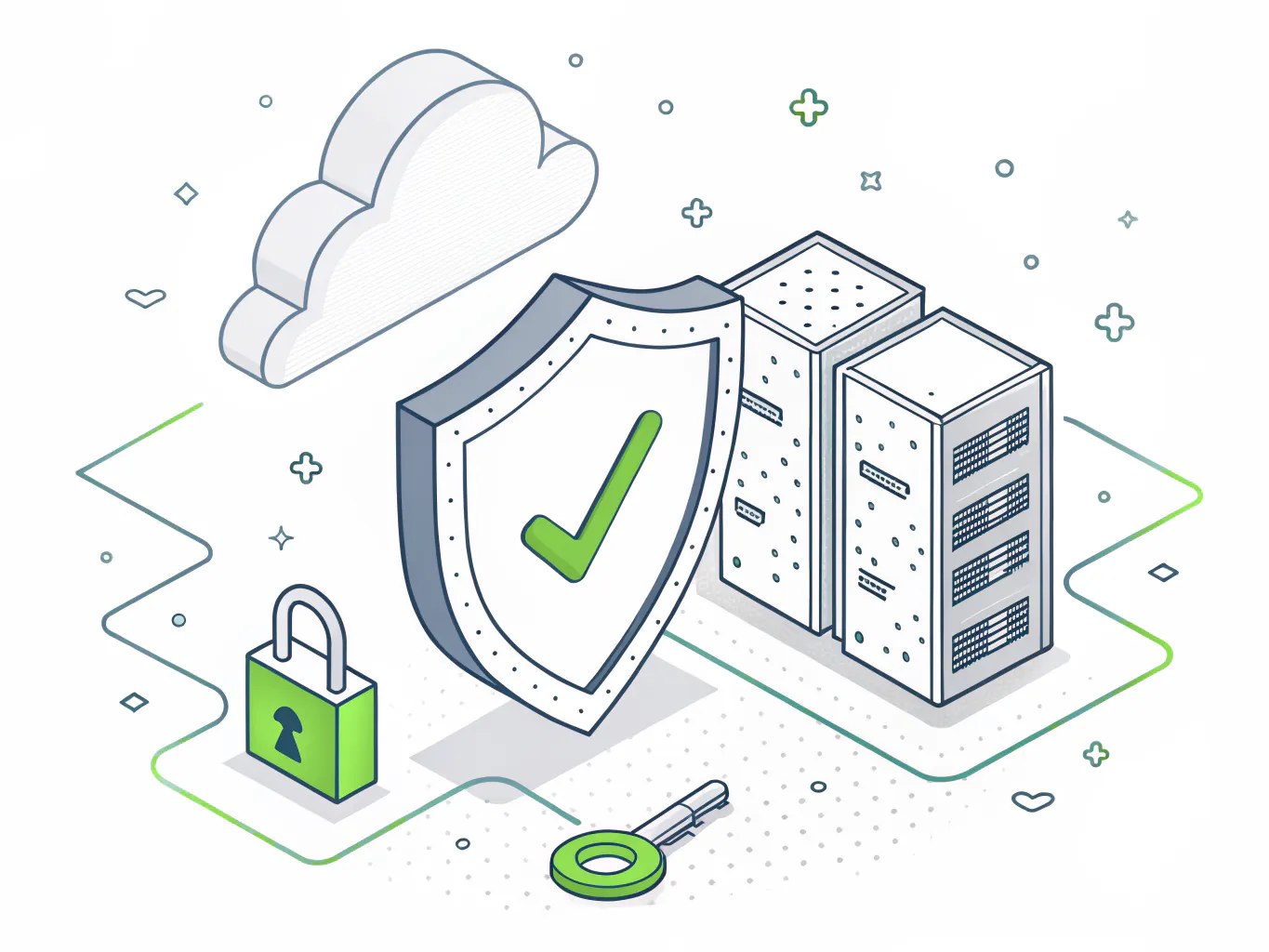
Trust shield with a checkmark beside a cloud server and a padlock representing SOC 2 readiness

How our SOC 2 readiness engagement works

SOC 2 is only useful if it holds up under an auditor's review and stays true the rest of the year. Ours runs in five steps, and the first one decides how hard the rest will be.

1

Scope

We set the report type, the Trust Services Criteria, and the systems, people, and vendors inside the audit boundary. A tighter scope is faster, cheaper, and easier to keep true all year.

2

Assess the gaps

We measure your environment against the criteria you are pursuing and hand you a plain-language readiness report, every gap ranked by risk and by effort to close.

3

Remediate

We implement the failing controls: access control, MFA, logging, encryption, change management, vendor risk, and incident response. Your team gets a clear plan for anything we do not run directly.

4

Build the evidence

We write the policies, procedures, and control narratives the auditor reads, and set up evidence collection so proof accumulates on its own instead of in a year-end scramble.

5

Audit and maintain

We line up the licensed CPA firm, hand off evidence in the format they expect, and keep controls and reviews running across the Type II window so the report holds and the next one is easier.

Step one is where the money is won or lost. Every control you keep out of scope is a control you do not have to run, document, and prove every single year.

What you walk away with

A logo on your trust page is not the deliverable. A control environment you can actually defend, with the evidence to back it and a report your buyers accept, is.

Scope and boundary definitionA documented audit boundary: report type, the Trust Services Criteria in scope, and the systems and vendors inside it
Readiness assessment reportEvery gap against the criteria, ranked from Critical to Low by risk and remediation effort
Implemented controlsAccess control, MFA, logging, encryption, change management, and vendor risk hardened and running
Policy and procedure setThe security policies, procedures, and control narratives the auditor reads, written for your business
Evidence collection systemA repeatable way to gather proof all year, so the Type II window and every renewal stay calm
Auditor coordinationA licensed CPA firm lined up, evidence handed off in their format, and us in the room through the examination

Who this is for, and who it is not

This is a strong fit if you are:

• A SaaS or B2B technology company, or a service business that stores and processes customer data, with roughly 15 to 500 employees and growing through enterprise deals.

• Losing or stalling deals because a prospect, customer, or partner is asking for a SOC 2 report you do not have yet.

• Facing your first SOC 2 and unsure whether you need a Type I or Type II, or which Trust Services Criteria actually apply to you.

• Renewing an annual SOC 2 and tired of the year-end evidence scramble, with no system collecting proof the rest of the year.

This probably is not the right fit if you:

• Want a SOC 2 logo for your website with no changes to how you actually run security. The audit is performed by an independent CPA firm, and it does not work that way.

• Already have a mature internal security team, a written control set, and an established auditor relationship. You may just need extra hands for evidence collection, which is a narrower conversation.

Magnifying glass over a checklist beside a cloud, showing whether SOC 2 readiness is the right fit

The questions buyers actually ask

Can't our auditor just give us the SOC 2 report?

No, and that separation is the point. The licensed CPA firm has to stay independent, so they examine and attest to your controls but cannot build them for you. That is the readiness gap we fill. We get your controls and evidence in shape, then work alongside the auditor through the examination. Using a readiness partner is standard practice and does not compromise the auditor independence at all.

Do we need Type I or Type II?

Type I attests that your controls are designed correctly at a single point in time. Type II attests that they actually operated over a period, usually three to twelve months. Type I is faster and useful to show momentum, but most enterprise buyers want a Type II because it proves the controls held up over time. Many companies do a Type I first, then a Type II covering the following window. We help you pick based on who is asking and how fast they need it.

How long does it take to get a SOC 2 report?

Readiness, the part we run, usually takes a few weeks to a few months depending on how mature your controls are at the start. After that, a Type I can be issued fairly quickly, while a Type II requires the auditor to observe your controls across the chosen window, so the report follows once that period closes. We give you a realistic timeline after the readiness assessment, not a guess up front.

What's the difference between SOC 2 and ISO 27001?

Both prove you take information security seriously, but they differ in form. SOC 2 is a CPA-issued attestation report built on the AICPA Trust Services Criteria, and it is the default ask among North American SaaS buyers. ISO 27001 is a certification against an international standard for an information security management system, and it carries more weight with global and European customers. If your buyers are mostly U.S.-based, SOC 2 is usually where to start.

Here is the part worth sitting with. A SOC 2 report is not really a security project; it is a sales asset. The AICPA built the framework so that one independent examination could answer the security questions every customer would otherwise ask one at a time. Treated that way, readiness stops being overhead and starts being the thing that unblocks your pipeline.

Explore the rest of Consilien's security practice

SOC 2 readiness is one move in a security-first managed IT practice. Keep going:

Sources: AICPA and CIMA, SOC 2 and the Trust Services Criteria; AICPA, SOC for Service Organizations; IBM, Cost of a Data Breach Report 2024.

Common questions about SOC 2 compliance

What is SOC 2 compliance?


SOC 2 is an audit framework from the AICPA that measures how well a service company protects customer data. An independent, licensed CPA firm examines your controls against the Trust Services Criteria and issues a formal report. It is an attestation, not a checkbox certificate, which is why enterprise buyers trust it.

Get SOC 2 audit-ready without stalling your pipeline

Every enterprise deal that asks for a SOC 2 report is revenue waiting on controls you can document and defend. A Consilien SOC 2 readiness engagement scopes it right, closes the gaps, and gets you audit-ready so the report stops being the thing that holds up your pipeline. Let's scope yours.