SOC 2 vs ISO 27001: Which Certification Do You Need?
SOC 2 and ISO 27001 both prove you protect data well. SOC 2 is a US-focused report signed by a CPA firm. ISO 27001 is an internationally recognized certification of a full security management system. Which one you need depends on who's asking, and where they operate.
Table of Contents
Most companies chasing SOC 2 or ISO 27001 didn't wake up wanting either. A customer asked. The choice between SOC 2 vs ISO 27001 usually comes down to one framework first, not both, and the right pick is set by the contract on your desk, not a feature chart. This guide walks the decision the way we walk it with clients pursuing compliance readiness.
Here's how it actually starts. A big customer sends over a vendor security questionnaire, or a new contract lands with a clause about recognized security certification, and legal forwards it to you with a one-line note. Now you're comparing two frameworks you didn't choose, on a deadline you didn't set.
Most companies treat this as a badge to buy. Pick a vendor, pass an audit, hang the logo on the website. That's the backward version. Both of these are an operating commitment, not a trophy, and the auditor showing up is the easy part. The work is what you run every day after they leave.
So what exactly is SOC 2?
SOC 2 is a report, not a certificate. A licensed CPA firm examines your controls and writes an opinion on how well you protect customer data. The framework is built on the AICPA's five Trust Services Criteria, which cover Security, Availability, Processing Integrity, Confidentiality, and Privacy.
Only one of those five is mandatory. Security. The other four get added based on what you promise customers. A backup provider adds Availability. A payroll platform adds Processing Integrity and Confidentiality. You scope it to what you actually do.
The output is an auditor's attestation. Not a pass or fail stamp from a governing body, but a signed professional opinion that your controls are designed well and, in a Type 2, that they operated the way you said over a stretch of time. That distinction matters more than it sounds, and it's the thing most first-timers miss.
Type 1 vs Type 2, in plain terms
Type 1 is a photo. It says your controls were designed correctly on one specific day. Type 2 is a video. It watches those same controls run over a window of 3 to 12 months and reports whether they held up, according to BARR Advisory.
Guess which one your customers actually want. Type 2. A Type 1 is fine as a bridge while your observation window runs, but no serious buyer treats a single-day snapshot as proof you can be trusted with their data for a year.
And what is ISO 27001?
ISO 27001 is a certification of how you manage security, not just which controls you run. An accredited body audits your Information Security Management System, or ISMS, and if you pass, you get a certificate that's recognized in more than 150 countries. The current version is ISO/IEC 27001 published in 2022.
The ISMS is the part people underestimate. It's a living system with risk assessments, a documented set of 93 Annex A controls you select from, internal audits you run on yourself, and management reviews where leadership signs off on the whole thing. The 2022 update added controls for cloud security, threat intelligence, and data privacy to catch up with how businesses actually operate now.
So ISO 27001 asks a harder question than SOC 2. Not whether you have good controls, but whether you have a repeatable machine for keeping those controls good as your business changes. That machine is the deliverable. The certificate just proves it exists.
The differences that actually matter
Strip away the marketing and four differences drive the decision. One is a report, the other is a certificate. One is a US default, the other is a global default. One is a set of controls, the other is a management system. And they're issued by completely different kinds of organizations, as Linford & Co lays out.
Here's the side by side.
- What you get. SOC 2 hands you an auditor's attestation report. ISO 27001 gives you an accredited certificate.
- Who issues it. A licensed CPA firm for SOC 2, an accredited certification body for ISO 27001.
- What it's built on. SOC 2 uses the 5 Trust Services Criteria. ISO 27001 uses an ISMS plus 93 Annex A controls.
- Home turf. SOC 2 is the US standard. ISO 27001 is recognized in more than 150 countries.
- The focus. SOC 2 proves the controls that protect customer data. ISO 27001 proves a system for managing security over time.
- Staying valid. A SOC 2 report covers a past window and gets renewed yearly. An ISO 27001 certificate runs a 3-year cycle with annual surveillance audits.
Notice that last one. A SOC 2 report is always looking backward at a window that already closed, which is why buyers want a fresh one every year. An ISO 27001 certificate looks forward across a 3-year cycle, but you earn the right to keep it with surveillance audits along the way. Neither one is set it and forget it. Both expire on you if you stop doing the work.
One more thing. SOC 2 reports are confidential documents you hand to a customer under an NDA. ISO 27001 certificates are public, so you can put the logo on your site and anyone can verify it. That changes how each one works as a sales asset.
Where they overlap, and where they don't
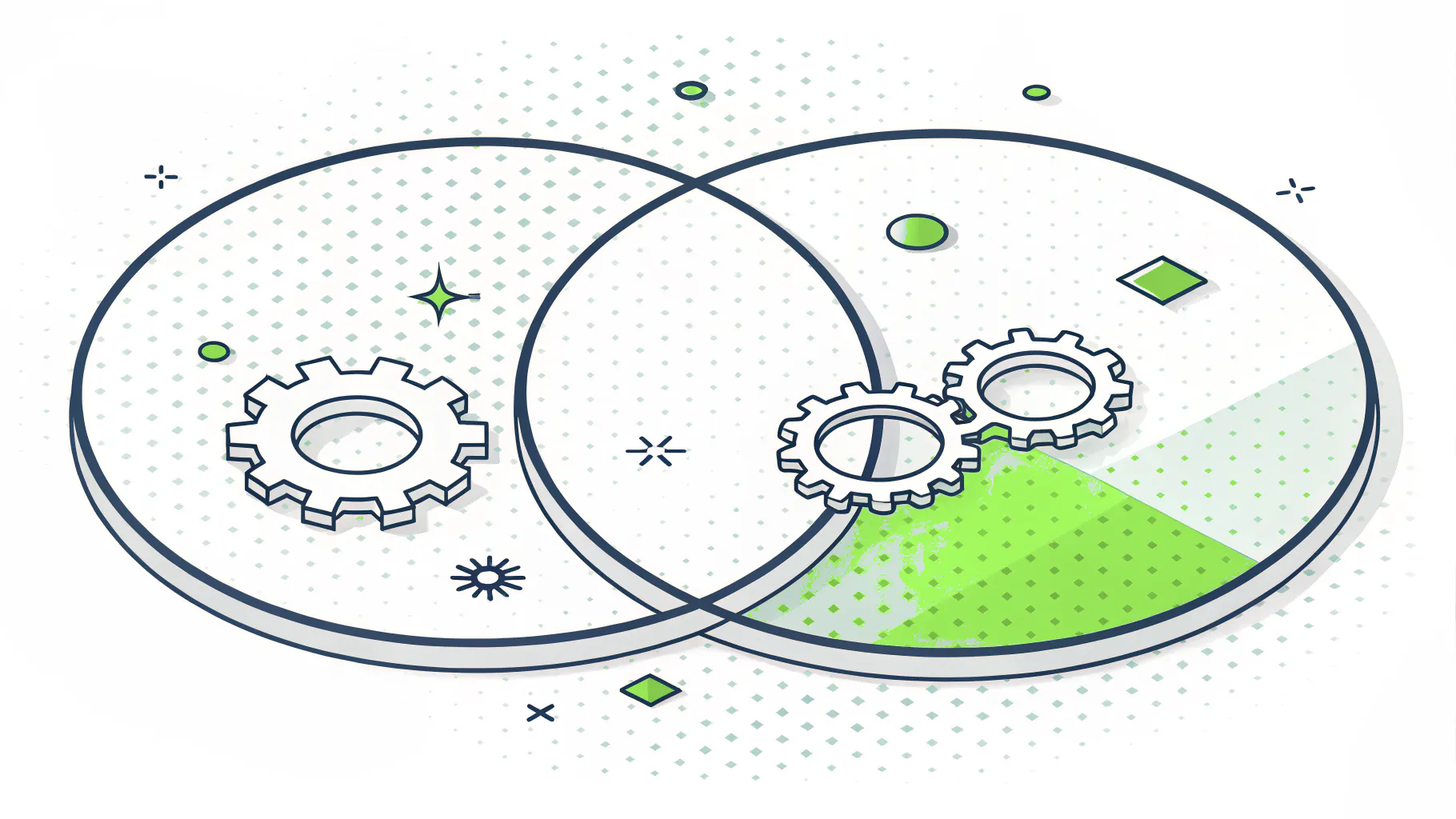
Here's the good news buried in all this. SOC 2 and ISO 27001 share roughly 80% of their actual security controls, based on the AICPA mapping referenced by Vanta. Access management, incident response, risk assessment, vendor review, employee training. Do the work once and most of it counts for both.
So if you already hold one, you've done 60% to 80% of the other. That's not a rounding error. That's most of the project.
But the 20% that doesn't overlap is exactly where teams get surprised. ISO 27001's management-system clauses have no SOC 2 equivalent at all, as StrongDM notes. Internal audit. Management review. Corrective action. Continual improvement. You can have a spotless SOC 2 report and still be nowhere near ISO 27001, because SOC 2 never asked you to build the governance layer on top.
Both frameworks lean on the same foundation of written policy, which is why solid data handling policies pull double duty. Weak policy, and you're rebuilding it twice. The overlap only pays off if the shared parts were done properly the first time.
Which one do you actually need?
Start with one question, not a comparison chart. Who is asking you for this, and where do they operate? That answer settles it faster than any feature list.
The pattern is consistent enough to write down.
- US customers and US enterprise procurement are asking? SOC 2 Type 2. It's the default expectation for selling to American companies.
- Selling into the EU, UK, or APAC, or a buyer name-drops the standard directly? ISO 27001. European procurement and regulated buyers lean on it, per Sprinto.
- Nobody's actually required anything yet, but you want to look ready? Slow down. You might not need either right now.
That last one deserves more honesty than it usually gets. Plenty of mid-market firms, a 40-person manufacturer or a regional distributor, get spooked by a security questionnaire and assume they need a full audit. Often they don't. A completed questionnaire, a written policy set, and evidence of real controls can satisfy the customer without a five-figure engagement. Bias disclosed here, we run compliance work and we still tell people this, because starting an audit you don't need is how you burn budget and goodwill at once.
When the framework decision genuinely is a coin flip, geography breaks the tie. Where does your revenue come from today, and where is it going? Someone has to own that call and the system underneath it, which is where a virtual CISO earns their keep. Not the letters after a name. The person who decides scope, owns the risk register, and answers to leadership when something drifts.
What each one costs and how long it takes
Real numbers, since most articles get vague right here. Cost swings hard on company size and how much cleanup you need before an auditor will touch you. The ranges below reflect 2026 pricing compiled by Secureframe and other current guides.
- Small companies under 50 people. SOC 2 runs about $20k to $50k all-in the first year. ISO 27001 lands around $15k to $50k. Figure 3 to 6 months.
- Mid-market, 50 to 250 people. SOC 2 is closer to $50k to $100k. ISO 27001 climbs to $50k to $150k. Figure 6 to 12 months.
- Larger organizations, 250 and up. SOC 2 starts around $100k. ISO 27001 can run $150k to $500k or more, over 10 to 18 months.
Read those numbers and then add the one they never print. Internal time. The auditor's fee is a line item you can see. The 200 hours your ops lead spends collecting evidence, writing policy, and chasing screenshots is the cost that actually hurts, and it doesn't show up on any quote. Budget for it anyway.
ISO 27001 usually runs longer and costs more at the top end because of that management-system burden. SOC 2 Type 1 is the fastest thing you can produce if a customer needs proof next quarter. Just remember it's the snapshot, not the video.
Do you need both, and how do you avoid paying twice?
Eventually, maybe. As you sell into more markets, the day comes when one customer wants the SOC 2 report and another wants the ISO certificate. When that happens, sequence them. Don't run two audits cold at the same time.
Lead with the framework your higher-revenue market demands. Get it clean. Then add the second, where that 80% control overlap turns what looks like a second full project into roughly 8 to 12 weeks of focused work, according to Truvocyber. Many firms bundle both engagements and save 30% to 40% versus buying them separately.
The mapping between the two is well documented, so the shared evidence carries over cleanly, as Strikegraph shows in its crosswalk. The trap is doing them out of order, or letting two separate consultants build two separate control sets that don't talk to each other. Now you're maintaining everything twice. Same controls. Double the upkeep.
The part nobody warns you about
The certificate is the easy part. Read that again, because it's the whole game. Passing the audit is a one-time push. Keeping the controls alive for the next three years is a job.
This is where mid-market firms quietly fail. They sprint to the audit, pass, celebrate, and then let access reviews slip, skip the quarterly risk check, and forget the management review entirely. Twelve months later the surveillance audit or the renewal arrives, and the machine they built has rusted. Now it's a scramble, not a system.
An audit measures a moment. Your customers are trusting you with a year. That gap only closes if someone runs managed security controls as an ongoing operation, not a project with an end date. This is exactly why we treat compliance as its own standing service rather than something bolted onto managed IT and forgotten. The framework you certified against is a snapshot. The security you actually deliver is a habit.
What Consilien does with this
Consilien is a security-first managed IT and compliance partner for companies with 20 to 500 users, nationwide. We help mid-market operators, manufacturers, distributors, and professional services firms pick the right framework, close the gaps to get audit-ready, and then keep the controls running long after the auditor signs off. Compliance is a standalone offering here, not a checkbox hidden inside a managed IT bundle, because the ongoing work is the part that actually protects you.
Pick by who's asking, not by which framework sounds more impressive. US customers point you to SOC 2. International or regulated buyers point you to ISO 27001. Start with one, and treat it as an operating system you run, not a plaque you earn once. If you're weighing SOC 2 vs ISO 27001 and not sure which your customers will accept, or whether you need either yet, speak to a compliance expert and start with a gap assessment before you commit to an audit. It's a lot cheaper to find out where you stand than to guess.