Information Security Compliance: How to Build a Program
Information security compliance means meeting a defined standard, like SOC 2, ISO 27001, or CMMC, and proving it with evidence. You build a program in five moves. Know your rules, find the gaps, assign ownership, document controls, then monitor continuously.
Table of Contents
Here is the plain version. Compliance is the floor, not the ceiling. It proves you met a standard on a given day. It does not prove you are safe the next morning. Most companies get this backward. They chase the certificate, pass the audit, and assume the work is done. Then something breaks, and they learn the certificate protected the paperwork, not the business. A real compliance readiness program treats the audit as a byproduct of good security, not the goal.
So why does this matter to a 60-person manufacturer in California? Because your customers, your insurer, and increasingly the Department of Defense are all asking the same question. Can you prove it? According to IBM, the average US data breach now runs $10.22 million. That number does not care whether you meant well. This guide walks through what information security compliance actually is, which rules apply to you, and how to build a program that holds up after the auditor leaves.
So what is information security compliance, really?
Information security compliance is the work of meeting an external security standard and producing evidence that you meet it. The standard might come from a regulator, a customer contract, an industry body, or a cyber-insurance application. The evidence is the part people forget.
Every framework is really asking the same three questions about your data. Is it kept private. Is it accurate and unchanged. Is it available when the business needs it. Confidentiality, integrity, availability. Auditors call it the CIA triad. Your operations team just calls it a Tuesday.
Compliance turns those three ideas into specific controls you can point at. Access is restricted to the people who need it. Backups run and get tested. Someone reviews the logs. Then you write it down and keep the receipts. A standard without evidence is a wish. That distinction is the whole game.
Compliance is not the same as security, and confusing them is expensive
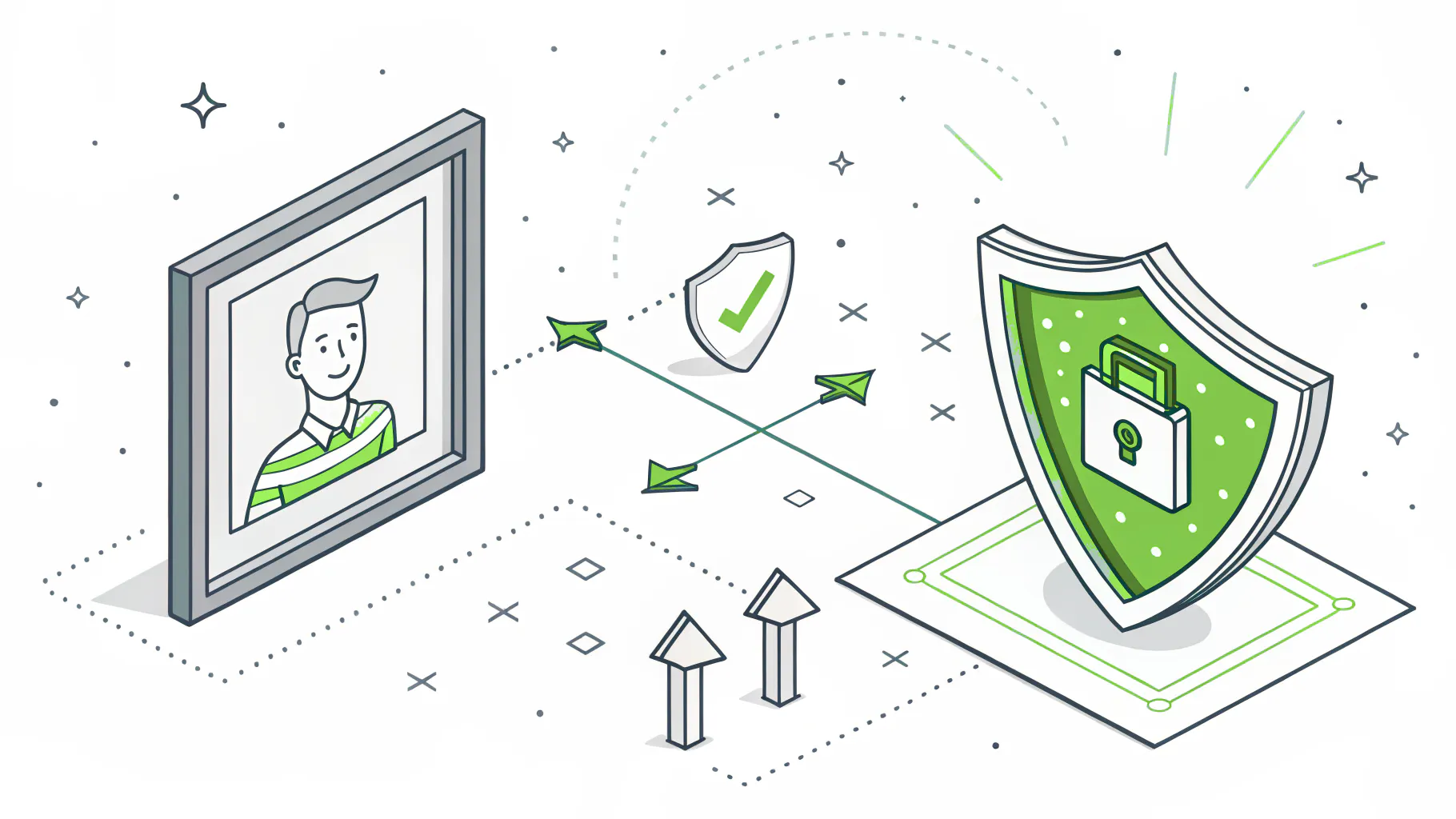
A compliance certificate confirms that certain controls existed when someone checked. It does not confirm those controls are still running today, tuned to your actual risk, or catching a threat that showed up last week. Security is the live version. Compliance is the photograph.
This gap is well documented. As one 2026 analysis of the compliance-security gap puts it, meeting a standard built for every organization says nothing about the risks specific to yours. A framework gives you a baseline. It does not know your network, your vendors, or the phishing email your controller will open on Thursday.
We have watched companies pass an audit and get breached in the same quarter. Not because the audit was wrong. Because the audit measured the floor, and the attacker walked in through a door the framework never asked about. That is why a compliance program should sit on top of real managed security, not replace it. Pass the audit. Then keep going. The certificate is the receipt, not the safe.
Which rules actually apply to you?
Before you build anything, figure out which standards you are actually on the hook for. Most companies are subject to more than one, and the triggers are usually a contract clause, a regulator, or the kind of data you touch. Here is the short map.
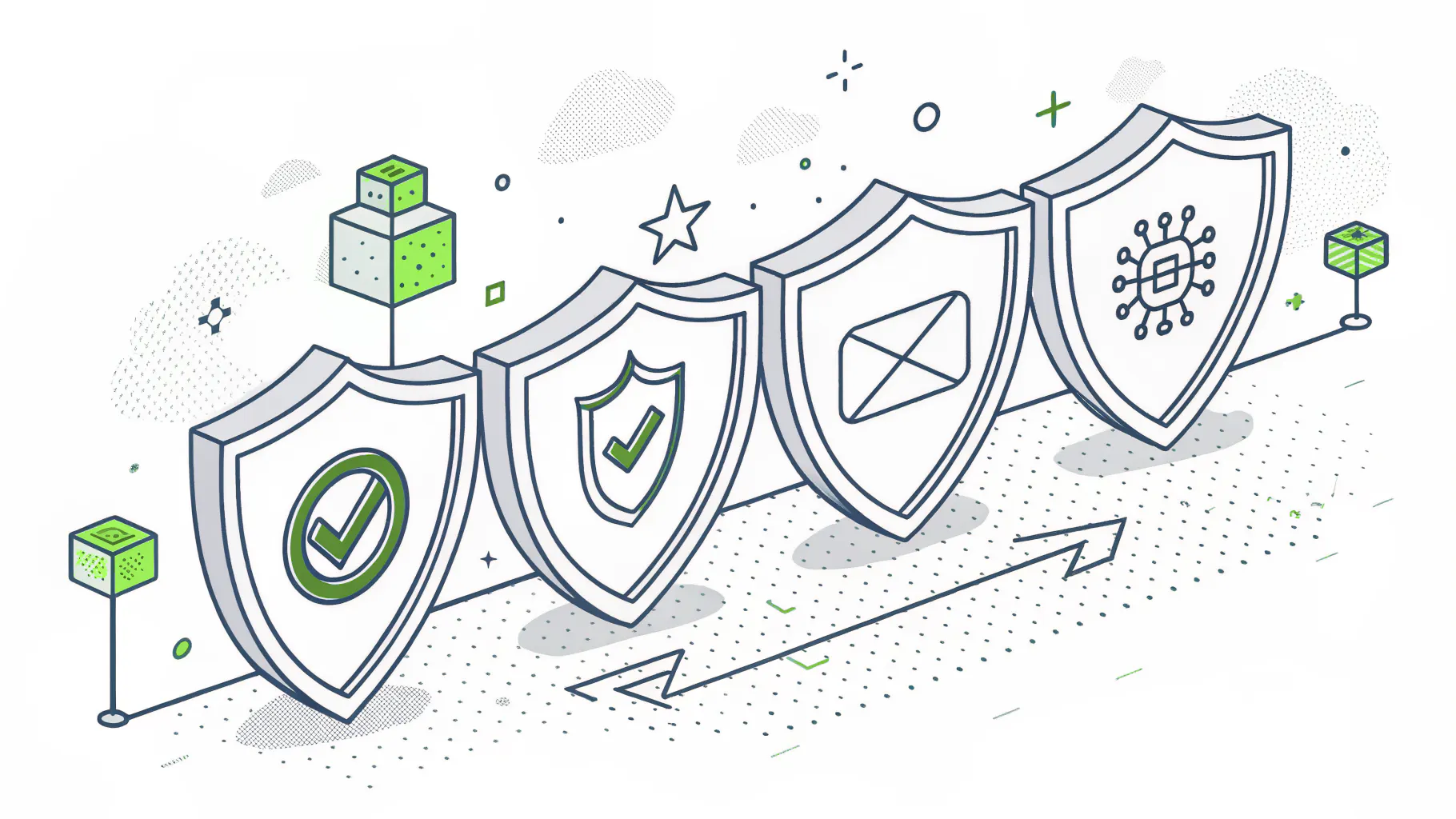
- SOC 2 is an AICPA audit report on how you handle customer data, built on trust criteria. SaaS and service firms holding client data usually need it once a customer asks for the report before signing.
- ISO 27001 is an international certification for a full information security management system. Companies selling globally or into the EU reach for it when enterprise or overseas buyers, or a board, want a certificate.
- NIST CSF 2.0 is a voluntary US framework organized into six functions. It fits anyone who wants structure without a formal audit, often prompted by insurer questions or a maturing risk program.
- CMMC 2.0 is the Defense Department cybersecurity requirement, delivered in tiered levels. DoD contractors and their supply chain need it the moment a defense contract or a flow-down clause lands.
- PCI DSS is the payment card industry data security standard. Any business that stores or processes card data is on the hook, at any volume.
A few of these carry real weight in a sales cycle. Roughly 78% of B2B buyers now want to see SOC 2 or ISO 27001 before they sign. So compliance is not only a risk exercise. It is a revenue gate.
The defense side is stricter. CMMC Level 1 asks for 17 basic practices to protect Federal Contract Information, while Level 2 layers on 110 controls for Controlled Unclassified Information, with a third-party assessment every three years. If you supply a prime and you handle CUI, this is not optional and the deadline is not yours to set. Not sure which framework fits? That is exactly what our compliance frameworks work sorts out first.
How to build an information security compliance program in 5 steps
You do not need a 200-page binder to start. You need a sequence. These five steps map cleanly onto the six functions of the NIST Cybersecurity Framework 2.0, which is a decent spine even if NIST is not the standard you are chasing.

Step 1: Know your rules
Scope first. List every standard you are subject to, then list the data that makes you subject to it. Card numbers, CUI, health records, customer PII, source code. Where does each type live, and who can touch it? This is the Govern and Identify work, and skipping it is why so many programs balloon later. You cannot protect what you have not found.
Step 2: Assess the gap
Now measure yourself against the standard. A security gap assessment compares your current controls to what the framework requires and hands you a punch list. What exists. What is missing. What exists but has no evidence behind it. That last bucket is always bigger than people expect. Most first assessments turn up controls that work fine in practice but were never written down, which means they do not count.

Step 3: Assign ownership
Here is where most SMB programs quietly die. In a company of 50 to 250 people, compliance usually belongs to nobody. It gets bolted onto the office manager, or the one IT person, or a founder who already has a day job. Then it drifts. Someone has to own this with real authority and real time. For most mid-market firms, standing up a full-time chief information security officer makes no financial sense, which is why a virtual CISO has become the common answer. Fractional cost. Full accountability.
Step 4: Fix, document, and collect evidence
Close the gaps from Step 2, in risk order, not alphabetical order. Fix the missing MFA before you polish the acceptable-use policy. Then document everything. Policies, procedures, config screenshots, ticket trails, training records. This is the Protect function, and it is the least glamorous part of the entire program. It is also the part auditors actually grade. Evidence is the deliverable. The control is just how you generate it.
Step 5: Monitor continuously
Compliance is not a project with an end date. It is a state you maintain. This is the Detect, Respond, and Recover work, and it is where the market moved hard in 2026. Instead of scrambling for two months before an annual audit, mature programs now verify controls in the background, all year. One continuous-compliance guide frames it as killing the audit scramble entirely. The payoff is real. Teams that automate evidence collection have cut audit prep by 60% to 80%. And organizations using security automation broadly saved an average of $1.67 million per breach. Set it up once. Let it run.
What does compliance actually cost, and how long does it take?
Straight answer. Budget more time than money, and more than you think for both. Competitors skip this section because the numbers make people flinch. You deserve them anyway.
SOC 2 is the most common first framework, so use it as a yardstick. A Type 1 report typically runs $7,500 to $15,000 for the audit alone, with Type 2 landing around $12,000 to $20,000. Add tooling, internal time, and remediation and most companies see $25,000 to $50,000 in year one. On timing, plan for three to six months of readiness work, and a Type 2 report needs a monitoring window on top of that.

- A SOC 2 Type 1 audit runs $7,500 to $15,000. It is a point-in-time snapshot of your controls.
- A SOC 2 Type 2 audit runs $12,000 to $20,000 and covers a monitoring window, usually 3 to 6 months.
- First-year all-in tends to land at $25,000 to $50,000 once you add tooling, remediation, and staff time.
- Readiness timeline is 3 to 6 months, faster if you already run core controls and slower from a blank page.
Now weigh that against the other side of the ledger. Non-compliance costs more, and not by a little. Regulators issued 1.2 billion euros in GDPR fines in 2025 alone, and that is before you count lost deals from a failed security review. I will disclose the bias plainly. We do this work, so of course I think it is worth doing. But the math holds up without me. A $40,000 program against a multi-million-dollar breach is not a close call.
Where compliance programs break, from the field
Frameworks do not fail. Programs do, and they fail in predictable ways. If you know the failure modes going in, you can design around them.
The first one we already covered. Nobody owns it. The second is evidence rot. A control gets set up, works great for a quarter, then someone changes a setting and nobody updates the documentation. Six months later the auditor asks for proof and it does not exist. The third is the tool trap. A company buys a shiny compliance platform, watches a demo, and mistakes the purchase for the program. The platform is a filing cabinet. It does not do the work.
The fourth is the one that actually hurts. Treating the certificate as the finish line. You pass, you exhale, you stop paying attention. That is precisely when risk creeps back in. This is the reasoning behind our CyberFit Managed Compliance Program inside the IC24 service model. Compliance sits as one layer on top of managed security and IT strategy, so the controls that pass the audit are the same ones defending the business the other 364 days a year. Compliance and security are not separate budgets. They are the same job, viewed from two angles.
The takeaway
Information security compliance is not a certificate you win and hang on the wall. It is an operating habit. Get three things right and the rest follows. Know exactly which rules apply to you and what data triggers them. Give the program a real owner with authority and time. And treat monitoring as continuous, because a control you checked once is a control you are no longer sure about.
Do that, and the audit stops being a fire drill. It becomes a formality you were ready for months ago.