Best EDR Software for Small & Mid-Size Businesses (2026)
ESET PROTECT ranks first among EDR software for small and mid-size businesses in 2026, the only product here to clear both MITRE ATT&CK Enterprise 2025 and AV-Comparatives EPR 2025. CrowdStrike Falcon leads on raw capability, Sophos Endpoint on review depth, Huntress on bundled 24/7 response. Rankings use a six-factor Confidence Score built on independently published data.
Table of Contents
Quick Picks
- Best Overall: ESET PROTECT Platform
- Best If You Have No In-House Security Staff: Huntress Managed EDR
- Best If You Have a Real Security Team: CrowdStrike Falcon
- Best Value Under 100 Endpoints: Bitdefender GravityZone
- Best If You Already Pay for Microsoft 365 Business Premium: Microsoft Defender for Business
Choosing the best EDR software used to mean reading independent test results and picking the product that caught the most attacks. That's harder now. Vendor participation in the MITRE ATT&CK Enterprise evaluation, the annual test that runs security products against a public catalog of real attacker techniques, fell from close to 30 in earlier rounds to 11 in 2025, and three of the biggest names in endpoint security sat it out. Meanwhile the products marketed hardest to companies under 500 users tend to be the ones with the thinnest independent testing record.
So this list scores something different. Every product below is measured on published third-party evidence, verified buyer reviews pulled live from Gartner Peer Insights, and one thing almost nobody publishes, which is whether the product actually fits a company between 20 and 500 users without hitting a licensing wall. Two of the most popular SMB options have a hard ceiling written into the SKU. If you're not sure what the technology does before comparing vendors, start with what EDR actually is and come back.
How This List Was Scored
Nine EDR products, six factors, one Confidence Score out of 10. Every input is public. No vendor paid for placement, submitted data, or reviewed a draft.
Consilien is a managed IT and security provider, not an EDR vendor, so nothing on this list competes with anything it sells.
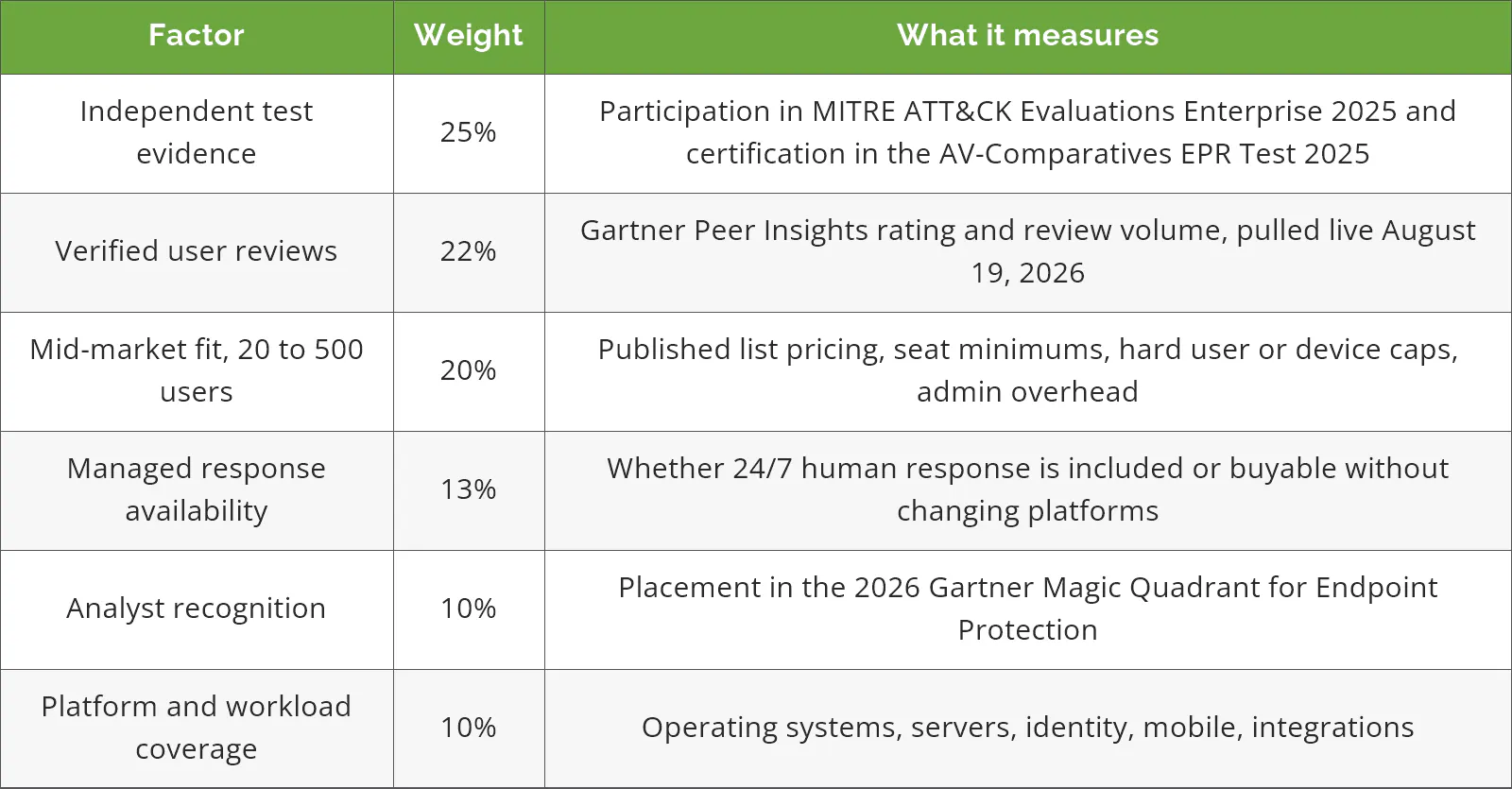
Independent testing carries the heaviest weight for a reason. Every EDR vendor claims high detection rates. Only a handful submit their product to an adversarial test they don't control and then publish the result. The AV-Comparatives EPR Test 2025 ran 50 targeted attack scenarios mapped to MITRE ATT&CK across three phases, and certification required an average score of 92% or higher across both active and passive response while staying cost efficient. Ten products certified. Two didn't.
The MITRE ATT&CK Evaluations Enterprise 2025 round, released December 10, 2025, emulated Scattered Spider and Mustang Panda. That round drew 11 vendors: Acronis, AhnLab, CrowdStrike, Cyberani, Cybereason, Cynet, ESET, Sophos, Trend Micro, WatchGuard, and WithSecure.
Microsoft announced on June 13, 2025 that it would not participate, citing its Secure Future Initiative. SentinelOne and Palo Alto Networks both confirmed their withdrawal on September 12, weeks before the evaluation wrapped. Vendors are entitled to spend engineering time however they want. But a buyer comparing endpoint products in 2026 has meaningfully less evidence to work with than a buyer did in 2023, and the shrinkage is concentrated among the largest vendors.
Mid-market fit is the second unusual factor here, and it's the one that changes recommendations most often. A product can be excellent and still be wrong for a 180-person distributor, because the affordable tier stops working at a headcount the company will cross in two years.
Scoring is mechanical. A product that appeared in both independent tests scores 10 on Factor 1. One test scores 6.5. Neither scores 2.5. Reviews use a 60/40 split between star rating and a logarithmic volume curve, so a product with 700 reviews isn't punished against one with 3,000. The same math ran on all nine.
EDR Software for SMBs at a Glance
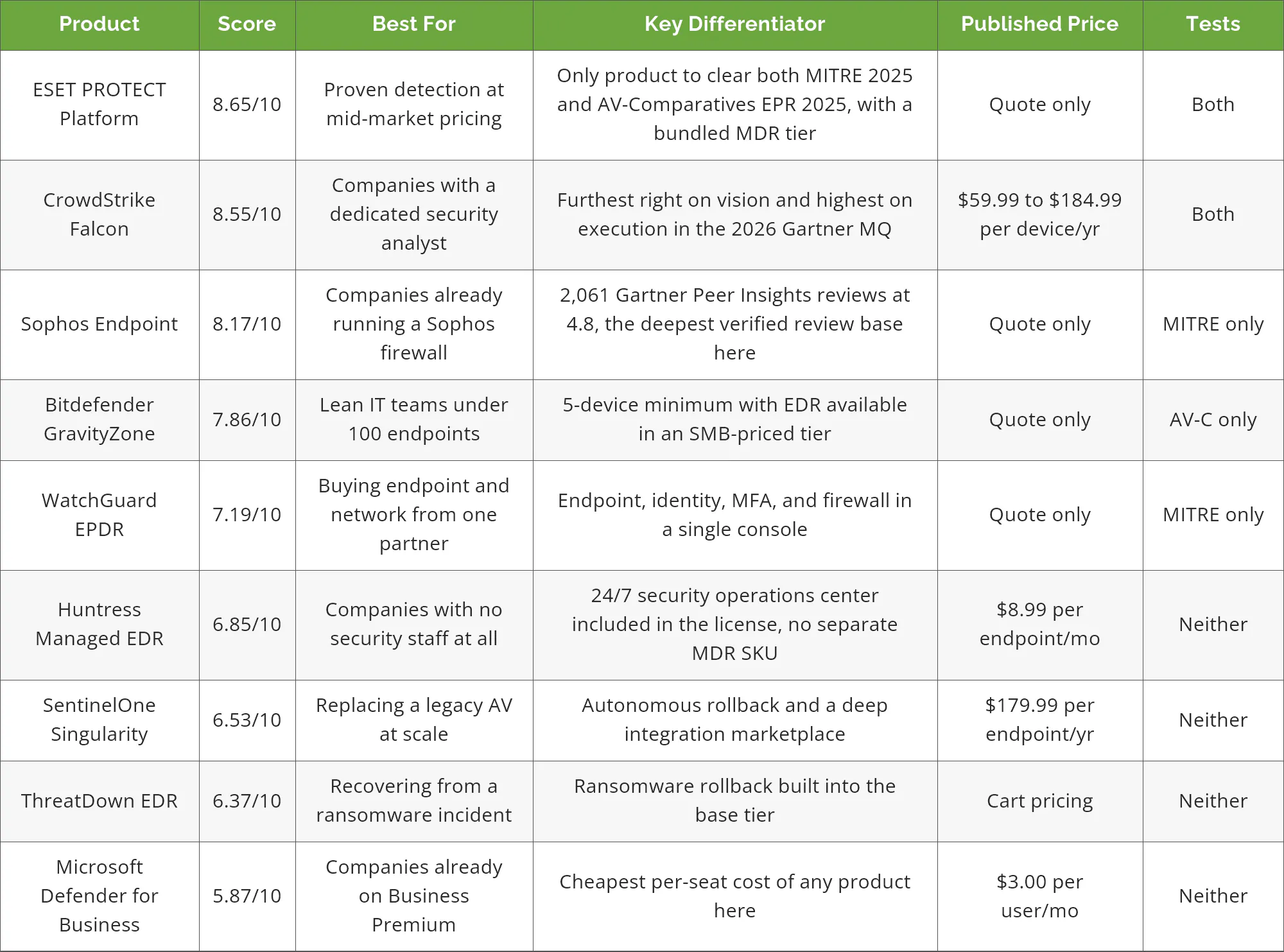
The 9 Best EDR Software Products for SMBs in 2026
1. ESET PROTECT Platform. Proven Detection Without the Enterprise Price Tag
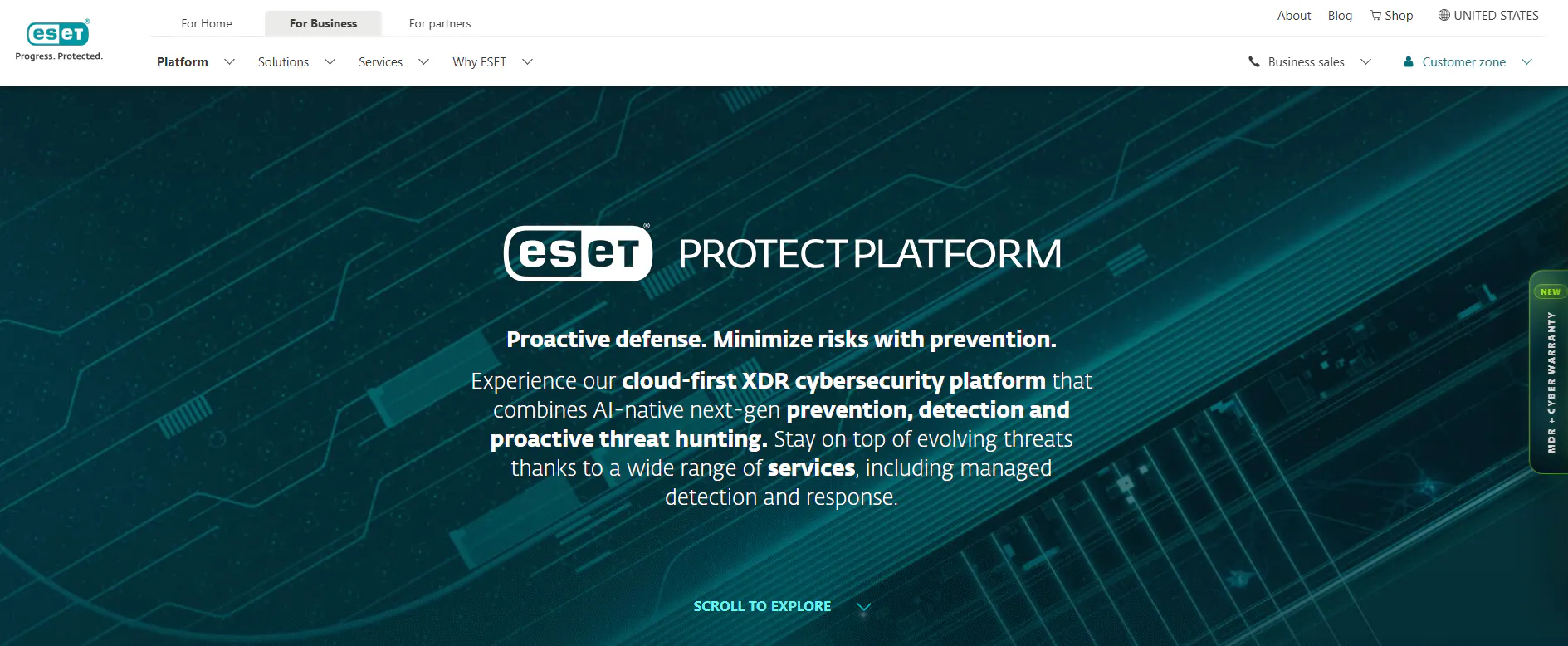
ESET is the quietest vendor on this list and the only one that showed up for both independent tests and passed.
Score: 8.65/10
Key Strengths
- ESET PROTECT Enterprise Cloud 6.3 earned AV-Comparatives EPR Certification in the 2025 test, and ESET was one of 11 vendors in MITRE ATT&CK Enterprise 2025. Nothing else here did both except CrowdStrike.
- 1,108 verified reviews on Gartner Peer Insights, averaging 4.7. Fourth-largest review base in the endpoint protection market.
- The agent is genuinely light. That matters more than it sounds when the endpoints in question are five-year-old shop-floor PCs running a CAD package that already fights for RAM.
- MDR isn't a bolt-on. PROTECT MDR and PROTECT MDR Ultimate are packaged tiers, so adding 24/7 human response is a license change, not a platform migration.
The tradeoff: ESET is the only Challenger in the 2026 Gartner Magic Quadrant for Endpoint Protection, its third consecutive year in that quadrant. Gartner puts it behind CrowdStrike, Microsoft, SentinelOne, Sophos, Trend Micro, and Palo Alto on completeness of vision. That's a real gap and it cost ESET points here. There's also no published list price anywhere on eset.com, so budgeting requires a partner conversation before you know whether the product is even in range.
And the console is dated next to Falcon or Sophos Central. Functional, dense, clearly built by engineers rather than designers. It works. It just isn't pleasant.
Best For: Companies between 50 and 500 users that want detection they can verify against a public test, run mixed Windows, macOS, and Linux fleets, and would rather grow into MDR than re-platform for it.
Not Ideal For: Security teams that need a large third-party integration marketplace, or anyone whose buying committee treats the Leaders quadrant as a shortlist filter.
Services: Endpoint protection, EDR and XDR via ESET Inspect, server protection, mobile, mail security, full disk encryption, cloud sandboxing, vulnerability and patch management, MDR.
Industries: Manufacturing, distribution, professional services, education, government.
Why It Ranks #1: It won on evidence, not marketing. Two independent bodies tested ESET in 2025 and it cleared both, which no other SMB-priced product on this list managed. Pair that with a strong review base, a light agent, and an MDR tier that doesn't require abandoning the platform, and the analyst-recognition gap stops looking decisive. A buyer who weights Gartner placement heavily will rank CrowdStrike first and won't be wrong. This scoring model weights what was independently measured over what was analyst-assessed, and on that basis ESET finishes ahead by a tenth of a point.
2. CrowdStrike Falcon. The Strongest Engine, With a Ceiling on the Cheap Tier
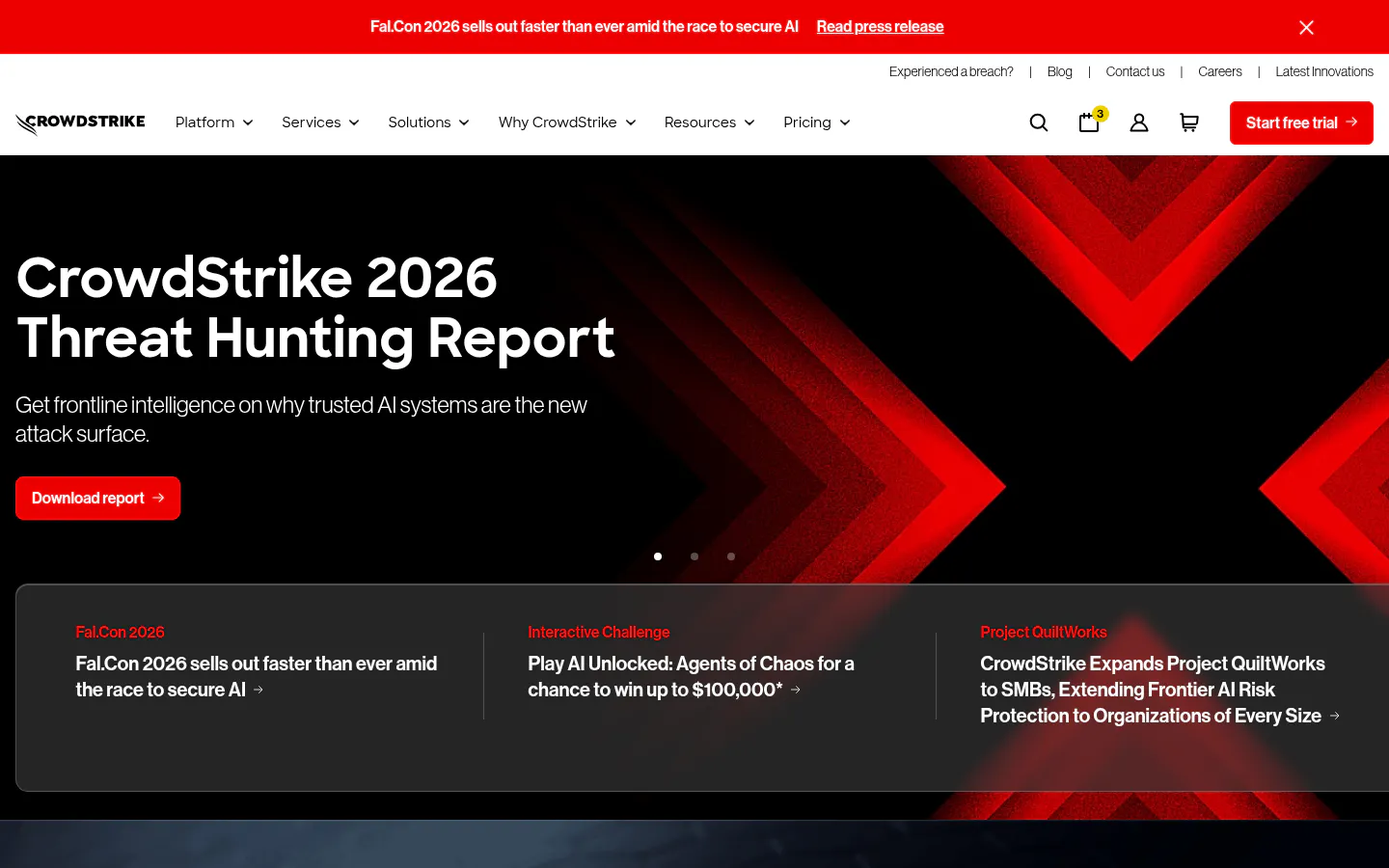
Nobody argues about whether Falcon detects things. The argument is about what it costs and who can run it.
Score: 8.55/10
Key Strengths
- Named a Leader in the 2026 Gartner Magic Quadrant for Endpoint Protection for the seventh consecutive time, positioned furthest right for completeness of vision and highest for ability to execute for the fourth round running
- Falcon Enterprise 7.25 certified in the AV-Comparatives EPR Test 2025, and CrowdStrike participated in MITRE ATT&CK Enterprise 2025
- 4.7 across 3,112 Gartner Peer Insights reviews, the largest verified review base in the market
- CrowdStrike is one of only four vendors here that publishes list pricing instead of routing everyone to a quote
Worth knowing: Falcon Go costs $59.99 per device per year and is capped at 100 devices. A 90-person company with laptops and servers crosses that line, and the next tier up, Falcon Pro, is $99.99. Falcon Enterprise, which is the tier that carries full EDR and threat hunting, runs $184.99 per device annually. The cost curve for a growing mid-market company is steeper than the entry price suggests.
Falcon Complete, the managed service, is contact-sales only. No published number at all. And the console rewards an analyst who knows what they're looking at. Hand it to a two-person IT team that also handles printers and you get a lot of unreviewed alerts.
Best For: Companies with at least one person whose job is security rather than IT generally, or an MSP running Falcon on their behalf. Under 100 devices, Falcon Go is genuinely good value.
Not Ideal For: Companies between 100 and 500 endpoints on a fixed security budget, or teams with nobody to work the queue.
Why It Ranks #2: Best raw product here, full stop, and it backed that up in both independent tests. It lands second because the 20-to-500 buyer runs into a pricing structure built for a different customer. The device cap on the affordable tier sits right in the middle of this list's target range.
3. Sophos Endpoint. The Deepest Review Base and an Easy MDR Path
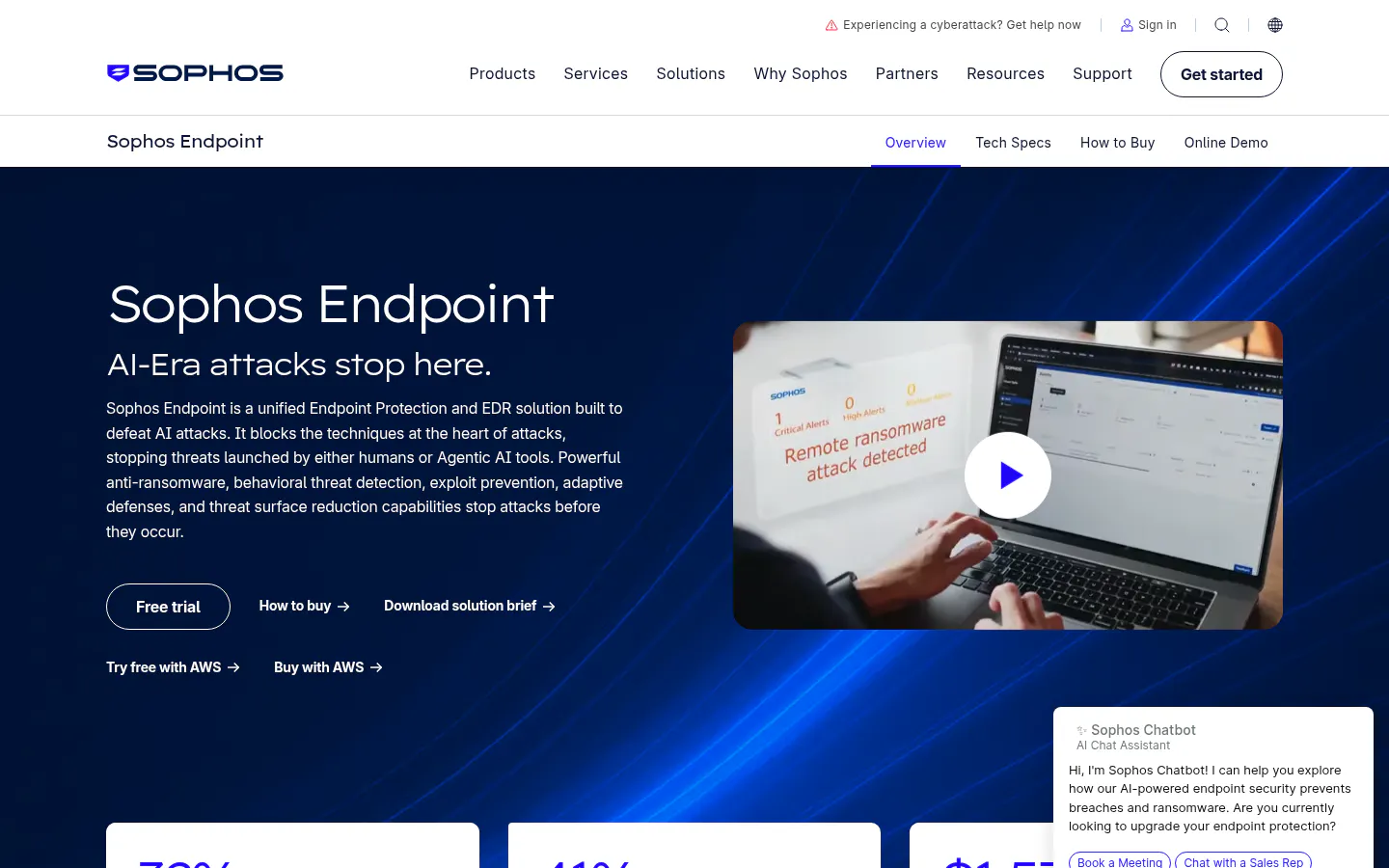
Seventeen consecutive Leader placements, the longest analyst run of anything on this list.
Score: 8.17/10
Key Strengths
- Gartner Peer Insights reviewers put Sophos at 4.8 across 2,061 reviews. Highest rating of anything here with a base over 1,000.
- Named a Leader in the 2026 Gartner Magic Quadrant for the 17th consecutive report
- Participated in MITRE ATT&CK Enterprise 2025
- Sophos Central runs endpoint, server, firewall, email, and cloud from one place, which removes a genuine daily annoyance for a small team
Where it falls short: Sophos didn't appear in the AV-Comparatives EPR Test 2025 certified list. It also doesn't publish pricing, selling entirely through partners and MSPs, so there's no way to sanity-check a quote against a public number.
Sophos MDR is a strong service and widely deployed in the mid-market. It's also a separate SKU on top of the endpoint license, so the real total runs higher than the endpoint quote implies. Ask for both numbers at once.
Best For: Companies already running a Sophos Firebox or XGS firewall, and anyone who values a single console over best-of-breed components.
Not Ideal For: Buyers who need published pricing before starting a procurement process.
Why It Ranks #3: The review base is the most credible signal Sophos has and it's excellent, 4.8 from more than 2,000 verified reviewers. The MITRE appearance without an AV-Comparatives certification leaves it a half-step behind the two products above it on independent evidence.
4. Bitdefender GravityZone. The Value Pick Under 100 Endpoints
GravityZone shows up on more SMB shortlists than almost anything else, and the reason is usually price.
Score: 7.86/10
Key Strengths
- GravityZone Business Security Enterprise 7.9 certified in the AV-Comparatives EPR Test 2025
- Gartner Peer Insights reviewers average 4.7 across 735 reviews
- Licensing starts at a 5-device minimum, so a 25-person firm can buy the real product rather than a stripped consumer version
- Named a Visionary in the 2026 Gartner Magic Quadrant for Endpoint Protection for the fourth consecutive year, and the only EU-headquartered vendor in that quadrant
One catch. Bitdefender wasn't among the 11 vendors in MITRE ATT&CK Enterprise 2025. Visionary placement means Gartner rates the roadmap ahead of the current execution, which is a fair description of the product. And EDR isn't in the base Small Business Security tier, so the entry price you'll see quoted often isn't for the tier that includes detection and response. Confirm which SKU the number refers to.
Best For: Companies under 100 endpoints with one or two IT generalists, especially where budget is the binding constraint.
Not Ideal For: Buyers who want a MITRE-evaluated product, or organizations above roughly 300 endpoints where the console starts feeling thin.
Why It Ranks #4: Certified detection at a genuine SMB entry point, held back by a missing MITRE appearance and an analyst placement that reads more like promise than proof.
5. WatchGuard EPDR. One Vendor for Endpoint and Network
Score: 7.19/10
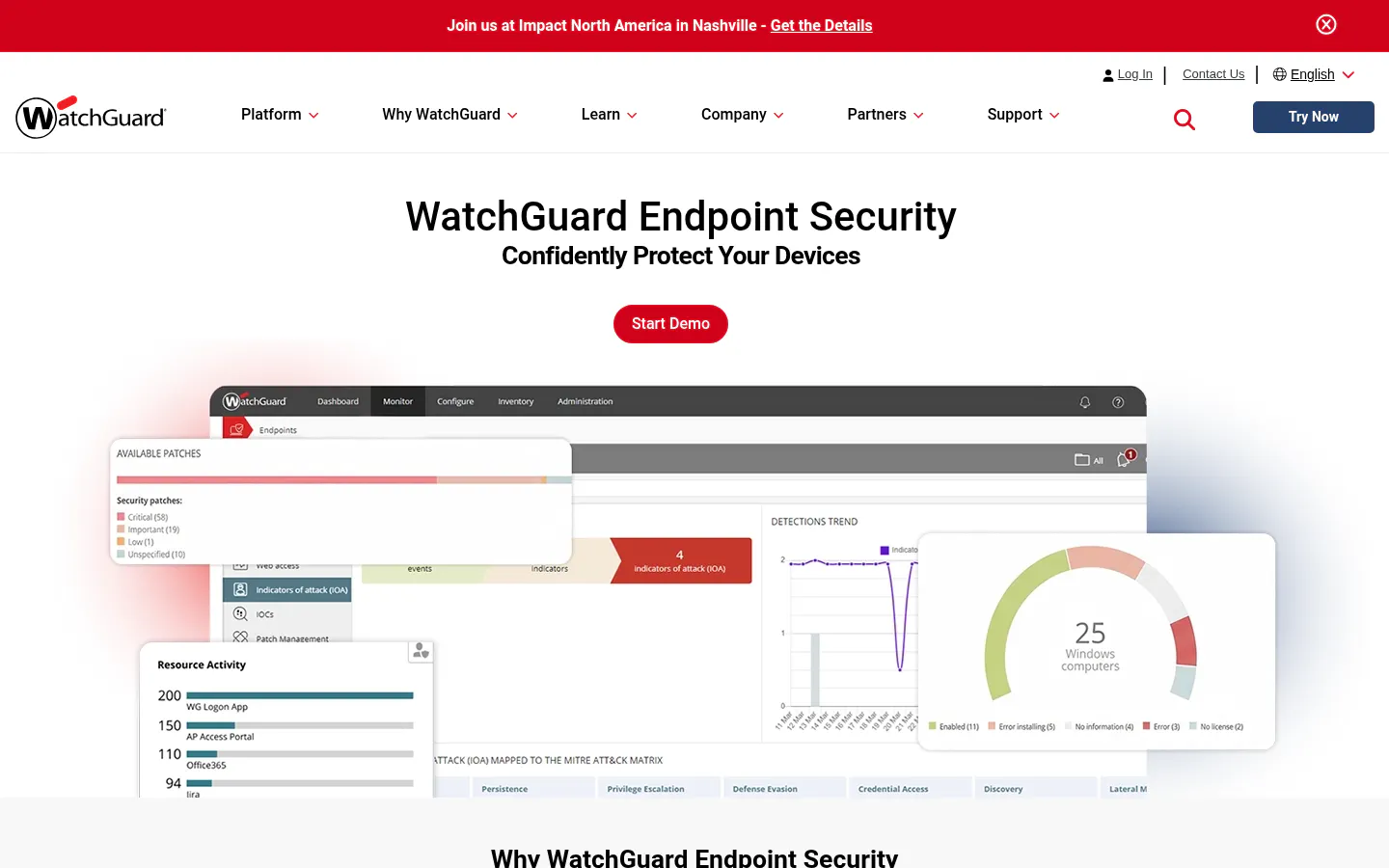
WatchGuard's pitch is consolidation. For a company with no security staff and one firewall vendor already in place, that's a legitimate reason to buy.
Key Strengths
- One of the 11 vendors in MITRE ATT&CK Enterprise 2025, alongside CrowdStrike, ESET, and Sophos
- 543 Gartner Peer Insights reviews, averaging 4.7
- Endpoint, identity, MFA, and Firebox network security all report into WatchGuard Cloud
- The zero-trust application service classifies every program that tries to run, which produces far fewer "is this normal?" judgment calls for a generalist admin
What's missing. WatchGuard has no confirmed placement in the 2026 Gartner Magic Quadrant for Endpoint Protection, which cost it heavily on Factor 5. It also didn't certify in the AV-Comparatives EPR Test 2025, and there's no published pricing.
Best For: Companies already running WatchGuard firewalls, and MSP-supported businesses that want fewer vendor relationships.
Not Ideal For: Companies with no existing WatchGuard footprint, where the consolidation argument disappears and the product has to win on detection alone.
Why It Ranks #5: A MITRE appearance and solid reviews put it ahead of four better-known products. Thin analyst coverage keeps it out of the top four.
6. Huntress Managed EDR. 24/7 Response in the Price, Thin Independent Evidence
Score: 6.85/10
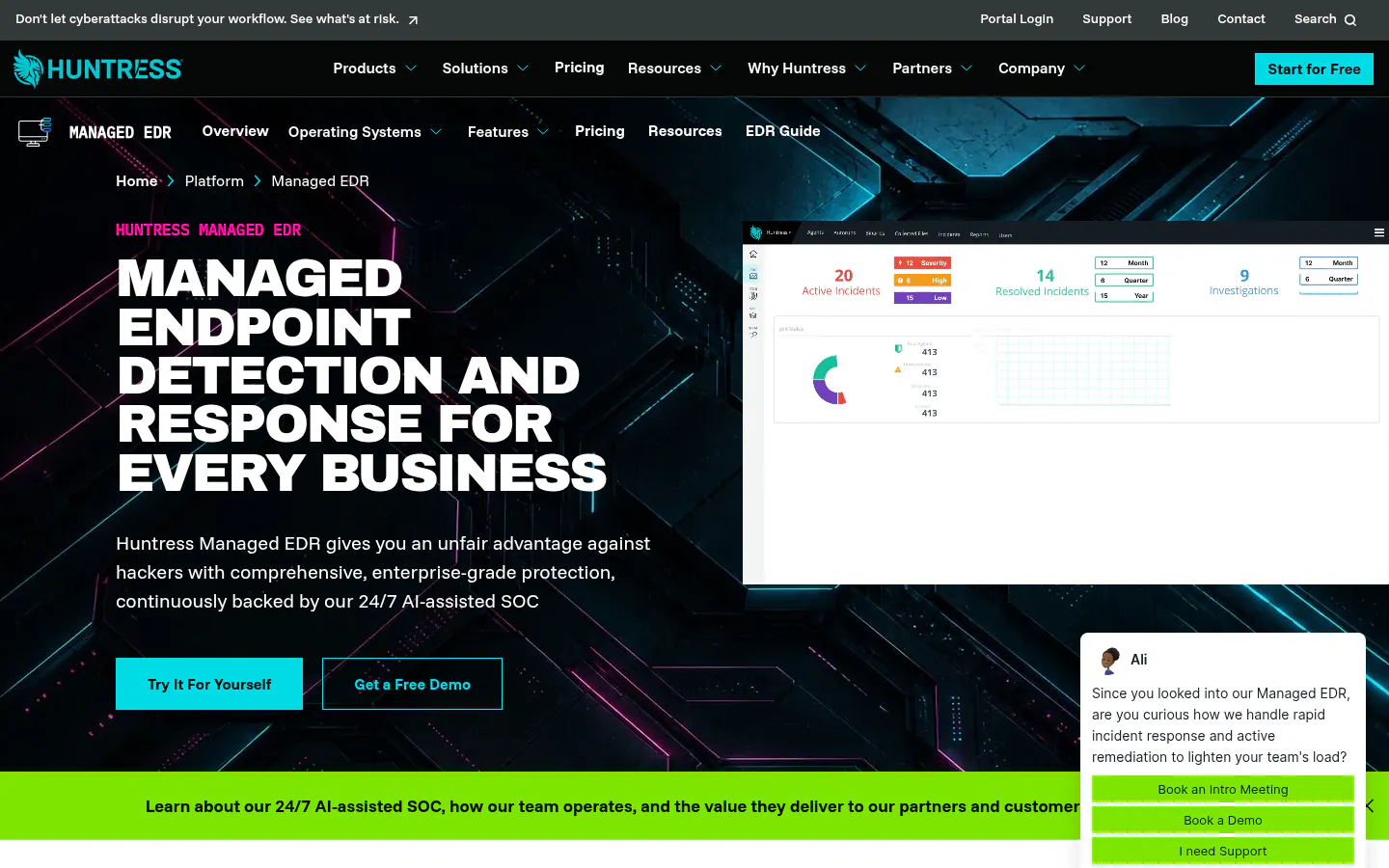
Huntress is the product most often recommended to small businesses in 2026, and the recommendation is usually sound. The published price is $8.99 per endpoint per month with a 50-seat minimum buying direct or through a reseller, no minimum through an MSP, and 24/7 monitoring and remediation by a staffed security operations center included at no additional fee. No add-on, no separate tier.
For a 120-person manufacturer with one systems administrator and no security analyst, that structure solves the actual problem. The gap at that company isn't detection quality. It's that nobody is awake at 2 a.m. to act on an alert.
Key Strengths
- 4.9 on Gartner Peer Insights, the highest rating of any product on this list
- Bundled 24/7 SOC with remediation, no separate MDR SKU to negotiate
- Windows, macOS, and Linux agents, with the Linux agent now generally available
- Transparent published pricing, which 4 of the 9 products here still don't offer
Where the score comes from: Huntress appears in neither MITRE ATT&CK Enterprise 2025 nor the AV-Comparatives EPR Test 2025, which costs it 25% of the model. It has no confirmed 2026 Gartner Magic Quadrant placement, costing another 10%. And its Gartner Peer Insights base is 23 reviews against Sophos at 2,061, so the 4.9 rating carries real signal but thin volume.
That 50-seat direct minimum also prices out companies under 50 endpoints unless they buy through an MSP. And the platform surface is deliberately narrower than the enterprise suites. No mobile agent. No cloud workload protection.
Best For: Companies with 50 to 300 endpoints and no dedicated security staff, and MSPs standardizing a stack across a client base.
Not Ideal For: Organizations under 50 endpoints buying direct, regulated environments where an auditor wants to see independent test results, or companies needing mobile and cloud workload coverage from the same agent.
Why It Ranks #6: A buyer who weights bundled 24/7 response above independent test participation should rank Huntress first, and that's a defensible way to buy. This model weights published third-party evidence at 35% between testing and analyst coverage, and Huntress currently has almost none of either. Scoring it any higher would mean rewarding reputation over the published record, which is exactly what this list exists to avoid.
7. SentinelOne Singularity Endpoint. Strong Product, Shrinking Public Record
Score: 6.53/10
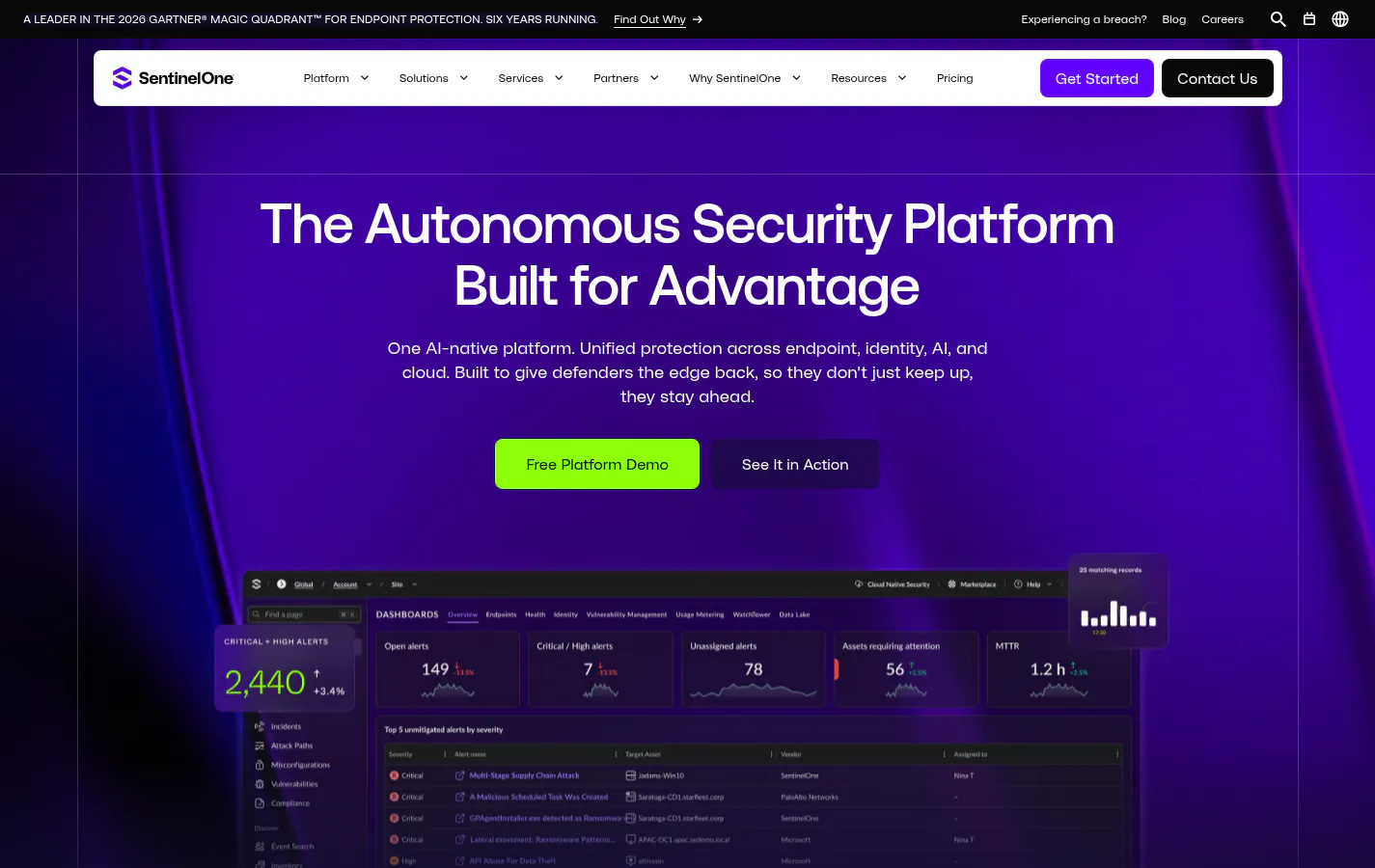
SentinelOne's autonomous rollback still does something most competitors don't. And the Singularity marketplace is the deepest integration ecosystem outside CrowdStrike.
Key Strengths
- Reviewers on Gartner Peer Insights average 4.7 across 2,883 reviews. Second only to CrowdStrike in volume.
- Named a Leader in the 2026 Gartner Magic Quadrant for the sixth year in a row
- Publishes list pricing at $179.99 per endpoint per year for Singularity Complete
- One-click rollback of ransomware encryption on Windows endpoints
The problem: SentinelOne withdrew from MITRE ATT&CK Enterprise 2025 on September 12, 2025, and didn't certify in the AV-Comparatives EPR Test 2025. That's zero independent test evidence from the most recent cycle for a product whose historical MITRE results were a core part of its sales pitch.
Pricing transparency has an asterisk too. The published $179.99 figure applies to 5 to 100 workstations. Past 100 you're in a quote, and $179.99 per endpoint per year is already the highest published price on this list.
Best For: Companies replacing legacy antivirus across a few hundred endpoints, with an analyst to tune policies and a genuine need for rollback.
Not Ideal For: Buyers who need current independent test results, and price-sensitive companies above 100 endpoints.
Why It Ranks #7: Excellent product, strong reviews, Leaders quadrant. It ranks here because a scoring model built on public evidence has 25% of its weight sitting in a category where SentinelOne contributed nothing in 2025.
8. ThreatDown EDR. Ransomware Rollback for Teams Without a Security Person
Score: 6.37/10
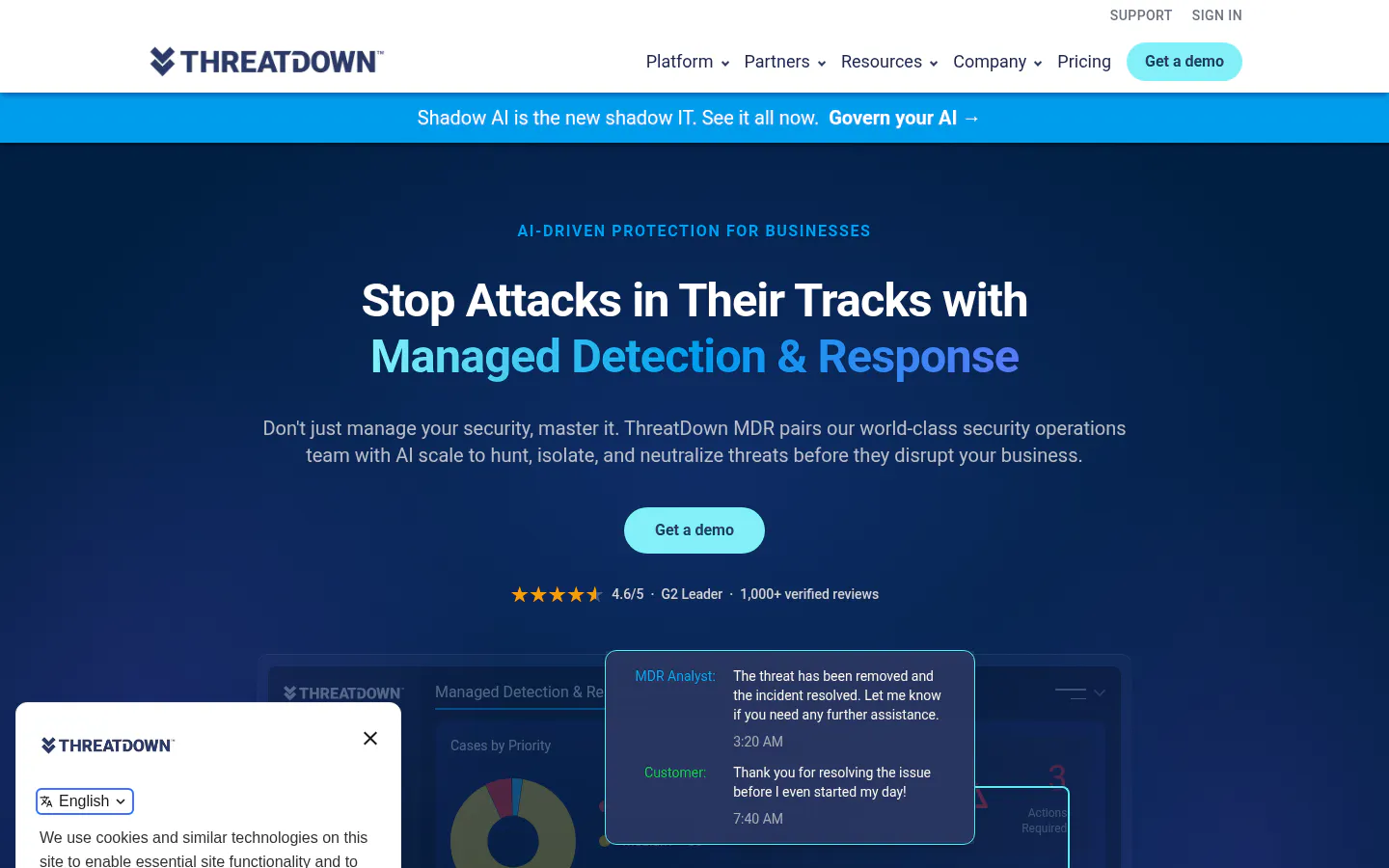
Malwarebytes rebuilt its business line as ThreatDown. The result is one of the simpler consoles here. Deliberately so.
Key Strengths
- 899 Gartner Peer Insights reviews, averaging 4.6
- Ransomware rollback sits in the base Core tier, not behind an upgrade
- The Elite MDR tier adds 24/7 analyst coverage inside the same cart, without a platform change
- Patch management and drive encryption are bundled into Advanced EDR rather than sold separately
The honest limitation. ThreatDown appears in neither 2025 independent test and has no confirmed 2026 Gartner Magic Quadrant placement. Pricing shows in a cart rather than a published rate card, which is better than a pure quote process but still not a list price you can budget against.
Best For: Companies of 20 to 150 users, particularly ones recovering from a ransomware incident who want rollback without a large deployment project.
Not Ideal For: Regulated buyers who need third-party validation, and companies that already run a full endpoint suite.
Why It Ranks #8: Practical, easy to run, and honestly priced for what it is. The independent evidence just isn't there.
9. Microsoft Defender for Business. Cheapest Per Seat, With Two Hard Walls
Score: 5.87/10
At $3.00 per user per month, or free inside Microsoft 365 Business Premium, this is the cheapest EDR on the list. Plenty of companies are already paying for it and don't know it's running.
Key Strengths
- Named a Leader in the 2026 Gartner Magic Quadrant for Endpoint Protection for the seventh consecutive time
- Included in Microsoft 365 Business Premium at no incremental cost
- Windows, macOS, iOS, Android, and Linux coverage with up to five devices per user
- Signal from endpoints, identity, email, and cloud apps lands in one place, which no standalone endpoint vendor can match
The two walls. Defender for Business is capped at 300 users. Cross it and the recommended path is Defender for Endpoint Plan 2 at $5.20 per user per month, which is a 73% jump in per-seat cost at exactly the point a company can least afford surprises.
The second wall is worse for a small team. Microsoft's managed service, Defender Experts MDR, isn't available on Defender for Business. It requires Defender for Endpoint P2 or another eligible P2 product, plus Microsoft Entra ID P1 for eligibility and Entra ID P2 for identity coverage, and Plan 2 also requires Microsoft Sentinel with 90 days of log retention and user behavior analytics switched on. A 200-person company that buys Defender for Business and later needs human response is looking at a licensing project, not a checkbox.
Microsoft also declined to participate in MITRE ATT&CK Enterprise 2025 and didn't certify in the AV-Comparatives EPR Test 2025. Its 4.4 Gartner Peer Insights rating across 1,942 reviews for Defender for Endpoint is the lowest here, and that rating is for the parent platform rather than the capped SMB packaging.
Best For: Companies under 300 users already on Business Premium, especially those pairing it with an MSP or a third-party SOC that handles response.
Not Ideal For: Companies approaching 300 users, or anyone counting on Microsoft's own managed service as the upgrade path.
Why It Ranks #9: Strong engine, lowest price here, Leaders quadrant. It finishes last because this model scores fit for 20 to 500 users, and Defender for Business has a user cap and a managed-response dead end sitting inside that exact range.
How to Choose EDR Software for a Small or Mid-Size Business
Start with one question. Who works the alert at 2 a.m.? If the answer is nobody, buy managed response first and pick the detection engine second.
That single decision splits this list cleanly. Companies with no security staff should look at Huntress, ESET PROTECT MDR, Sophos MDR, or ThreatDown Elite, because in all four the human coverage is a license change rather than a separate procurement. Companies with a real security analyst should look at CrowdStrike Falcon or SentinelOne, where the console depth pays off instead of drowning someone.
Budget signals. Under 100 endpoints, Falcon Go at $59.99 per device per year and Bitdefender's 5-device minimum are the two strongest value plays. Between 100 and 500 endpoints, published pricing gets scarce and the quote spread widens, so get two quotes on the same endpoint count and the same term before comparing anything. Companies already paying for Microsoft 365 Business Premium are paying for Defender for Business whether they use it or not, which makes it the right baseline even if something else eventually sits on top.
Size signals matter more than most buyers expect. Check the ceiling before you check the price. Falcon Go stops at 100 devices. Defender for Business stops at 300 users. SentinelOne publishes pricing only through 100 workstations. If the company plans to be meaningfully bigger in three years, price the tier it will land in, not the one it fits today.
Compliance changes the math again. An auditor asking how you validated your endpoint control is easier to answer with a product that appeared in the 2025 MITRE evaluation or certified with AV-Comparatives. That narrows the field to ESET, CrowdStrike, Sophos, Bitdefender, and WatchGuard. That's 5 of the 9. The others aren't weaker. Their paper trail is just shorter.
Coverage beats capability. Every time. According to the Microsoft Digital Defense Report 2025, 80% to 90% of successful ransomware attacks in the prior year started on a device that wasn't managed. The best EDR on the market does nothing on the server somebody deferred during rollout, or the contractor laptop nobody enrolled. Before comparing detection rates, count the endpoints that will actually get an agent, and name the ones that won't in writing.
Ask each vendor which independent evaluation they took part in most recently and what the result was. The answer, including a refusal to answer, tells you more than any datasheet.
Where This Leaves the Decision
ESET PROTECT takes the top spot because it's the only SMB-priced product here that submitted to both independent evaluations in 2025 and cleared them, while keeping MDR inside the same license family. CrowdStrike Falcon is the better engine and the better console, and it's the right answer for any company with a security analyst and fewer than 100 devices, or the budget for Enterprise across a larger fleet.
If nobody at the company is going to work the alerts, Huntress at $8.99 per endpoint with a bundled SOC solves the real problem better than a higher-scoring product that ships alerts to an empty inbox. And if the company is already on Business Premium, turn Defender for Business on today and treat it as a baseline while the longer decision plays out.
A harder question sits underneath all of this. Should the company be running any of it in-house? Tooling and staffing are separate problems, and the difference between EDR, MDR, and XDR is mostly a question of who does the work. For companies that decide the answer is a partner rather than a product, the comparison of MDR providers for small and mid-size businesses covers that side of the decision, and managed detection and response is where the endpoint agent stops being a tool and starts being a service.
What Buyers Ask Before Choosing EDR
Is EDR software actually different from antivirus, or is that just marketing?
Different, genuinely. Antivirus compares files against known signatures and blocks matches. EDR records what processes actually do on the endpoint, flags behavior that looks like an attack in progress, and lets someone reconstruct what happened afterward. The practical difference shows up during a ransomware attack, where the malicious step is often a legitimate tool being used the wrong way, which a signature scanner has no reason to flag.
What should a 200-person company expect to pay for EDR in 2026?
Between roughly $36 per user per year at the bottom and $185 per device per year at the top, based on published list prices. Microsoft Defender for Business sits at the bottom at $3.00 per user per month. Huntress runs $8.99 per endpoint per month with a SOC included. CrowdStrike Falcon Pro is $99.99 per device per year and Falcon Enterprise is $184.99. And 4 of the 9 products here publish no list price at all, which is worth factoring into how long procurement takes.
Does an SMB really need EDR, or is that an enterprise problem?
Small and mid-size businesses are the primary target now, not the exception. The Verizon 2026 Data Breach Investigations Report found ransomware in 48% of breaches, up from 44%, and 96% of ransomware victims were small and medium businesses. The median ransom payout fell to $140,000 and 69% of victims didn't pay, which suggests recovery capability is improving. Recovery still costs more than prevention.
Why did MITRE participation drop, and should a buyer care?
11 vendors took part in the 2025 Enterprise round, down from close to 30 in earlier cycles. Microsoft announced in June 2025 that it wouldn't participate, and SentinelOne and Palo Alto Networks both pulled out in September. Each cited a resource-allocation reason. Whether that's the whole story is unknowable from outside. What is knowable is that a buyer comparing products in 2026 has fewer independent data points than a buyer did three years ago, and the vendors who stayed in are the ones whose results you can still check.
Can one product cover Windows, Mac, Linux, and phones?
Not evenly. CrowdStrike, SentinelOne, and Microsoft cover the widest surface including mobile. ESET, Sophos, and Bitdefender cover Windows, macOS, Linux, and servers well, with mobile handled through separate modules. Huntress covers Windows, macOS, and Linux, with the Linux agent now generally available, but has no mobile agent. Inventory the fleet before shortlisting, because a product that covers 92% of endpoints and leaves the rest bare is a coverage decision disguised as a product decision.
How long does an EDR rollout actually take?
Two to six weeks for most companies under 500 endpoints, and the agent deployment is rarely the slow part. Servers, machines running line-of-business software with vendor-mandated exclusions, and remote or contractor devices are where rollouts stall. Budget the time for those specifically, and get a written list of every endpoint that won't receive an agent and why.