What Is EDR (Endpoint Detection and Response)?
EDR, or endpoint detection and response, is security software that continuously watches your devices, laptops, servers, phones, spots behavior that looks like an attack, and can shut it down before it spreads. It catches what traditional antivirus misses. Antivirus checks files against a list of known bad ones. EDR watches what's actually happening on the device and flags the pattern, even when the threat has never been seen before.
Table of Contents
EDR is a smoke detector for your endpoints. It's very good at going off. But a detector only saves the building if someone hears it and grabs the extinguisher. Most companies buy EDR, watch the dashboard glow green, and assume they're covered. They're not. The tool isn't the protection. The response is. Good managed cybersecurity treats the software as the easy 20% of the job. The hard 80% is the human loop that acts on what the software finds, fast, at 2 a.m. on a Saturday when your team is asleep and the attacker is counting on exactly that.
What Does EDR Actually Do?
EDR does four things without stopping. It records everything happening on a device, analyzes that activity for attack behavior, alerts a human when something looks wrong, and can act on its own to contain the threat.
Think of it as a flight recorder bolted to every laptop and server you own. It logs process launches, file changes, registry edits, network connections, and login activity, then streams all of it to one place where a detection engine hunts for the patterns that add up to an attack. When the pattern matches, it doesn't just write a log line. It can kill the process, quarantine the machine off the network, and hand your team a full timeline of what happened.
Break it down and you get four jobs.
- Record. Continuous telemetry from the endpoint, all the time, not just during a scheduled scan.
- Detect through behavior, not signatures. A finance laptop suddenly running PowerShell to encrypt files at 2 a.m. has no known virus signature. The behavior still screams ransomware.
- Alert, with context. Not a cryptic popup. A ranked event that tells an analyst what fired and why it matters.
- Respond. Isolate the device, terminate the process, roll back the change. Automatically when the rule is clear, or on a human call when it isn't.
That fourth job separates EDR from tools that only tell you that you were breached after the fact. Detection without response is just a very detailed incident report. If you want to see how endpoint data feeds the bigger monitoring picture, that's where SIEM fits.
What's the Real Difference Between EDR and Antivirus?
Antivirus blocks threats it already recognizes. EDR catches threats nobody has seen yet by watching behavior instead of matching signatures. Antivirus is the lock on the door. EDR is the camera and the guard who notices someone climbing through the window.
Here's where it gets confusing for buyers. Four terms float around, and vendors blur them on purpose. Antivirus, EPP, EDR, and MDR aren't the same thing. Knowing which is which saves you from paying twice for the same coverage or, worse, thinking you're protected when you're not.
Here's the plain-terms version of the alphabet soup.
- Antivirus (AV) matches files against known threats, catches known malware, and runs on its own with nobody watching.
- EPP, the endpoint protection platform, wraps next-gen antivirus together with firewall and device controls to stop known and some unknown threats before they execute.
- EDR records and detects behavior to catch the unknown and fileless threats that slipped past prevention, but it only protects you if your team, or someone, is actually watching it.
- MDR, managed detection and response, is EDR plus a 24/7 human security team, so someone actually acts on what the tool finds.
The clean way to read it. AV and EPP try to stop the attack before it runs. EDR assumes something will get through and gives you the tools to catch it in the act. Security analysts put it plainly, prevention and detection are separate jobs, and modern attacks demand both. You don't replace antivirus with EDR. You run EDR on top of it.
How Does EDR Work Under the Hood?
Four moving parts. An agent, a data pipeline, a detection engine, and a response layer.
The agent is a lightweight piece of software installed on each endpoint. It's the sensor. It watches process activity, file access, network traffic, and user actions, then ships that telemetry to a central platform, cloud or on-premises. The detection engine, usually a mix of machine learning and behavioral rules, chews through billions of events looking for the sequences that mean trouble. Then the response layer acts.
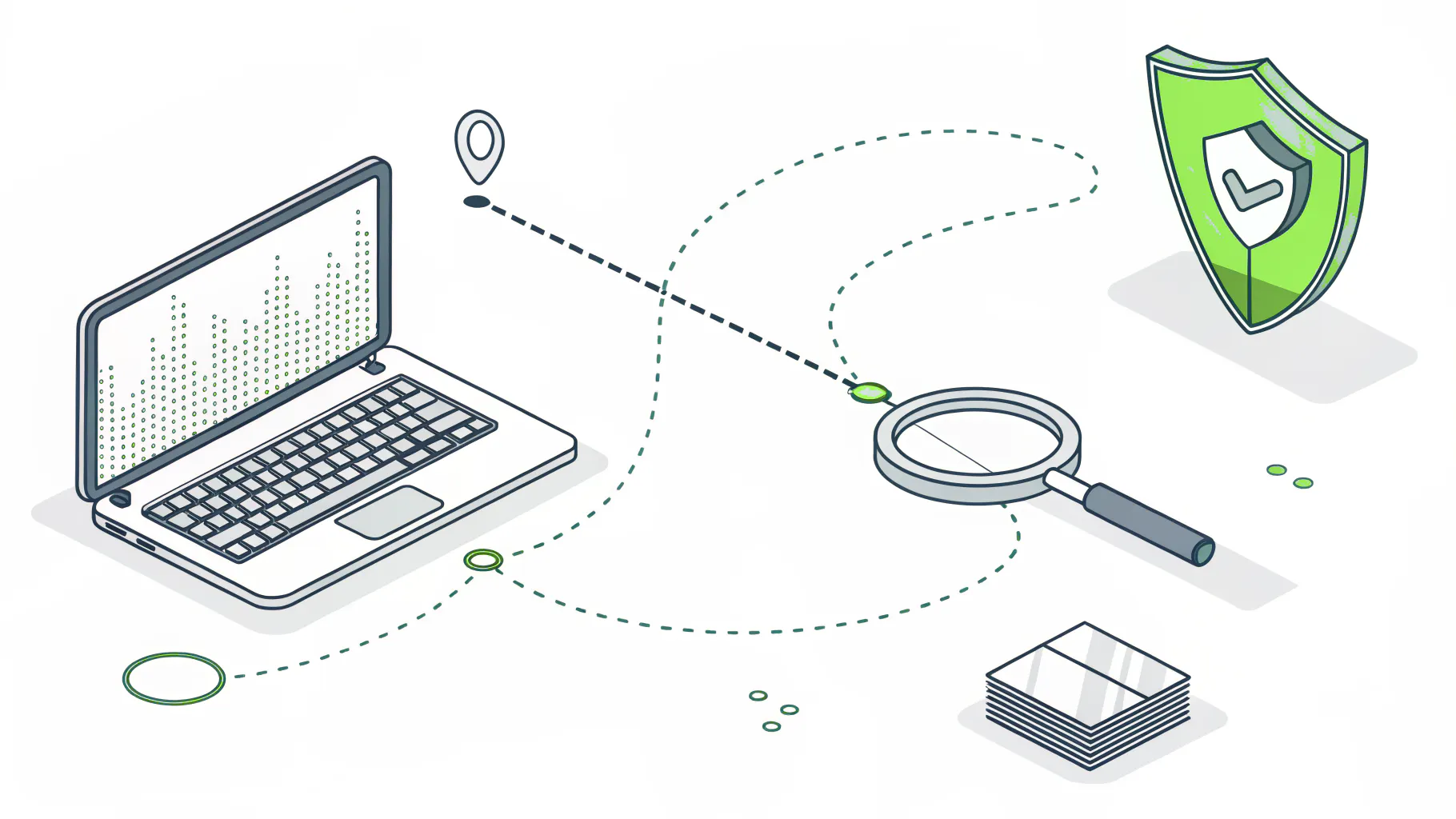
Picture a real one. A sales rep opens an invoice attachment. Looks normal. Behind the scenes the file spawns a hidden PowerShell command that starts reaching out to an unfamiliar server and touching hundreds of files in seconds. Antivirus sees a Word document and a Windows process it already trusts, so it stays quiet. EDR sees the behavior instead, a trusted app doing something it has never done, connecting somewhere it shouldn't, moving faster than any human could. It flags the event, isolates the laptop, and stops the spread while your team still has coffee in hand. That's the whole point of the category.
Why EDR Became a Baseline in 2026, Not a Nice-to-Have
Attacks got faster than humans can react unaided. When an intruder can move from one machine to your whole network in under 30 minutes, you need detection and response measured in seconds, not the hours a person needs just to notice.
The numbers are ugly. CrowdStrike's 2026 report clocked the average breakout time at 29 minutes, down from 48 the year before. The fastest they recorded was 27 seconds. Breakout time is how long it takes an attacker to jump from the first machine they compromise to the rest of your environment. Half an hour. That's the window you're defending.
It gets worse. Mandiant found that the handoff from the person who breaks in to the ransomware crew who does the damage has collapsed to 22 seconds. In 2022 that same handoff took more than eight hours. The attack chain is automated end to end now. Your defense can't be manual and expect to keep pace.
So the market moved. EDR spending hit $6.33 billion in 2026 and keeps climbing, pushed partly by federal mandates and partly by the fact that ransomware crews now operate like real businesses. Then there's the money lever nobody warns you about. Your cyber insurer. EDR has quietly become a standard requirement for coverage, and carriers increasingly deny claims when a required control wasn't in place. No EDR, no payout. That's a board-level problem, not an IT footnote.
The Part Vendors Skip: a Tool Isn't Protection
EDR only works if someone acts on what it finds. Left unwatched, it generates alerts nobody reads and isolates almost nothing. The software is maybe 20% of real protection. The other 80% is the human response loop.
Let me disclose my bias up front. Consilien runs managed security, so we make money when companies decide they can't watch this alone. Read the next part critically. The math still holds.
Here's what the vendor pages won't tell you. EDR is noisy. Left unmanaged, it fires constantly, and plenty of those alerts are false alarms, a developer running an odd script, an admin tool that looks sketchy but isn't. Security teams burn a large share of their week just deciding which alerts are real. When everything pings, people tune it out. Alerts pile up unread. In overloaded teams, roughly a quarter to a third of alerts go completely uninvestigated.
Now put that in a 40-person company with no security staff and one IT generalist who's also fixing the printer. The EDR agent does its job at 2 a.m. Saturday. It flags the ransomware. It even isolates one machine. Nobody's watching. The attacker pivots to a device the tool didn't auto-isolate, and by Monday you're on the phone negotiating a ransom. The tool worked. The protection failed. Those are two different outcomes, and the gap between them is where most breaches actually live.
This is the honest reason MDR exists. Not because the tool is bad. Because a tool without a watcher is a receipt, not a defense.
EDR, MDR, or XDR: Which One Do You Actually Need?
Run EDR yourself if you have a real security team watching it around the clock. Pick MDR if you don't. Consider XDR when you need one view across endpoints, email, cloud, and identity, not just devices.
Short version, by situation.
- You have a 24/7 in-house SOC. EDR alone can work, because you already have the humans to run it.
- Lean IT, or no dedicated security staff at all. Managed detection and response is the honest answer, the same detection with an outside team that actually watches and responds while you sleep.
- You've outgrown endpoints as the only battleground. XDR pulls email, cloud, and identity signals into one place so an attack that hops between them doesn't slip through the cracks between tools.
Most companies in the 20 to 500 user range don't have a night-shift analyst, and hiring one costs more than the entire EDR license. That's not a knock. It's just the math. If you want the full breakdown of where each option fits, we wrote a whole piece on EDR vs MDR vs XDR. For most mid-market teams the real question isn't which tool. It's who's going to watch it.
What Does EDR Cost?
EDR licenses run about $3 to $15 per endpoint per month in 2026. Managed EDR with a human team runs closer to $10 to $15. But the license is the cheap part. Watching it is where the real cost hides.
Sticker price first. Standalone EDR sits in the $3 to $15 per endpoint per month range, with platform bundles running $20 to $45 when EDR ships packaged with other tools. For a 60-person shop that's a few hundred dollars a month. Feels manageable.
Then the real bill arrives. Someone has to tune the rules, triage the alerts, chase the false positives, and respond at 3 a.m. when it counts. Do that in-house and you're staffing a security analyst, or a rotation of them for around-the-clock coverage, at six figures each. That's the number vendors leave off the quote. The license is a rounding error next to the labor. This is exactly why so many companies our size hand the watching to an outside team. You aren't really buying software. You're buying the fact that someone competent is awake when the alert fires.
The Bottom Line on EDR
EDR is real progress. It catches what antivirus can't, it moves fast, and in 2026 it's close to non-negotiable, your insurer may already require it in writing. If you take three things from this, take these. Antivirus blocks the known, EDR catches the unknown, and you want both. Attackers move in minutes now, so detection without fast response loses. And the tool is only as strong as the person or team watching it.
That last one is the whole game. Buying EDR and walking away is like wiring a fire alarm and then leaving town. If you're weighing endpoint security for a 20 to 500 user company and you're not sure you have the staff to run it, that's the conversation to have first. Speak to a cybersecurity expert about what watching it actually takes, before you sign for a tool nobody has time to monitor.