Identity and Access Management for Electronics Manufacturers

Role-based access control, MFA deployment, and identity governance for semiconductor and electronics manufacturers handling CUI, ITAR data, and proprietary IP.

Identity and access management (IAM) for electronics manufacturers is the structured control of who can access which systems, data, and physical areas across IT and OT environments. Consilien designs and manages IAM programs for PCB fabricators, semiconductor suppliers, EMS companies, and defense electronics manufacturers, covering MFA deployment, role-based access control, privileged access management, and compliance documentation for NIST 800-171, CMMC, ITAR, and ISO 27001.

Who Actually Has Access to Your Design Files Right Now?

Not who should. Who does.

That's the question most electronics manufacturers can't answer with confidence. Somewhere between the ERP system, the shared engineering workstation, the contractor VPN that was supposed to be temporary 14 months ago, and the MES terminal that three shifts use with the same login, the picture gets blurry fast.

And blurry is exactly what attackers count on. Palo Alto's Unit 42 Global Incident Response Report for 2026 found that identity weaknesses played a material role in nearly 90% of incident response investigations. Identity-based techniques, including phishing, stolen credentials, brute force, and insider activity, were the initial access method in 65% of cases.

Manufacturing isn't immune to those numbers. It's worse. IBM's 2026 X-Force data showed valid account abuse accounted for 16% of manufacturing breaches. Not a zero-day. Not a sophisticated exploit. Someone using real credentials they shouldn't have had.

For an electronics manufacturer, that's not an abstract risk. Your Gerber files, your BOM data, your test procedures, your process recipes, these have direct competitive and contractual value. One mismanaged account, one orphaned contractor login, one shared workstation with no session timeout, and the exposure is real.

That's the problem identity and access management is built to solve.
Line illustration of a closed file folder secured with a padlock, three keys floating beside it, and a printed circuit board

Why Standard IAM Doesn't Work on a Manufacturing Floor

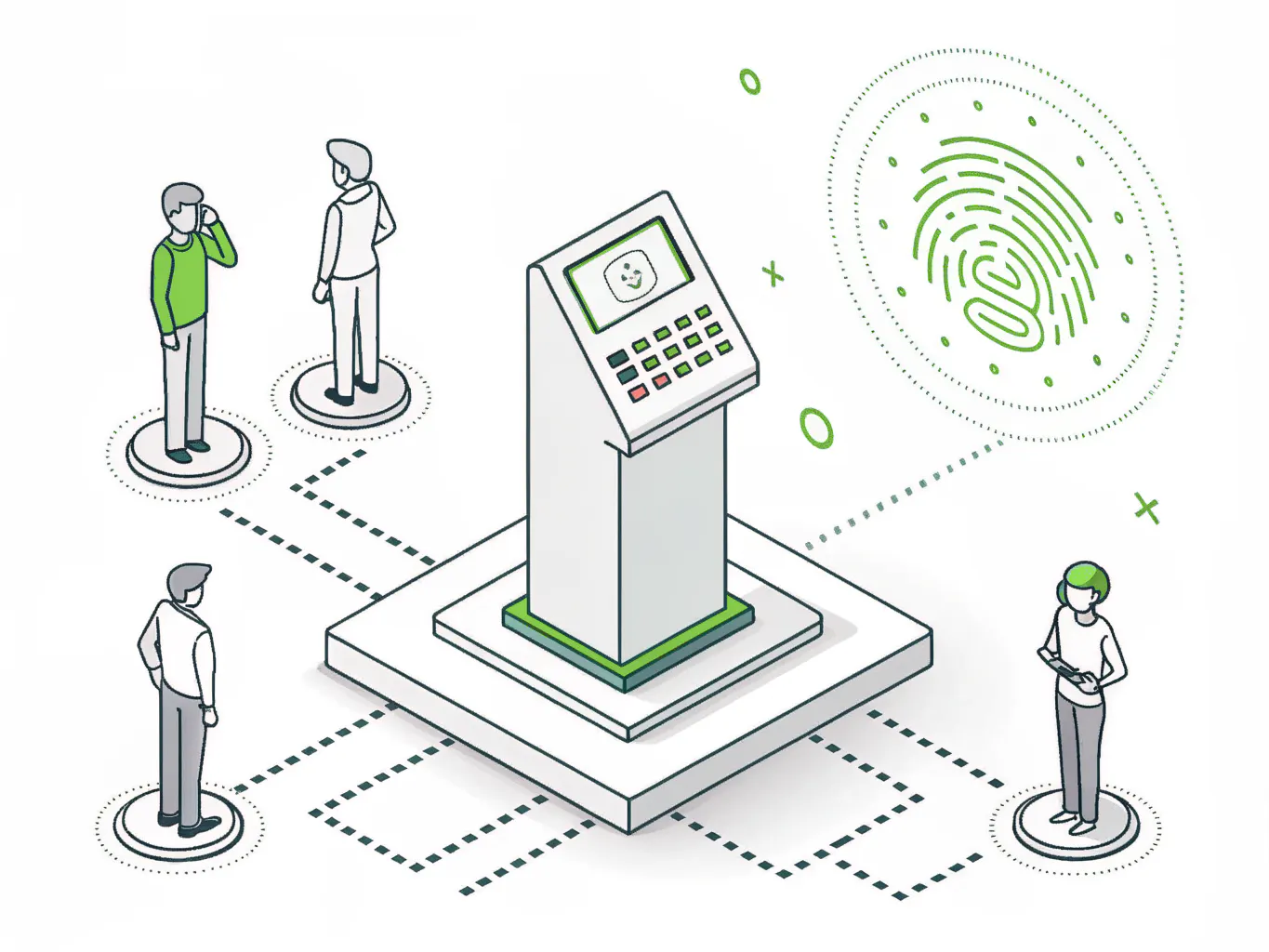
There's a reason identity management in electronics manufacturing is harder than in a typical office environment. The operational reality breaks assumptions that IAM tools were built on.

Line illustration of one industrial control terminal shared by several worker figures with a fingerprint symbol above it

What a Real IAM Program Covers in Electronics Manufacturing

Identity and access management is the set of policies, processes, and technologies that ensure every person, every device, and every service account in your environment has exactly the access they need and nothing more, with every action attributable to a specific identity and logged for audit.

That definition covers a lot of ground. Here's what it looks like in practice for an electronics manufacturer.

Identity governance and lifecycle management

Every employee, contractor, and vendor gets provisioned with the minimum access required for their role. When someone changes roles, their access changes. When someone leaves, their access gets revoked the same day. Not next week. Not when IT gets around to it. Same day. Automated where possible, with manual verification for high-risk accounts.

Role-based access control (RBAC)

Access permissions are tied to roles, not individuals. A production operator role gets MES access and shop floor systems. An engineer role gets CAD and PLM access. A finance role gets ERP. Nobody gets everything. And the role definitions are reviewed quarterly, not once at setup and forgotten.

Multi-factor authentication deployed for manufacturing reality

MFA that works on a manufacturing floor looks different from MFA in an office. Badge-based authentication, proximity cards, biometrics, FIDO2 hardware keys. Not phone-based authenticator apps on a production floor where phones aren't allowed. Not SMS codes in a clean room. Microsoft is retiring SMS and voice MFA in Entra ID by February 2027, which means every manufacturer using Microsoft 365 needs a non-SMS MFA strategy before that date hits. The alternative can't be suppressing MFA entirely for shop floor workstations. That fails every compliance framework that requires individual-level access attribution.

Privileged access management (PAM)

Admin accounts, service accounts, and any credential with elevated permissions get additional controls. Just-in-time access instead of standing privileges. Session recording for high-risk accounts. Separate credentials for admin work versus daily use. The CrowdStrike 2025 Global Threat Report found 75% of attacks to gain initial access were malware-free, relying instead on credential theft and identity-based techniques. Privileged accounts are the primary target.

Third-party and vendor access management

Equipment vendors, system integrators, remote support technicians, auditors. All of them need some level of access, and all of them represent risk. Vendor accounts should be scoped to the minimum required, time-limited, logged, and revoked on completion. For ITAR-controlled environments, vendor nationality verification is mandatory before granting any access to controlled systems or data.

The Compliance Angle Nobody Can Ignore

If you sell into defense supply chains, federal contractors, or regulated industries, IAM isn't a security best practice. It's a documented requirement with specific controls you'll be assessed against.

NIST SP 800-171 Access Control (Family 3.1)

Contains 22 requirements covering account authorization, least privilege, remote access controls, and individual-level audit logging. Control 3.1.1 requires limiting system access to authorized users, processes acting on behalf of authorized users, and devices. Control 3.1.2 requires limiting system access to the types of transactions and functions that authorized users are permitted to execute.

CMMC Level 2

Maps directly to these NIST controls. Assessors look for evidence that access controls are actually implemented, not just documented. Shared accounts on CUI systems? That's a finding. MFA only on some systems that touch controlled data? That's a finding. No automated account deprovisioning? Finding.

ITAR

Adds citizenship-based restrictions on top of everything else. Only U.S. persons can access ITAR-controlled technical data. Your IAM system needs to enforce this technically, not rely on policy documents that say "don't share this with non-U.S. persons." Export Compliance Training Institute data puts ITAR civil penalties at $1,271,078 per violation. The financial exposure from a single mismanaged account dwarfs the cost of building the controls correctly.

ISO 27001 Annex A

Includes controls around access management, identity verification, and privileged access that align closely with NIST requirements. For electronics manufacturers pursuing ISO 27001, IAM is one of the most audit-intensive control areas.

Consilien doesn't promise certification or guarantee assessment outcomes. We support compliance readiness, build the technical controls, produce the documentation, and align with your external assessors. The distinction matters.

How Consilien Builds IAM Programs for Electronics Manufacturers

1

Access Audit and Identity Inventory

We start by documenting every user, service account, and vendor credential across your IT and OT environment. Who has access to what? What level of privilege? When was it last reviewed? Where are the shared accounts? This baseline typically surfaces 20-40% more active accounts than leadership expects, because orphaned credentials and standing vendor access accumulate invisibly.

2

Role Design and Access Architecture

We define roles based on actual job functions, map permissions to roles, and design the access architecture around least privilege. For ITAR environments, citizenship-based access boundaries get built into the role structure. The architecture accounts for shared workstation workflows, shift-based access patterns, and OT system access requirements specific to your manufacturing environment.

3

MFA and Authentication Deployment

We deploy MFA across the full environment with authentication methods matched to each context. Badge or proximity for shared workstations. FIDO2 keys for engineers and admins. Conditional access policies for remote access. Everything tied to individual identity, including on shared terminals. We don't deploy a single MFA method across the whole company and call it done.

4

Privileged Access Controls and Monitoring

Admin accounts get just-in-time elevation, separate credentials, and session logging. Service accounts get inventoried, scoped, and reviewed. Standing admin access gets replaced with request-based temporary elevation wherever possible.

5

Lifecycle Automation and Ongoing Governance

Provisioning, role changes, and deprovisioning get automated through your directory and HR system. Quarterly access reviews catch privilege creep. Annual role audits confirm that role definitions still match actual job functions. The ongoing governance feeds into your vCISO program and compliance documentation.

Numbers That Ground the Conversation

Metric Data Point Source
Identity's role in breachesMaterial factor in ~90% of investigationsUnit 42 Global IR Report, 2026
Initial access via identity techniques65% of incident response casesUnit 42 Global IR Report, 2026
Compromised credentials as breach vector22% of confirmed breaches, leading vector 2nd year runningVerizon DBIR, 2025
Cost of credential-based breach$4.67M averageIBM Cost of a Data Breach, 2025
Time to identify credential breach246-day mean time to identify and containIBM Cost of a Data Breach, 2025
MFA effectivenessBlocks 99.9% of automated attacksMicrosoft
ITAR civil penalty$1,271,078 per violationExport Compliance Training Institute, 2025

Access Is the Perimeter Now

Firewalls still matter. Network segmentation still matters. But the data is clear. Attackers are getting in through credentials, not through network boundaries. And in electronics manufacturing, where shared workstations, contractor access, and ITAR restrictions create a uniquely complex identity landscape, the gap between "we have logins" and "we have identity governance" is where breaches happen.

If your electronics manufacturing operation handles CUI, ITAR data, or IP worth protecting, and you can't answer definitively who has access to what right now, that's the starting point.

Our Clients' Success

Common Questions About IAM for Electronics Manufacturers

How do we handle MFA on shared manufacturing workstations where phones aren't allowed?


Badge-tap and proximity-based authentication work in environments where phone-based MFA fails. FIDO2 hardware security keys are another option that doesn't require a personal device. The key requirement is individual attribution, meaning every login session ties to a specific person even on shared equipment. We design the authentication flow around your specific production floor constraints, whether that's clean room protocols, glove requirements, or no-phone policies.

Schedule an access audit and we'll map your current identity posture across IT and OT before the first meeting ends.

Explore managed IT for semiconductor and electronics manufacturing or see how the co-managed model works alongside an in-house team.