What Is Penetration Testing? A Beginner's Guide
Penetration testing is an authorized, simulated cyberattack. Security experts try to break into your systems the way a real attacker would, then hand you a report of exactly what they got into and how to close it.
Table of Contents
A penetration test is a controlled, scoped attack run by people you hired. It shows how far a real intruder could get and what it would cost you. The catch most guides skip is simple. Finding the holes is the easy part. Fixing them is where companies quietly fail, and an unfixed finding protects nobody. This guide covers what a pentest is, the types, how one runs, and how to tell a test that reduces risk from one that just produces a PDF.
You're evaluating penetration testing services and every article reads the same. Authorized attack. Ethical hacking. Find vulnerabilities before the bad guys do. All true, and all missing the point.
Here's the uncomfortable part. In 2026, 84% of penetration tests found at least one exploitable vulnerability, and testers breached the internal network in 93% of the companies they tested. So finding a way in isn't the achievement. Everyone has a way in. The question a pentest actually answers is narrower and more useful. If someone does get inside, and the numbers say they will, what can they actually reach from there, how fast can they get to the data that would hurt you, and did you close the path before a real attacker tried the same door?
This is a beginner's guide, so we'll start with the plain definition and the types and the process. But we'll spend most of the time on the parts that actually decide whether the money was worth spending, the parts that get glossed over everywhere else because they make the service look less like a magic fix and more like the ongoing work it really is.
So What Exactly Is Penetration Testing?
A penetration test is an authorized, scoped attempt to break into your own systems using the same tools, techniques, and patience a real criminal would bring, run by people you hired and bounded by a contract that spells out exactly how far they're allowed to go. The goal is not to cause damage. The goal is to prove what an attacker could actually do, then write it down so you can fix it.
People call it ethical hacking, and that name fits. Same skills as the other side. Different rules. A pentester works under a signed contract that spells out what they're allowed to touch, when, and how far they can push. NIST defines it as a test that mimics real-world attacks to find ways to get around a system's security features. Authorized is the word that separates a pentest from a crime.
Think of it like hiring someone to break into your own building. They pick the locks, tailgate through the side door, and see if the server room was left open. Then they hand you a list of every gap they found, ranked by how much damage it could actually do, along with the specific steps your team would take to close each one before a real burglar ever shows up. Nothing gets stolen. You just learn what a burglar would have learned, on your terms, before one shows up uninvited.
Why bother staging a fake attack instead of running a scanner? Because a scanner tells you a window is unlocked. A pentester climbs through that unlocked window, walks down the hall, jimmies the one flimsy internal door nobody thought mattered, and shows you that the forgotten window on the ground floor led, three quiet steps later, straight into your customer database. That difference is the whole reason the service exists.
Penetration Testing vs. Vulnerability Scanning, Does the Gap Matter?
Yes, and the confusion is expensive. A vulnerability scan finds weaknesses automatically and lists them. A penetration test takes those weaknesses and tries to exploit them, chaining small flaws into a real breach. One is a smoke detector. The other is someone actually setting a small, controlled fire to see what burns.

Most beginners think they're buying a pentest when they've really bought a scan with a nicer cover page. The tools are different. The price is very different. And the results answer different questions. A scan is broad, fast, and cheap. A test is narrow, slow, and mostly done by hand, because a human being has to sit there and think like an attacker, chaining one small oversight into the next until it turns into something real, not just match your systems against a database of already-known bugs.
The split comes down to a few things.
- What it does. A scan finds and lists known weaknesses. A pentest exploits them to prove the real-world impact.
- Who runs it. A scan is an automated tool with minimal human input. A pentest is a skilled human working mostly by hand.
- Depth and cost. A scan is wide, shallow, and runs from hundreds to low thousands. A pentest is narrow, deep, and runs $5,000 to $100,000 or more.
- Cadence. You scan weekly or monthly for hygiene. You test once or twice a year for proof.
You need both, and they aren't rivals. Scan often to catch the obvious stuff cheaply. Test periodically to find the chained, human-level attacks a scanner will never see. If you want the full breakdown, we wrote a separate piece on how scanning and testing differ and when to use each. For a beginner, the rule of thumb is short. Scan for hygiene. Test for proof. As TechTarget puts it, a scan is a higher-level view while a pen test mimics a real attack and its consequences.
What Are the Main Types of Penetration Tests?
There are two questions hiding inside what type of test do I need. One is how much the tester knows going in. The other is what they're attacking. Beginners mix these up constantly, so keep them separate in your head.
The first axis is knowledge level. How much information you hand the tester before they start.
- Black box. The tester gets nothing but your company name. Closest to a real outside attacker, but slower, because they burn time on recon a real criminal would also burn.
- Gray box means partial access. Maybe a low-level login or a network diagram. This is the sweet spot for most first-timers. It points the budget straight at real exploitation instead of reconnaissance.
- White box. Full access. Source code, architecture docs, admin credentials. Deepest coverage, best for finding everything, least like a real surprise attack.
The second axis is the target. What are we actually testing? This is where the scope conversation lives, and it drives the price more than anything else.
- Network testing, external for your internet-facing systems or internal for what a person on the inside could reach.
- Web application and API testing, which follows the OWASP testing methodology for flaws that live in login flows, shopping carts, and portals.
- Cloud testing of your Azure, AWS, or Microsoft 365 setup, where a single wrong permission exposes far more than a bad password ever could.
- Social engineering, phishing your staff and sometimes calling them, because the person is usually the softest target in the building.
- Physical testing, where someone tries to walk in and plug into your network. Rare for small companies, standard for anyone holding regulated data.
You don't order all of these. You pick the ones that match where your risk actually lives. A SaaS company living in Azure and Microsoft 365 leads with web application and cloud testing, while a manufacturer running a physical plant and a stack of older on-site systems thinks harder about network and physical access, because the thing that would hurt each of them most sits in a completely different place. The right scope is the one that maps to what would actually hurt you if it fell.
How Does a Penetration Test Actually Work?
A real engagement follows a repeatable arc. The industry standard version is the Penetration Testing Execution Standard, which lays out seven phases. Stripped of the jargon, here's what happens from your side of the table.
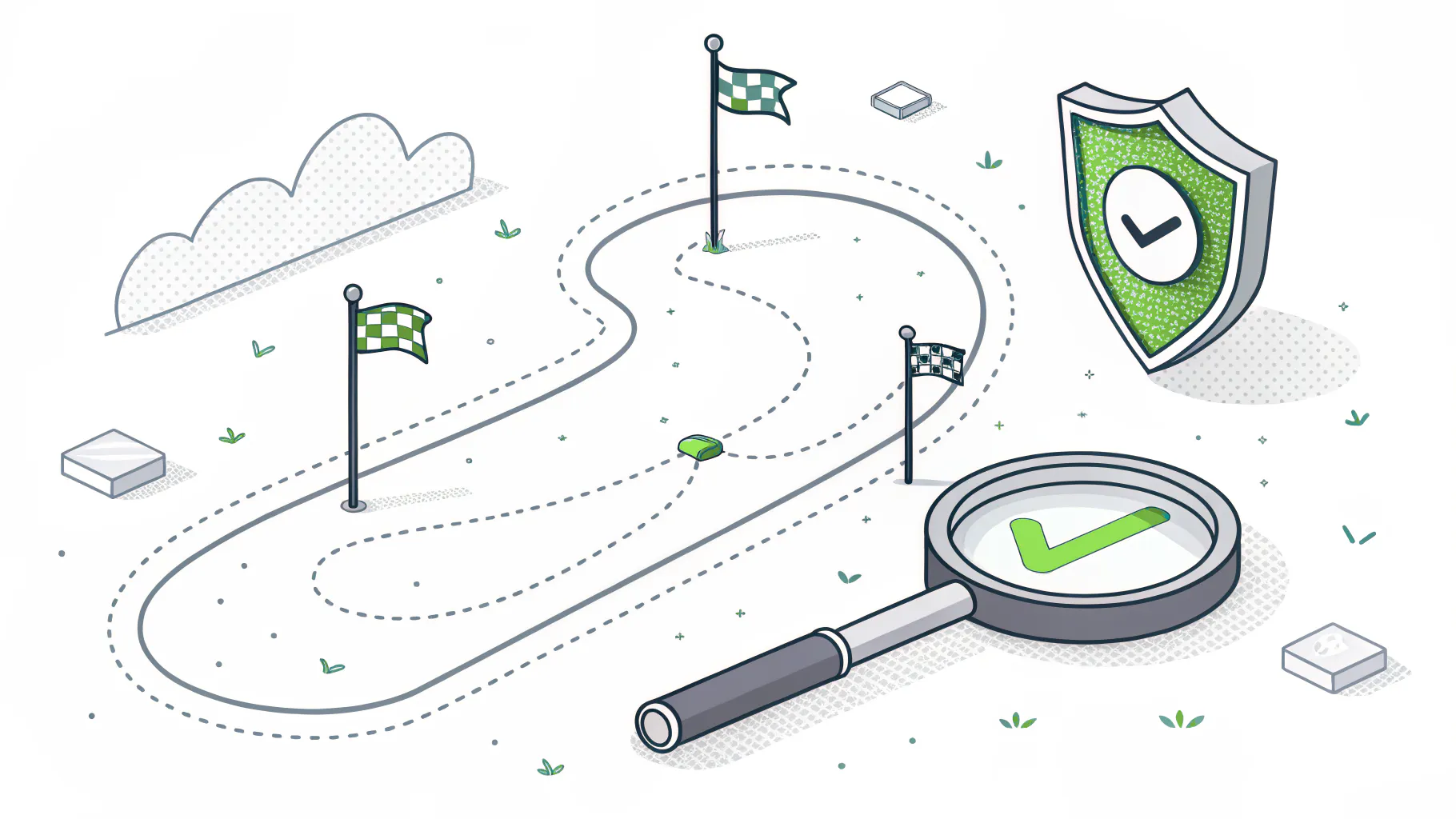
- Scoping and rules of engagement. You and the tester agree on what's in bounds, what's off limits, and who to call if something breaks. This is a contract, not a formality. Skip it and you've authorized nothing.
- Reconnaissance. The tester maps your attack surface, the way an attacker would, before touching anything. Public records, exposed services, leaked credentials, employee names.
- Finding the weak points. Now they hunt for exploitable flaws across the scoped targets. Some found by tools. The interesting ones found by a human noticing something a tool ignored.
- Exploitation. The part everyone pictures. They actually break in, get a foothold, and prove the flaw is real rather than theoretical.
- Seeing how far it goes. Once inside, they pivot. Escalate privileges. Move toward the data that matters. This is where a small flaw becomes a five-alarm finding.
- Reporting. Everything gets written up. What they found, how bad it is, how they'd fix it, ranked by real risk. This document is the actual product you paid for.
- The retest. After you fix things, a good firm comes back to confirm the fixes held. If your provider skips this, you never learn whether the money worked.
Notice where the value sits. Not in the break-in. In the report and the retest. A tester who dumps a 90-page PDF full of raw tool output and then disappears until next year has technically completed an engagement while doing almost nothing to make you safer, because the half of the work that actually changes your risk is the messy, unglamorous part that comes after the break-in. That half is on you.
What Happens After the Report? The Part Most Companies Get Wrong
This is the section nobody ranking on page one wants to talk about, because it's unflattering. A penetration test only makes you safer if you fix what it finds. And the data on that is rough.
According to Cobalt's 2026 State of Pentesting report, the median time to resolve a high-risk finding is 39 days. That sounds fine. It isn't the whole story. Over a five-year window, only 52% of all findings ever got resolved at all. Read that again. Half of the serious problems a company paid to have discovered were still sitting there years later. The report found the door. Nobody locked it. Money spent, risk unchanged.
The gap between good and bad is enormous. Top-performing teams close high-risk findings in about 10 days. The bottom tier takes 249. Same test. Same report. Wildly different outcome, and the difference has nothing to do with the pentester. It's whether the organization treats the report as a to-do list or a trophy.
Here's the operator truth. A pentest is not a security product. It's a measurement. Buying one and shelving the results is like getting a blood test, reading the bad numbers, and doing nothing. You paid for the diagnosis and skipped the treatment. The companies that get real value out of a pentest almost always do the same three unglamorous things, none of which involve the test itself. They assign a named owner to every single finding so nothing lands in a shared inbox and dies there. They set a hard deadline. And they pay for the retest, so the fix gets verified in practice instead of assumed on a spreadsheet.
So when you evaluate a provider, don't just ask how they test. Ask what they hand you afterward. Ranked findings or a raw tool dump? Fix guidance a real admin can follow, or vague advice to apply patches? A retest included, or an upsell? Those answers predict whether you'll be in the 52% that fixes things or the half that doesn't. If you're comparing firms, our guide on how to choose a penetration testing partner walks through the questions that separate the two.
Do You Actually Need a Penetration Test Right Now?
Maybe not yet. That's an odd thing for a company that sells this to admit, but it's true, and pretending otherwise wastes your money. A pentest is the right move when you have a security baseline worth stress-testing. It's the wrong move when you haven't done the basics, because it'll just hand you a list of things you already know are broken.
A quick gut check on who needs one now.
- Test now if you handle payment data, health records, or customer data at scale, ship software regularly, or a client or regulator is asking for a report.
- Fix first if you've never run a vulnerability scan, don't patch on a schedule, or don't have multi-factor authentication turned on everywhere. Do that, then test. A pentest on an unpatched network just confirms the obvious at a premium price.
- Compliance-driven means the calendar decides for you. PCI DSS requires annual testing plus a test after major changes, SOC 2 auditors expect it, a proposed 2025 HIPAA update may make it mandatory for covered entities, and more cyber insurance carriers now ask for a recent pentest before they'll write or renew a policy.
The honest framing is a maturity ladder. Scan and patch first. Get the basics solid. Then bring in a pentest to find the sophisticated stuff your everyday hygiene can't catch, the chained attacks and business-logic flaws and misconfigurations that only surface when a real person spends a week trying to string them together into something that hurts. Skipping straight to the test because it sounds serious is a common and expensive mistake. We see it a lot. We've watched companies spend real money to be told their front door was unlocked, a fact a $200 scan would have surfaced.
What Does a Penetration Test Cost, and How Often?
Most tests land between $5,000 and $100,000, with a lot of small-business engagements in the $10,000 to $30,000 range and an all-types average near $18,300. Scope drives the number more than anything. A single web app is cheap. A full engagement covering your external network, internal network, cloud environment, and a round of phishing against your staff is a different animal entirely, because every target you add is more hours a human tester has to spend actually trying to break it.
Put that next to the downside it's meant to prevent. IBM pegs the average U.S. data breach at $10.22 million in 2025. You don't need the math spelled out. One prevented incident, a single breach that never happens because a test caught the path first, pays for a decade of testing and then some. That's the ROI argument, and it holds, as long as you actually fix what the test finds.
How often depends on how much you change.
- Most businesses with stable systems test once a year, plus after any major change.
- Teams shipping frequent software releases or cloud changes test every 6 months.
- Companies holding payment, health, or high-value data test semi-annually, sometimes quarterly.
- After a merger, migration, or breach, test right away instead of waiting for the calendar.
Annual is the floor for most, not the ceiling. Your systems change. A test from 14 months ago describes a network that no longer exists. The point of a rhythm is that your security keeps pace with the thing you're securing.
The Bottom Line
Penetration testing is one of the most useful things you can do to understand your real exposure, but only if you treat the report you get back as the start of the work rather than the finish line, because a beautifully written list of vulnerabilities that nobody ever acts on protects you exactly as much as no test at all. The test finds the holes. You close them. That second step is the one that actually moves your risk, and it's the one most companies skip.
So take three things from this. A pentest proves what an attacker could do, not just what might be wrong. The report is the product, and the retest is what makes it real. And if you haven't done the basics yet, do those first, then test. If you're weighing a first engagement or trying to fit it into a broader managed cybersecurity program, start by getting the scope right for where your risk actually lives.