Penetration Testing vs Vulnerability Scanning: What's the Difference and Which Do You Need?
A vulnerability scan is automated, broad, and cheap. It finds what might be wrong. A penetration test is manual, deep, and periodic. It proves what an attacker could actually do with what's wrong. You run scans monthly or quarterly and a pen test at least once a year. One can't stand in for the other, and confusing them shows up in the worst places. On a compliance audit. On an insurance claim.
Table of Contents
A vulnerability scan is an automated check that finds and lists known weaknesses. A penetration test is a manual attack simulation that exploits those weaknesses to prove real business impact. Most companies need both, in sequence.
The question of penetration testing vs vulnerability scanning sounds like a vocabulary problem. It isn't. It's a decision that auditors, underwriters, and attackers all treat as very real, with real money and real consequences riding on it, even when the people signing the checks for security treat the two terms as if they mean the same thing. Here's the plain version. A scan finds what might be wrong. A pen test proves what an attacker could actually do with it. The scan is the smoke detector. The pen test is the fire drill where a trained person tries to break in while the alarm is going.
Most companies buy one and assume they're covered for both. They aren't. And the gap between "we ran a scan" and "we passed a penetration test" is exactly where the expensive surprises live. A denied claim. A failed contract requirement. A breach that a validated test would have caught eight months earlier. According to IBM's 2026 Cost of a Data Breach report, the average U.S. breach now runs $10.22 million, an all-time high. That's the number on the other side of the confusion.
What Is a Vulnerability Scan?
A vulnerability scan is an automated tool that checks your systems against a database of known weaknesses and hands you a list of what it found. It runs fast. It runs cheap. It doesn't try to break anything.
Think of it as a machine reading your entire environment against a giant catalog of published flaws and flagging every match it trips over, missing patches, weak configurations, exposed ports, outdated software versions, the default password nobody ever bothered to rotate. Tools like Nessus, Qualys, and OpenVAS do this well. They cross-reference what's on your network against public vulnerability records, then rank what they see by severity. In the NIST Cybersecurity Framework 2.0, this maps to continuous monitoring functions like vulnerability scanning under control RA-5. It's the discovery layer.
What a scan gives you is coverage. Broad. Repeatable, and quick enough to run every week if you want without anyone lifting a finger. What it doesn't give you is judgment. It flags a weakness. It can't tell you whether that weakness is reachable, whether it's already patched by something else, or whether an attacker could actually chain it into anything worse. It just points. You decide what matters. Every time. And that's the catch nobody mentions when they sell you the scan.
What Is a Penetration Test?
A penetration test is a manual, human-led attack simulation. A security professional actively tries to break into your systems the way a real attacker would, exploiting the weaknesses to see how far they can get and what they can reach once inside. Not in theory. For real.
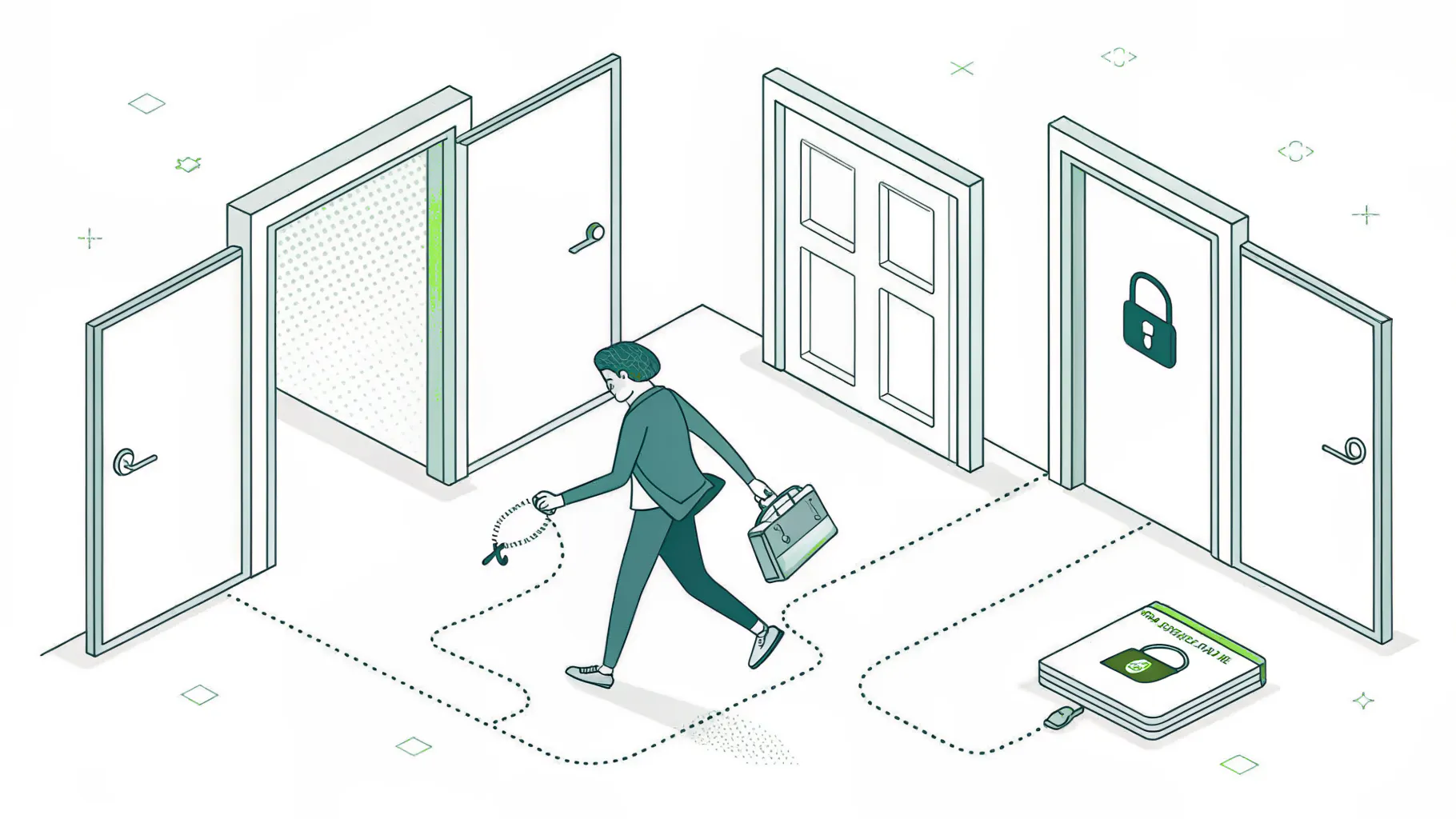
This is where the machine stops and the person starts. A scanner tells you a door is unlocked. A pen tester walks through it, tries the next door, picks up a credential lying on a desk, and ends up in your finance system. That's the difference between a list and a story. The tester chases business-logic flaws, chained exploits, and context-specific weaknesses that automated tools are not built to find, like abusing a shopping-cart feature to change prices, or stringing three low-severity findings into one high-impact path to sensitive data.
You get a validated report. Not "here are 400 possible issues," but "here are the 6 that actually matter, here's how we exploited them, and here's what we reached." Proof, with a paper trail. That's what a pen test sells that a scan never can.
Penetration Testing vs Vulnerability Scanning: The Core Differences
Same goal, find weaknesses before an attacker does. Completely different method, depth, and output. Where the scan gives you breadth and speed at almost no cost, the pen test gives you depth and certainty at real expense, and the two were never designed to compete with each other. It comes down to method, depth, output, and cost.
Now the false-positive gap. Scanners flag things that turn out to be fine somewhere between 30% and 60% of the time, according to research on scanner accuracy from Edgescan, which means as much as half of what lands on your desk may be a ghost you still have to chase down. A pen test doesn't have that problem, because a human confirmed the finding by exploiting it. One produces noise you have to sort. The other produces proof you can act on. Keep that in mind, because it drives the whole compliance question next.
Why the Difference Matters for Compliance and Cyber Insurance
This is the part competitors skip, and it's the part that costs money. To an auditor and an underwriter, a scan and a pen test are not interchangeable. Calling one the other can fail an assessment or void a claim.
Start with PCI DSS, the standard for anyone handling card data. Version 4.0.1 treats scanning and testing as two separate obligations with different clocks. Quarterly vulnerability scans sit under one requirement. Annual penetration testing sits under another, entirely separate one. You can't stack up four clean quarterly scans and quietly check the penetration test box, because the assessor reads the two line items independently and expects different evidence for each. No shortcuts. The standard was written specifically to keep them distinct. SOC 2 and NIST CSF 2.0 lean the same way, treating a penetration test as the more rigorous validation of whether your controls actually hold.
Now the one that really stings. Cyber insurance. Underwriters increasingly require an annual, insurance-grade penetration test as a condition of writing the policy at all, and an automated vulnerability scan, however clean it comes back, does not satisfy that requirement on its own. Worse, if you represent a scan as a pen test on your application and then file a claim, the mismatch can be grounds to deny the payout. Picture it. You've paid premiums for three years. You get breached. The insurer asks for the pen test you attested to, and all you have is a Nessus report. That's not a coverage gap. That's a denied claim during the worst week of your year.
Compliance readiness is its own discipline, and at Consilien it's a standalone offering, not something quietly folded into a managed IT contract. If you're mapping controls to a framework, the compliance requirements decide which tests you owe and when. Get that wrong and the technology was never the problem. The paperwork was.
The False-Positive Problem, and Why a Scan Alone Isn't Enough
A scan alone buries your team in findings that may or may not be real. Somewhere between 30% and 60% of scanner output is a false positive, and every one of those still has to be checked by a human. By hand. That's the hidden tax on scanning without validation.
Run the math on a mid-sized environment. A quarterly scan surfaces 800 findings. Even at the low end, 240 of them are noise. Your two-person IT team now spends the better part of a week chasing flags that were never exploitable in the first place, while the six or seven findings that actually matter sit in the exact same undifferentiated pile, waiting their turn. Alert fatigue sets in. People start ignoring the list. The one critical finding that could have been chained into a breach gets triaged as "we'll get to it."
A pen test cuts through that. It takes the scanner output, tests the findings that look serious, and tells you which ones an attacker could actually use. Confirmed, exploitable, ranked by real impact. That's the difference between a to-do list of 800 maybes and a work order of 6 certainties. Which one would you rather hand your team on a Monday?
Which One Do You Need, and When?
Almost always, both. Scan continuously for coverage, then pen test periodically to validate what the scan can't. The order matters, and so does the cadence.
Here's the sequencing that works. Scan first, because it's the cheap, fast way to find and clean up the obvious problems at scale. Pen test second, because there's no point paying a skilled human to walk past the same unpatched server your scanner would have caught for a fraction of the cost. Fix the easy stuff with automation. Aim the expensive expertise at the questions automation can't answer. Security teams broadly agree that scanning belongs on a monthly-to-quarterly rhythm while penetration testing lands once or twice a year.
Cadence isn't one-size-fits-all, though. It scales with your risk tolerance, your rate of change, the sensitivity of the data you're holding, and whatever framework or insurance policy is quietly setting a floor you have to clear. That simple.
One trigger overrides the calendar. Significant change. New infrastructure, a merger, a cloud migration, a major application release. Any of those can undo the assurance your last test gave you, which is why a good IT security assessment checks when your environment last changed, not just when you last tested. Test the environment you have now, not the one you had in January.
How Scanning and Pen Testing Work Together
Treat them as one program, not two purchases. Continuous scanning is the early-warning system. Periodic pen testing is the reality check. Together they cover both breadth and depth, which is the whole point.

In practice, this is where a managed provider earns its keep, or fails to. Good ones run the scanning cadence for you, feed the findings into an actual remediation workflow instead of a spreadsheet nobody opens, and bring in penetration testing at the right intervals to confirm the fixes held. That's the model behind Consilien's managed cybersecurity work, security-first by default, built for companies in the 20 to 500 user range that need real coverage without standing up a full internal security team of their own.
Now the trap. Watch for the provider who runs an automated scan, drops a branded PDF on your desk, and calls it a penetration test. It happens more than it should. The tell is in the report. A real pen test describes what the tester did, which findings they exploited, and what they reached. A scan dressed up as a test is just a tool's export with a logo on the cover. If there's no attacker narrative and no manual exploitation, you paid for a scan. Full stop. And if your insurer ever asks, that distinction is the only thing that matters.
Full disclosure, we sell both scanning and testing, so read the next line knowing that. If you're a five-person shop with no card data, no regulated framework, and nothing an attacker would cross the street for, an annual scan and basic hygiene may genuinely be enough. The math changes the moment you hold sensitive data, sign a contract with a security clause, or carry a cyber policy. Then you need proof, not a list.
Vulnerability scanning finds. Penetration testing proves. A scan gives you broad, frequent, automated coverage of what might be wrong. A pen test gives you deep, periodic, human validation of what an attacker could actually do. Run scans on a monthly-to-quarterly rhythm, run a pen test at least once a year, and never let anyone convince you that one replaces the other, because your auditor and your insurer already know it doesn't.
The companies that get breached are rarely the ones that couldn't afford security. They're the ones who ran a scan, filed the PDF, and assumed the box was checked. Don't be that story. If you're weighing what your business actually owes for compliance or insurance, the fastest way to get clear is to schedule a penetration test scoped to your real requirements. Speak to a penetration testing expert who'll tell you which you need, when, and why, even if the honest answer is that you need less than you thought.