SOC 2 Type I vs Type II: Which Report Do You Need?
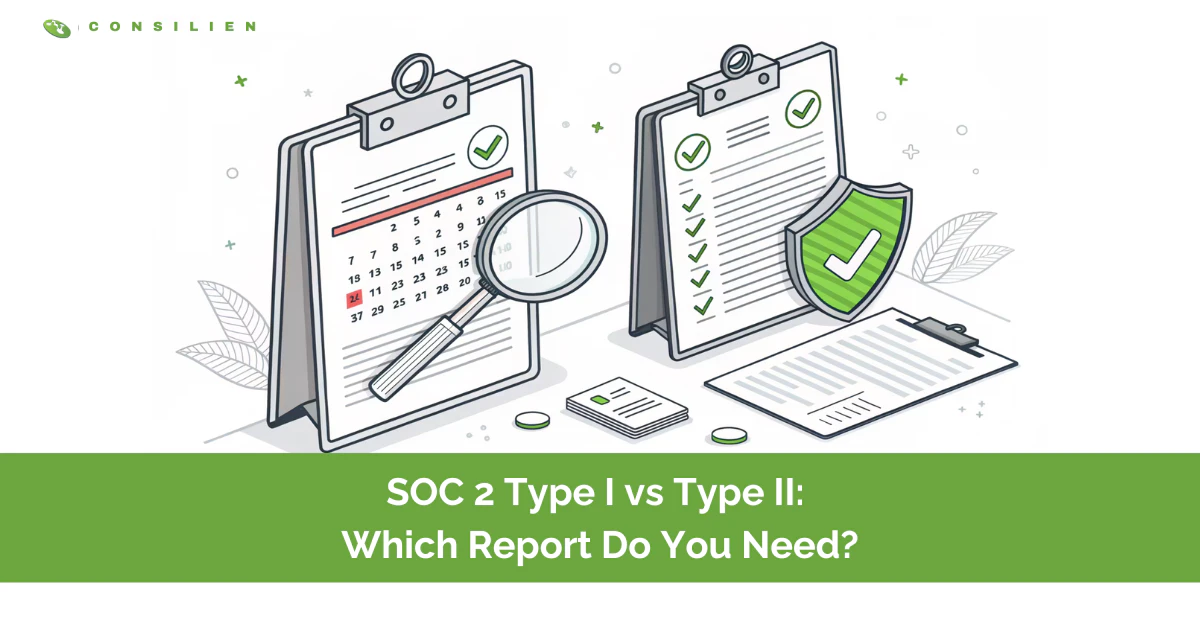
SOC 2 Type I audits whether your security controls are designed correctly on one specific day. Type II tests whether those same controls actually worked over 3 to 12 months. Most enterprise buyers want the second one.
Table of Contents
That difference sounds small. It decides your budget, your timeline, and whether the deal on your desk closes this quarter or next year.
Here's how most SOC 2 projects start. A prospect sends one line, can you send over your SOC 2 report? No report exists yet. Now you're choosing between two audits you don't fully understand, and the wrong call costs you months. This is a compliance decision before it's a security one, and the report you pick should be driven by who's asking, not by which one looks faster on paper.
Type I proves intent. Type II proves behavior. A buyer handing you their customer data cares far more about the second, which is why enterprise procurement teams keep sending Type I reports back and asking for Type II instead. And the stakes behind that request are real. IBM puts the average data breach at $4.44 million globally and $10.22 million in the US for 2025. Verizon found third-party breaches doubled to 30% of all incidents. Your customers read those numbers too. SOC 2 is how they check you aren't the weak link.
SOC 2 Type I vs Type II: What's the Real Difference?
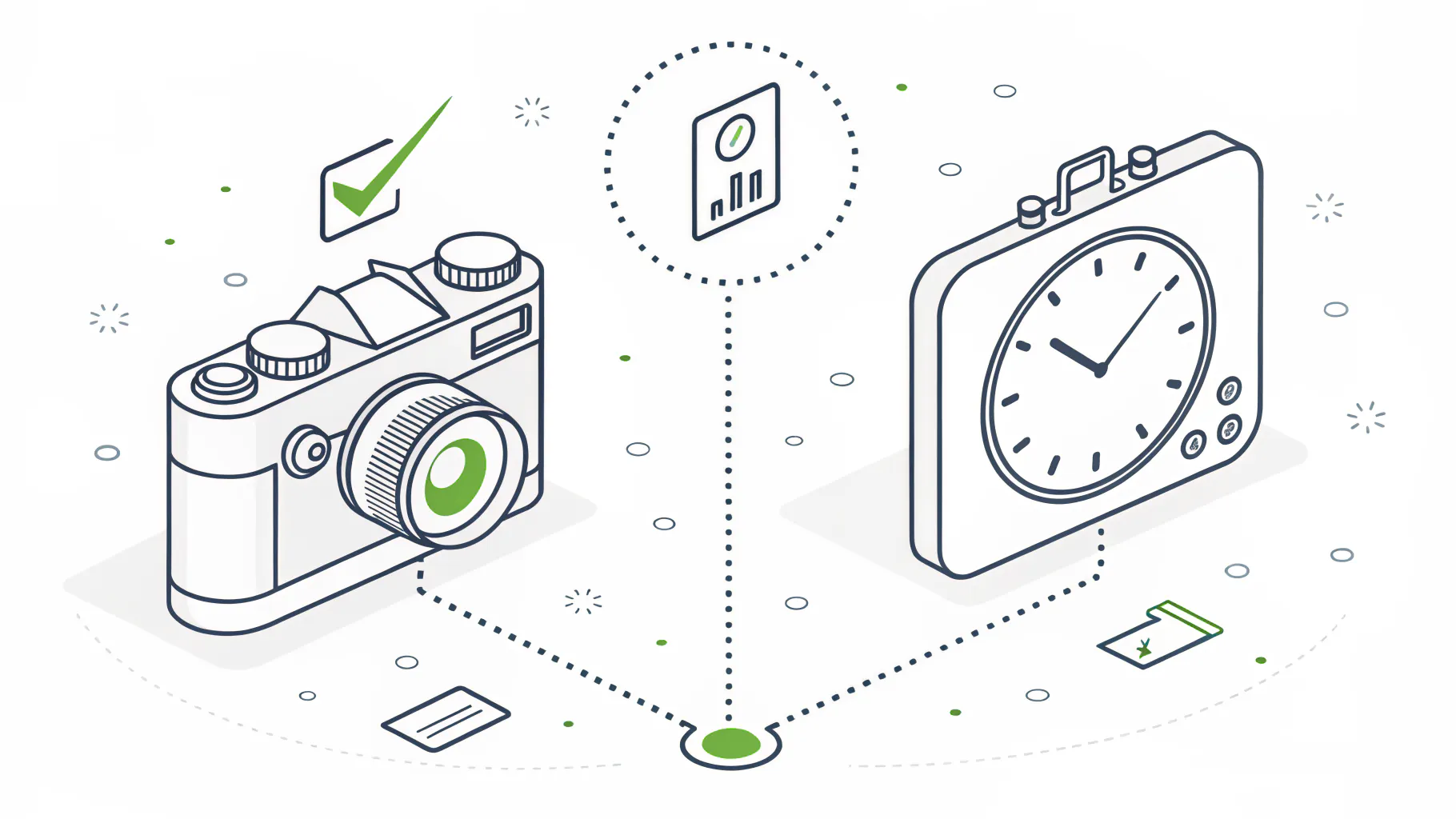
Type I is a snapshot. Type II is a track record. A Type I report checks that your controls are designed properly at a single moment. A Type II report watches those controls run for months and confirms they held up.
Put another way, Type I documents what your security program is supposed to do. Type II proves it actually did it, day after day, across a defined window. The auditor collects evidence the whole time, not just on audit day. That's the gap enterprise buyers care about.
Think about what a customer is really asking. They're about to route their data through your systems. A design that looks good on paper doesn't tell them your access reviews happened every month, your backups ran, or your offboarding removed access when someone quit. Type II answers those questions with proof. Type I just says the plan existed. Picture a Type I as a photo of a clean kitchen. A Type II is the health inspector watching you cook for six months. That's the right instinct to keep.
Which SOC 2 Report Do You Actually Need?
You need the report your buyers will accept. For most companies selling to enterprise or mid-market customers, that's Type II. Type I only earns its place as a fast, temporary bridge while a Type II observation window runs.
The trap is treating this as a technical choice. It isn't. It's a procurement choice. The right question isn't which audit is easier, it's what the person blocking your deal will accept. Answer that first, then work backward to timeline and budget.
Here's how it usually breaks down by who's asking.
- Selling to enterprise or regulated buyers? Go Type II. Vendor surveys put roughly 78% of enterprise clients as requiring it for clearance, and a Type I gets sent back.
- Mid-market SaaS deals stuck in security review need Type II as well. Their risk team wants operating evidence, not a design snapshot.
- Early-stage, with one big prospect dangling a contract on some SOC 2. A Type I can unblock that single deal fast, then you upgrade.
- Nobody's asking yet, but you want a baseline before you scale. Type I is a reasonable first rung, since it surfaces gaps cheaply before the clock on a Type II starts.
Notice the pattern. Type II is the default. Type I is the exception you reach for when speed matters more than the stronger report, and only for a moment. Before you commit either way, a security risk assessment tells you how wide the gap is between where you are and what an auditor expects. Skip that step and you're guessing at your own timeline.
What Does Each Report Cost, and How Long Does It Take?
Type I runs roughly $7,500 to $60,000 and takes a few weeks to a few months. Type II runs $12,000 to $100,000 in audit fees and 6 to 15 months once you count the observation window. Those are audit fees only. Your real spend is higher.
The number that surprises people is the part the audit firm never bills. Compliance automation platforms run $10,000 to $50,000 a year. Internal engineering time to build and prove controls adds another $20,000 to $50,000 in loaded cost. For a 10 to 50 person company, a realistic first-year all-in for Type II lands between $25,000 and $80,000 or more, per 2026 industry cost data.

One more thing about time. The observation window is a floor, not a schedule. You don't start the clock until your controls are actually in place and generating evidence. A team that thinks it's three months from Type II but hasn't turned on logging or documented a single policy is really nine months out. Be honest about your starting line.
Type I First, or Go Straight to Type II?
If you have time, go straight to Type II. Doing a Type I first usually means paying two audit fees for what one audit could prove. Do Type I first only when a specific deal needs proof in the next few weeks.
Here's the math nobody likes. A Type I today, then a Type II in 6 months, is two engagements and two invoices. Around 85% of mid-market buyers and 98% of Fortune 500 buyers require Type II anyway, so the Type I often becomes a receipt you throw away.
But there's a move that gets missed. You can run the Type II observation window at the same time you'd otherwise be waiting. A common pathway is to get a Type I into a buyer's hands fast for the one deal that needs it, while the observation clock for your Type II is already ticking underneath. Done right, the Type I doesn't add 6 months. It fills the gap while the real report bakes. Vanta and other platforms structure the sequence this way on purpose.
Bias disclosed, we help companies get audit-ready, so we benefit when this goes well. But we'll tell a client to skip Type I when there's no deal on the line. Paying for a snapshot nobody asked for is spending money to feel busy. If a single contract is stalled on proof and you can't wait, that's the one case where Type I clearly earns its fee.
The Five Trust Services Criteria You'll Be Scored Against
SOC 2 measures your controls against five Trust Services Criteria. Only Security is required. The other four you add based on what you promise customers and what your buyers demand.
These come from the AICPA's 2017 Trust Services Criteria, updated with 2022 points of focus. Here's what each one covers.
- Security is the baseline. Every SOC 2 includes it, mapped to the Common Criteria, CC1 through CC9, covering access, risk, and how you respond when something breaks.
- Availability. Can customers count on your systems being up? Backups, disaster recovery, uptime commitments all live here.
- Confidentiality protects sensitive business data, contracts, source code, internal financials, from the wrong eyes.
- Processing Integrity asks a narrower question. Does your system do what it's supposed to, accurately and on time, without silent errors?
- Privacy kicks in when you collect personal information, names, emails, location, device data, and it governs how you handle that data end to end.
Most SaaS companies scope Security plus Availability and Confidentiality. Add Privacy if you touch consumer personal data. Don't bolt on criteria you don't need. Every category you add is more controls to build, more evidence to collect, and more that can generate an exception. Where a control needs real-world proof, a penetration test often supplies evidence auditors like to see. Scope tight, prove deep.
How Long Is a SOC 2 Report Valid, and What's a Bridge Letter?
A SOC 2 report doesn't formally expire, but buyers treat it as valid for about 12 months from issuance. After that it's stale. You renew with a fresh Type II audit each year.
The problem is the calendar never lines up. Your report covers, say, January through December. A prospect asks for it in March. Now there's a 3-month gap between your report's end date and today, and their security team notices. That's where a bridge letter comes in.
A bridge letter, sometimes called a gap letter, is a short document your management signs stating nothing material has changed since the report period ended. It covers the gap, usually up to 3 months. Worth knowing, the CPA firm doesn't write or sign it, you do. It's not a substitute for the report. Stretch a bridge letter past a quarter and sophisticated buyers stop accepting it.
The failure mode we see most? A company lets its report lapse mid-deal. Renewal wasn't started early enough, the old report aged out, and a signed contract sits frozen while a new audit runs. Start renewal 4 to 6 months before your report ends. A lapsed report can cost you the exact deal SOC 2 was supposed to win.
What SOC 2 Readiness Actually Takes for a California SMB
Readiness is the work before the audit. It's where most of the time and cost actually live. For a 50 to 250 person company, expect 2 to 3 months of gap remediation before any observation window should start.
The audit itself is the short part. The long part is building and documenting controls that don't exist yet, then generating months of clean evidence. Access reviews. Vendor risk records. Incident response you've actually tested. Change management that leaves a trail. Auditors don't want your intentions. They want logs, tickets, and dates.
Consilien is a security-first managed IT and advisory firm for California SMBs and mid-market companies, the 15 to 500 employee range, in manufacturing, distribution, professional services, and similar industries. We handle the readiness grind, the control build, the evidence collection, and the auditor hand-off, so your team isn't reverse-engineering a compliance program while it's also shipping product. What makes that different from buying a compliance tool alone? The platform tracks tasks. It doesn't do the work, sit in your vendor risk review, or tell you which criteria to scope. That's where advisory earns its keep.
A fractional virtual CISO is often the piece that makes this survivable for a company without a full security team. Someone owns the program, sets the scope, and answers the auditor, without a six-figure full-time hire. For most SMBs chasing their first Type II, that's the difference between a nine-month scramble and a controlled timeline.
The Bottom Line on Choosing Your SOC 2 Report
Three things to carry out of here. First, Type II is the report your buyers almost certainly want, so treat it as the default and Type I as a rare exception for speed. Second, the audit fee is a fraction of the real cost, so budget for readiness, tooling, and engineering time. Third, the observation window doesn't start until your controls actually run, which means honest readiness beats an optimistic guess every time.
Most SOC 2 pain comes from starting the audit before the controls are real. Get the readiness right and the report takes care of itself. If you're weighing Type I against Type II for a California company, start with a gap check against the criteria your buyers care about, then map the shortest honest path to the report they'll accept. That's what our SOC 2 readiness support is built to do.