IT Trends in Manufacturing for 2026: What Mid-Market Manufacturers Actually Need to Plan For
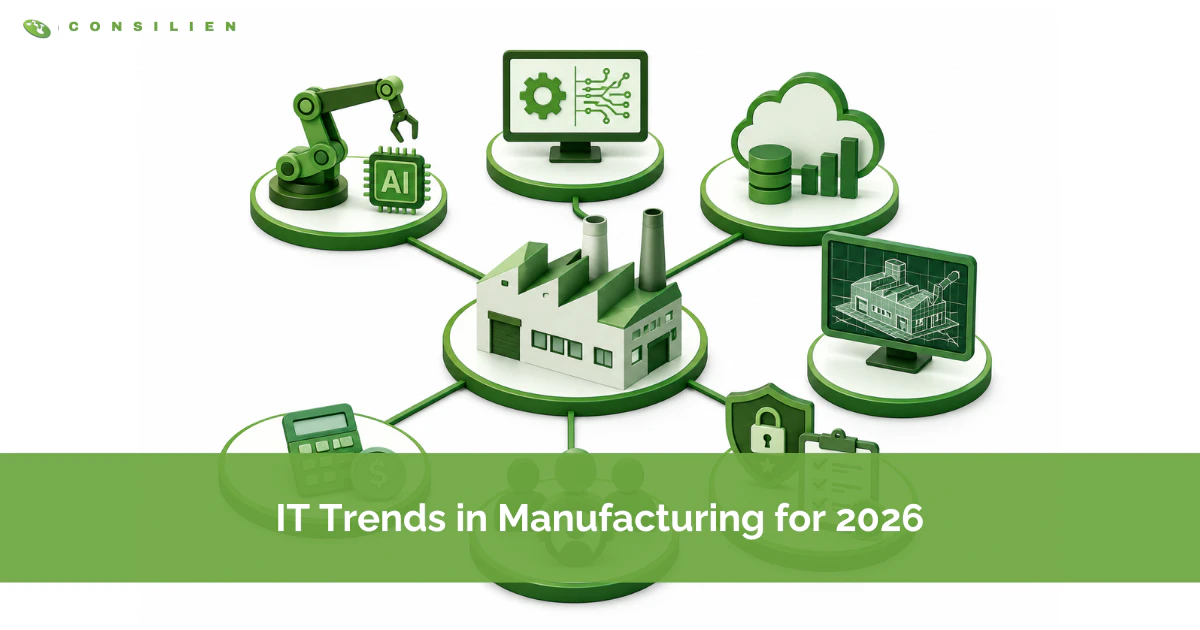
The IT trends in manufacturing for 2026 are AI on the plant floor, IT/OT convergence, cloud ERP migration, digital twins, CMMC 2.0 enforcement, a widening skills gap, and tighter IT budgets. That is the list every outlook will hand you. The list is the easy part.
Table of Contents
Here is what those outlooks leave out. Most of these are not technology you buy. They are decisions you make about risk, contracts, and who runs your environment. A digital twin is a line item. Whether your shop can still bid a defense contract in November is not. If you run a 50 to 250 person manufacturing operation, the right way to read this is as a planning document, not a tech forecast. For each trend, the question is not whether it is real. It is what breaks if you ignore it, and how fast it gets worse. The same logic runs through everything we publish on IT for manufacturers.
The short version. Seven trends will shape manufacturing IT in 2026, and most of them are security and compliance decisions wearing a technology costume. AI and digital twins get the headlines. Ransomware, the CMMC deadline, and a shrinking talent pool will decide who has a good year.
The one thread connecting every 2026 trend
Connectivity. Every trend on this list adds another connection between your machines, your data, and the outside world. That is where the value is. It is also where the risk is. The same network link that lets an AI model predict a bearing failure is the link an attacker uses to reach your line.
The global Industry 4.0 market is projected to grow from $172.5 billion in 2026 to $1.2 trillion by 2035, a 24% compound annual growth rate, according to GM Insights. That money buys connectivity. None of it buys the discipline to manage what you just connected. Hold that thought through all seven trends.
Trend 1: AI moves off the slide deck and onto the plant floor
For three years AI in manufacturing meant a pilot somebody ran and nobody scaled. That ends in 2026. Deloitte projects AI adoption in manufacturing roughly quadrupling, from 6% to 24%. The clearest use case is predictive maintenance. Sensors watch the equipment, a model flags the failure before it happens, and you fix it on your schedule instead of at 2 a.m.
The catch is underneath. AI is only as good as the data feeding it, and most plants sit on years of messy, unlabeled machine data. The companies winning with AI in 2026 are not the ones with the best model. They are the ones who cleaned up their data first.
What it means for a mid-market manufacturer
Do not start with the model. Start with the data and the connection. Pick one expensive machine, instrument it, and prove the payback on one line before you buy a platform. We walk through the realistic version of this in our breakdown of the AI revolution in manufacturing.
Trend 2: IT/OT convergence is now your biggest security exposure
Your IT systems and your operational technology, the PLCs and machines on the floor, used to live on separate networks. They are merging fast, because that is how the data flows. It is also why manufacturing has been the most attacked industry in the world for four years running.
The numbers are not subtle. Ransomware attacks on manufacturing rose 56% in 2025, per Industrial Cyber, and exposed remote access, like an open RDP port or an unsecured VPN, remains one of the most common ways in. Attackers go after manufacturers for one reason. When the line stops, you pay fast, because every hour of downtime has a number attached to it.
Here is the uncomfortable part. The shop floor is where most plants are weakest. A CNC machine running a 12-year-old operating system cannot be patched like a laptop, and IoT Analytics notes that retrofitting old equipment with connectivity is exactly what widened the attack surface. The fix is not one tool. It is network segmentation, monitoring built for OT, and a plan that assumes a breach instead of hoping against one. We get into where leaders go wrong in OT vs IT security in manufacturing and the specific cybersecurity threats facing manufacturers in 2026.
Trend 3: The cloud ERP window, and the 2027 cliff behind it
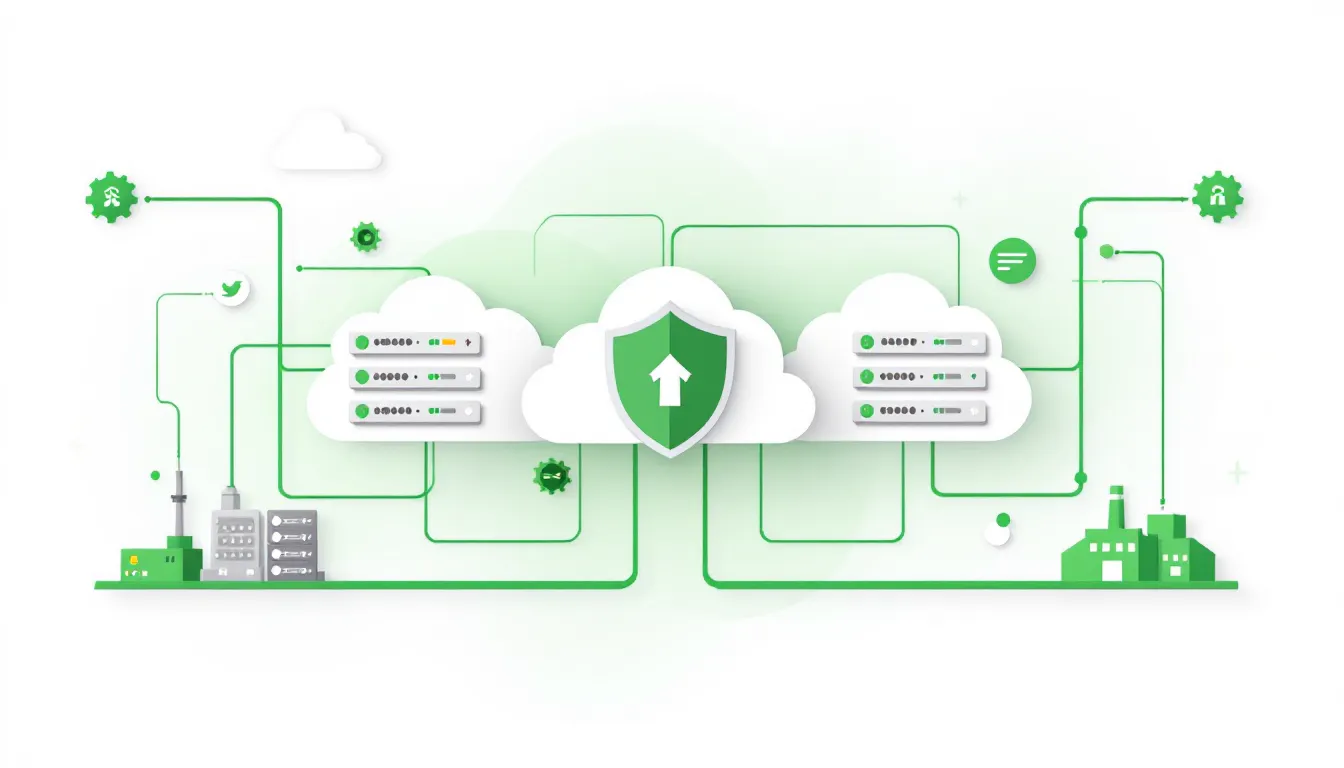
Manufacturing now leads every industry in moving to cloud ERP, holding the largest revenue share of the SMB cloud ERP market, according to Mordor Intelligence. Part of that is choice. Part of it is a deadline. Legacy ERP support is sunsetting, and a lot of manufacturers are being pushed off old systems whether they planned for it or not.
The trend is not "move everything to the cloud." It is hybrid. Keep what has to stay local for latency or data sovereignty, move the rest, and stop treating it as a one-time project. A migration done badly is just your old mess running on someone else's servers at a higher monthly bill. Done right, it is the foundation the other six trends sit on. We lay out the manufacturing-specific version in cloud solutions for manufacturing companies.
Trend 4: Digital twins cross from pilot to payback
A digital twin is a live virtual copy of a machine, a line, or a whole plant that you can test against before you touch the real thing. The technology is not new. What changed is the math. Manufacturers now report 15% to 30% ROI on digital twin projects, with payback often under 24 months, per Mindinventory's 2026 data.
For a mid-market plant, the trap is scope. You do not need a twin of the entire facility. You need one of the bottleneck, the constraint that decides your output. Model that, find the fix in software, then change the floor. Start anywhere else and you are paying for a science project.
Trend 5: CMMC 2.0 becomes a revenue gate, not a checkbox
If any of your revenue touches the defense supply chain, this is the trend that can end your year. CMMC 2.0 Phase 2 begins November 10, 2026, when third-party C3PAO assessments become a condition of award for most Level 2 contracts, per Kiteworks. No certification, no contract. That is the whole story.
Most manufacturers are underestimating the runway. Certification takes 9 to 12 months, assessor calendars are filling, and that same legacy shop-floor equipment from Trend 2 often cannot meet the controls without upgrades. If you wait until the deadline is close, you will not make it. Treat compliance as a revenue requirement, not an IT chore, and start the gap assessment now. Our CMMC compliance services and the plain-language CMMC 2.0 timeline breakdown show what the path actually looks like.

Trend 6: The skills gap pushes manufacturers toward co-managed IT
Manufacturing is short on people, and getting shorter. The Manufacturing Institute and Deloitte project a shortfall of more than 2 million workers over the next decade, per ManufacturingTomorrow. The gap that hurts most is not on the line. It is the people who connect the digital and physical worlds. Controls engineers, security staff, the IT generalist you cannot hire and cannot afford to lose.
This is why co-managed IT stopped being a fallback and became a strategy. You keep your internal person on the work only they can do, and you rent the depth, the security operations, the after-hours coverage, the strategic planning, instead of trying to hire all of it. Done right, it is cheaper and more resilient than a team you cannot staff. See co-managed IT services and, for the strategy layer, vCIO services for manufacturers.
Trend 7: Budgets tighten, and cost optimization edges out security
For the first time, 84% of CIOs rank cost optimization as their top priority, ahead of security, according to Evanta's 2026 survey. That makes sense on a spreadsheet. It is also how breaches happen.
Here is the line that matters. Cutting your security budget does not remove the risk. It just moves the cost from a predictable monthly number to an unpredictable catastrophic one. The manufacturers who handle this well are not spending less. They are spending on purpose, retiring the legacy systems that cost money and create exposure at the same time, and making every dollar do double duty. Optimization is not the same as cutting. Treat it like it is and you will save a little this year and pay a lot the next.
How to turn seven trends into a 2026 IT plan
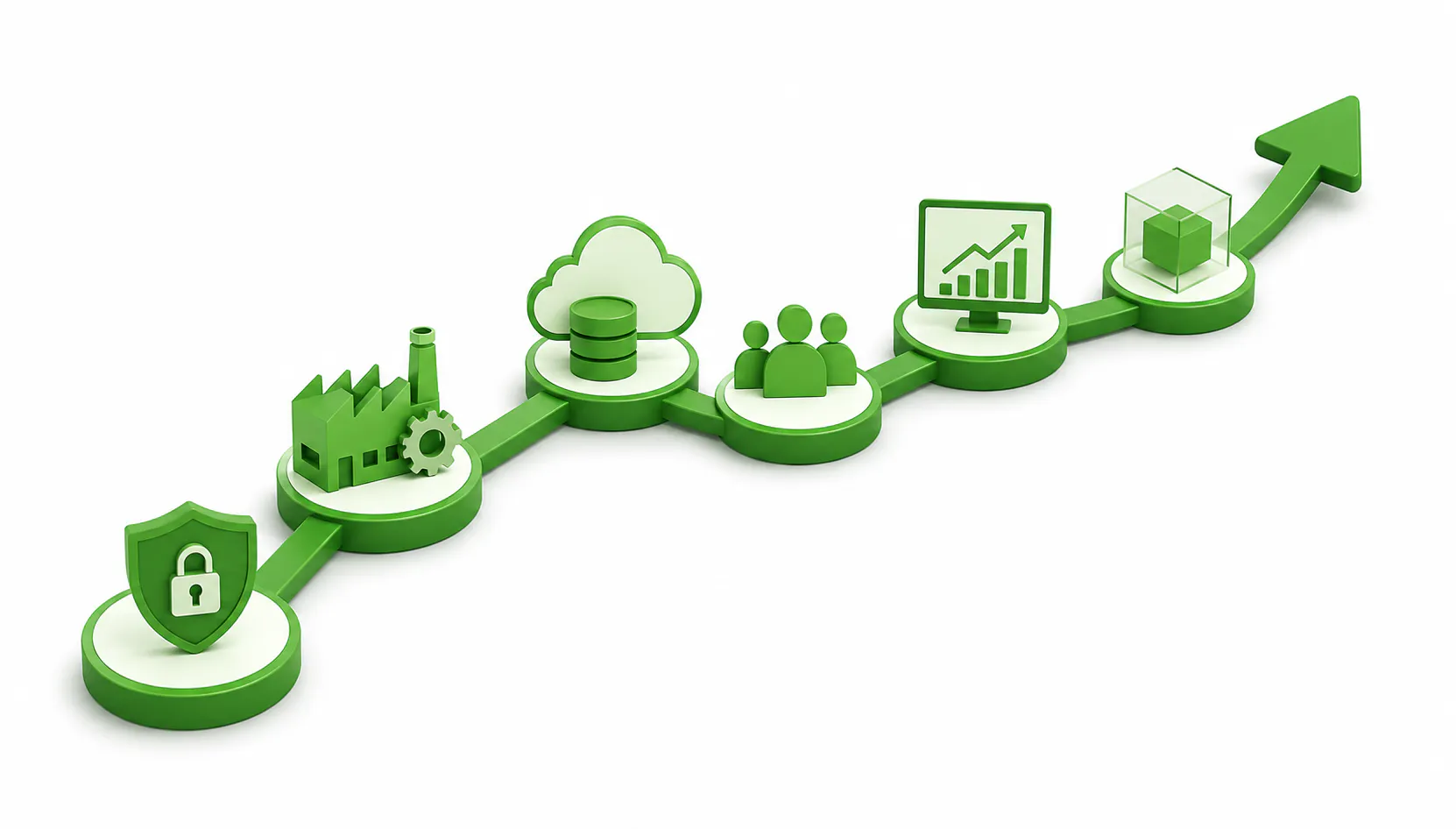
You do not act on all seven at once. You sequence them. Start with the two that carry hard deadlines and direct financial risk. Secure the IT/OT seam, and if CMMC applies to you, start the clock today. Fix your data and cloud foundation next, because AI and digital twins are built on top of it. Solve the people problem with a co-managed model so you are not betting the plan on a hire you cannot make. Then spend on AI and digital twins where the payback is provable, not where the hype is loudest.
None of this requires predicting the future. It requires being honest about what is already true. The manufacturers who win in 2026 will be the ones who did the un-glamorous work first. Not the flashiest technology. The foundation underneath it. If you want an outside read on where your environment actually stands, that is what an IT assessment is for.