Best Security Awareness Training Programs in 2026
Security awareness training is the structured program that teaches your people to spot and report the attacks that target them directly, phishing, smishing, social engineering, before those attacks turn into a breach. The platform is the tool. The program is the building you put on top of it.
Table of Contents
Most companies get this backward. They buy a license, push out a few videos once a year to satisfy an auditor, and assume they are covered. Then a finance manager wires money to a spoofed vendor, and they find out the thing they bought was content, not behavior change.
Here is the uncomfortable part. According to the Verizon 2025 Data Breach Investigations Report, roughly 60% of breaches still involve a human element. The IBM Cost of a Data Breach Report 2025 puts the average United States breach at $10.22 million, a record high. The companies that hold the line almost always share one trait. They run training as a managed, year-round program with real phishing simulations and reporting that proves it is working, not as a once-a-year checkbox.
This guide ranks the best security awareness training programs for 2026, scored against the criteria that actually predict results for a 50 to 250 person business. We build and run managed security awareness training for California companies, so yes, we put ourselves on this list and explain exactly why. Every other provider here is a real platform with real third-party ratings and honest limitations. You can follow the math.
The Short Answer
For a small or mid-sized business that wants training run for them, with phishing simulations, compliance reporting, and a person accountable for results, the ranking is straightforward.
- Consilien Managed Security Awareness Training, 4.90 out of 5. Best for SMBs that want it fully managed.
- KnowBe4, 4.30 out of 5. Best self-service platform overall.
- Arctic Wolf Managed Security Awareness, 4.08 out of 5. Best concierge program for enterprise.
- Hoxhunt, 3.83 out of 5. Best for measurable behavior change.
- Proofpoint ZenGuide, 3.75 out of 5. Best for existing Proofpoint email security customers.
- NINJIO, 3.65 out of 5. Best for story-driven engagement.
- Cofense PhishMe, 3.58 out of 5. Best for phishing defense tied to your SOC.
- Mimecast Engage, 3.55 out of 5. Best for engaging content inside Mimecast email security.
If you have a full security team and want to run everything in-house, start with KnowBe4. If you want the program off your plate and tied into your broader security and compliance work, that is where we fit.
How We Scored These Programs
A best-of list is only worth reading if you can see the scoring. Ours is built for one buyer, a business that wants security awareness training to change behavior and survive an audit, without hiring a full-time person to run it. Each program is scored 1 to 5 on five weighted criteria.
- Managed, done-for-you delivery (30%): does someone build, schedule, and run the program for you, or are you the admin?
- Compliance and audit-ready reporting (20%): maps to NIST, CMMC, HIPAA, PCI, and SOC 2, with reports a board or auditor will accept.
- Phishing simulation and behavior change (20%): realistic, adaptive simulations that measurably lower click rates over time.
- Integration with a broader security program (15%): does training connect to your wider security and IT stack, or sit in a silo?
- Support and SMB fit (15%): responsive support and a model that fits a 25 to 250 person company.

We weight managed delivery the heaviest on purpose, because for our reader, the biggest failure point is not the software. It is that nobody internally has the time to run it well. If you want to own the console yourself, a self-service platform will score higher for you than for the buyer this list is built for. Third-party ratings below are pulled from G2 and Gartner Peer Insights as of June 2026, and review counts move constantly, so treat them as directional.
1. Consilien Managed Security Awareness Training: Best for SMBs That Want It Managed
Score: 4.90 / 5.
We run security awareness training as a managed program inside a broader managed cybersecurity and compliance practice. You are not handed a login and a content library and left to figure out cadence, segmentation, and reporting. We design the program, schedule the phishing simulations, deliver the micro-training, and bring you reporting that maps to the framework you actually answer to, whether that is NIST, CMMC, PCI, or SOC 2.
The platforms below are very good software. The gap they leave is the same one Gartner flags. Most SMBs do not have the in-house time or expertise to operate a SAT platform well, and that is the gap we fill, with a named team and local accountability in Southern California.
Key strengths: fully managed delivery including phishing simulations and remediation, reporting aligned to NIST, CMMC, PCI, and SOC 2, training folded into your wider managed security and IT strategy instead of sitting in a silo, and direct, responsive support sized for a 25 to 250 person business.
Honest weaknesses: we are a regional provider focused on California, not a national self-service brand with a million seats. If your goal is to run the platform entirely in-house, a self-service tool is a better fit than a managed service. And we are not the cheapest line item, because a managed program costs more than an unmanaged license.
Why it ranks #1: on the criteria that matter most to this buyer, managed delivery, compliance reporting, and integration into a real security program, a managed service beats a self-service license. That is the whole point of the ranking. For the cost side of that decision, see our guide on how much security awareness training costs.
2. KnowBe4: Best Self-Service Platform Overall
Score: 4.30 / 5.
KnowBe4 is the most widely deployed SAT platform in the world, with the company claiming more than 70,000 customers. Founded in 2010 and now owned by Vista Equity Partners, it offers the largest content library in the category, delivered in 35+ languages, plus AI-assisted phishing simulation and behavior-based risk scoring.
Third-party ratings: G2 4.6 out of 5 from roughly 2,300 reviews, and Gartner Peer Insights 4.6 out of 5. KnowBe4 was named a Leader in the G2 Winter 2026 Grid. Its best fit is broad, from SMB to enterprise, especially compliance-driven buyers who want breadth.
Honest weaknesses: reviewers consistently flag that reporting needs tuning and historical campaign data is hard to find, and that campaign setup is time-consuming and not intuitive. The sheer size of the library can overwhelm, with little guidance on which modules matter.
Why it ranks here: it is the best self-service platform, period, and it can be run on your behalf by an MSP. It loses to a managed service only on the done-for-you criterion, which is exactly what this list weights most.
3. Arctic Wolf Managed Security Awareness: Best Concierge Program for Enterprise
Score: 4.08 / 5.
Arctic Wolf is the closest thing on this list to a managed competitor. It is a concierge program where Arctic Wolf builds and runs the training and simulations for you, built partly on the Hollywood-style content from its 2021 Habitu8 acquisition. Microlearning arrives roughly every two weeks, with no separate login.
Third-party ratings: Gartner Peer Insights 4.9 out of 5 with 100% willingness to recommend, from 51 reviews, as of the Gartner report dated October 2024. There is no reliable standalone G2 rating for this specific product, since the G2 page covers the broader Arctic Wolf platform. Its best fit is organizations, often existing Arctic Wolf MDR customers, that want awareness handled inside one enterprise vendor.
Honest weaknesses: reviewers note limited content and training customization, the inherent tradeoff of a fully managed model, and that Arctic Wolf can be pricey, with the best value tied to bundling its broader platform.
Why it ranks here: the managed model scores well on our heaviest criterion. It ranks behind us on SMB fit and local accountability, and behind KnowBe4 on flexibility and library depth. It tilts enterprise, where Arctic Wolf's bundle makes the most sense.
4. Hoxhunt: Best for Measurable Behavior Change
Score: 3.83 / 5.
Hoxhunt, founded in 2016 and based in Helsinki, is built around adaptive, gamified phishing simulation that adjusts to each user across email, Slack, and Teams. It is the platform to beat on engagement and measurable behavior change, with named customers including Airbus, Qualcomm, and Nokia.
Third-party ratings: G2 4.8 out of 5 from roughly 3,300 reviews, about 92% five-star, and Gartner Peer Insights 4.9 out of 5, a Customers' Choice. Its best fit is mid-market to enterprise teams that want behavior change over checkbox compliance.
Honest weaknesses: reviewers say simulations can feel too easy, that they arrive too often and clutter the inbox, and that the threat scope is email-centric, with lighter coverage of vishing, smishing, and deepfakes.
Why it ranks here: the strongest behavior change on this list, but it is a self-service platform with an email-first focus, so it scores lower on managed delivery and broad program integration.
5. Proofpoint ZenGuide: Best for Existing Proofpoint Customers
Score: 3.75 / 5.
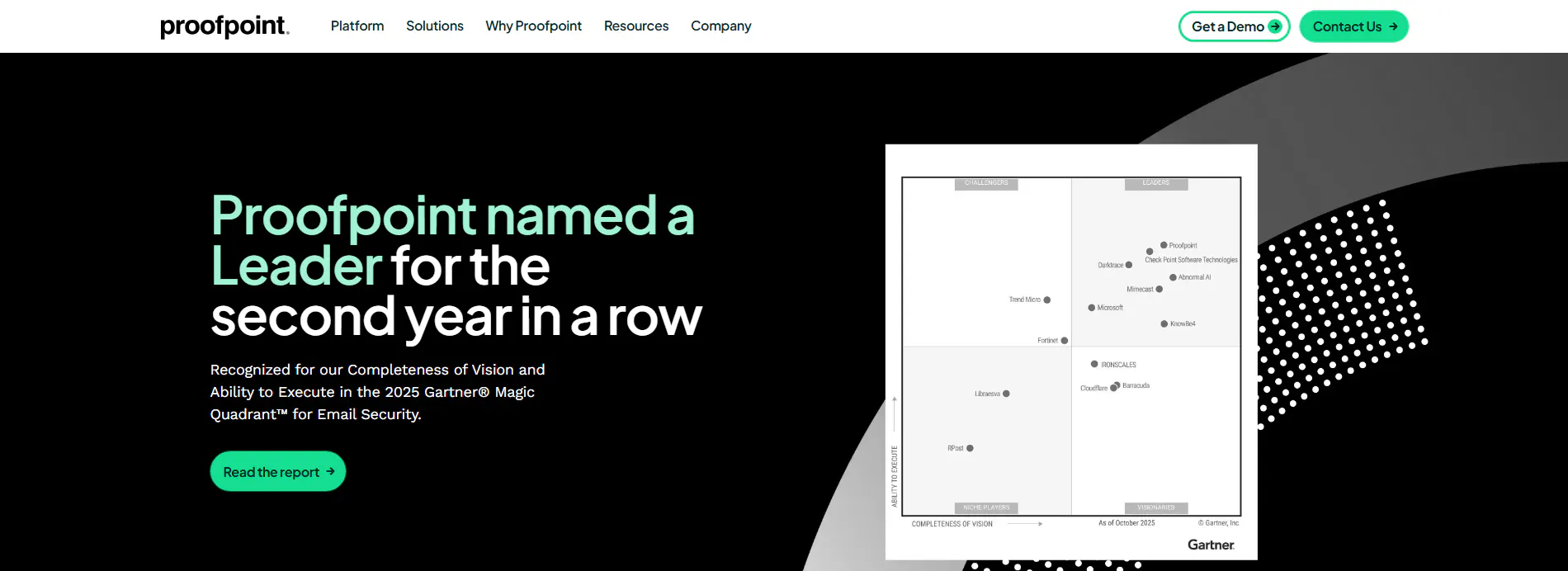
Proofpoint's SAT platform, now branded ZenGuide and built on its acquisition of Wombat Security, ties training to the threat intelligence from Proofpoint's email security. If you already run Proofpoint, the shared telemetry and unified human-risk view are a real advantage.
Third-party ratings: G2 4.5 out of 5 from 334 reviews, and Gartner Peer Insights 4.5 out of 5 from 793 reviews. Its best fit is large, distributed enterprises already standardized on Proofpoint.
Honest weaknesses: reviewers cite dated training content, no mid-campaign flexibility once a path is running, and pricing above the market average, with one comparison putting it well above KnowBe4.
Why it ranks here: strong for the enterprise already on Proofpoint, weaker on SMB fit and price. The integration advantage does not transfer if Proofpoint is not your email security.
6. NINJIO: Best for Story-Driven Engagement
Score: 3.65 / 5.
NINJIO is known for Hollywood-style animated micro-episodes, 3 to 4 minutes each, that dramatize real breaches, paired with phishing simulation and AI-driven personalization. If slide-deck training puts your people to sleep, NINJIO is the antidote.
Third-party ratings: G2 4.8 out of 5 from roughly 387 reviews, a Leader in the Spring 2026 G2 Grid. Its Gartner Peer Insights score is 4.9, from a snapshot dated April 2025. NINJIO's own site cites 4.9, but the independent G2 figure is 4.8, so we use the third-party number. Its best fit is teams that want high engagement through entertaining, story-based microlearning.
Honest weaknesses: reviewers flag admin UI friction, multiple clicks for what should take one, reporting gaps where completion reports occasionally come back blank, and US-centric content that does not always translate for global teams.
Why it ranks here: excellent content and engagement, but a self-service tool with admin and reporting rough edges, so it lands mid-pack against managed options.
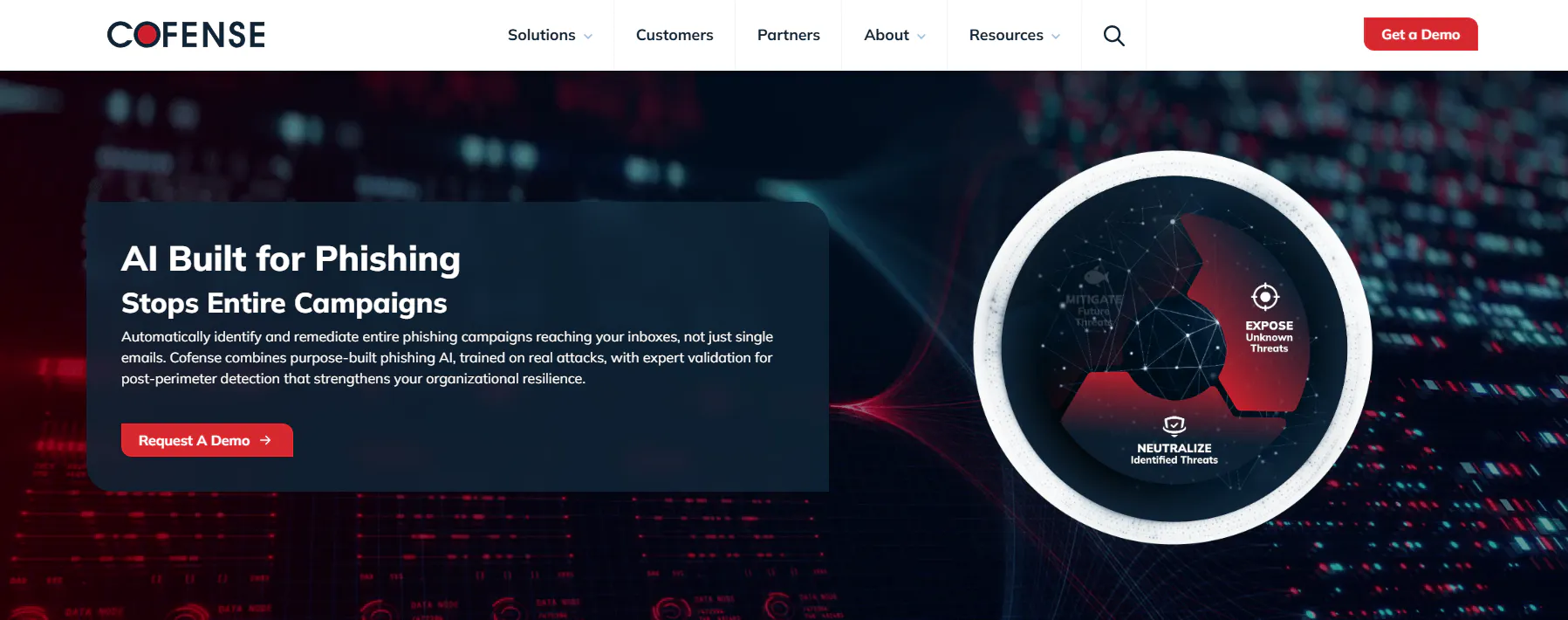
7. Cofense PhishMe: Best for Phishing Defense Tied to Your SOC
Score: 3.58 / 5.
Cofense, founded in 2007 as PhishMe, is the phishing-defense specialist. Its simulations are built from real phishing that bypassed email gateways, and its Reporter button turns employees into live detection sensors feeding the security operations center.
Third-party ratings: Gartner Peer Insights 4.5 out of 5 from 361 reviews. A standalone G2 product rating could not be isolated from the Cofense seller page, so we are not citing one. Its best fit is mid-market to enterprise security teams that want phishing resistance tied to detection and response.
Honest weaknesses: reviewers report deliverability and allow-listing friction in Microsoft 365 and Defender, a clunky interface with occasional scanner downtime, and a cost that can be hard to justify for small businesses.
Why it ranks here: powerful if you run a SOC and value the detection loop, but it is built for security teams, not for the SMB that wants a turnkey awareness program.
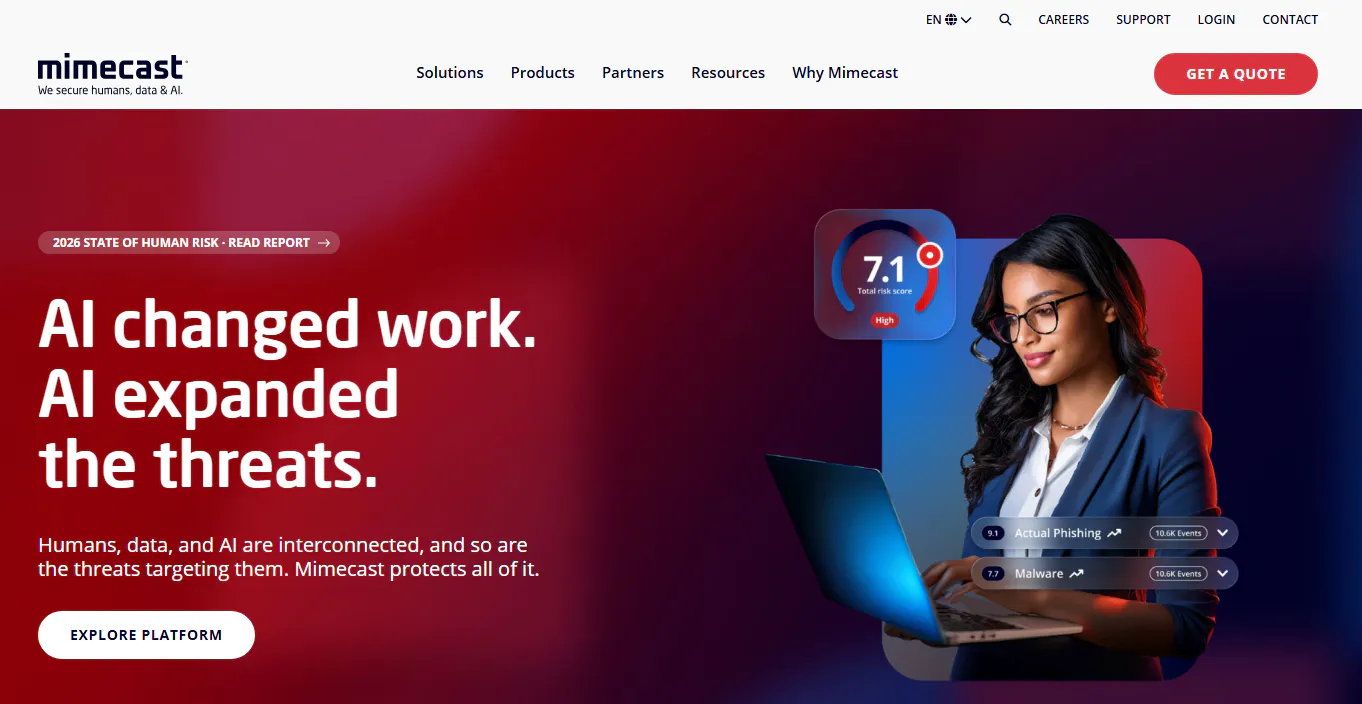
8. Mimecast Engage: Best Inside Mimecast Email Security
Score: 3.55 / 5.
Mimecast Engage, built on the Ataata product Mimecast acquired in 2018, is known for short, humor-driven mini-sitcom training videos plus phishing simulation. It is most compelling if you already run Mimecast email security and want training bundled in.
Third-party ratings: Gartner Peer Insights 4.3 out of 5 from 79 reviews. A standalone G2 rating for the SAT product could not be isolated from the broader Mimecast seller profile, so we are not citing one. Its best fit is existing Mimecast email security customers who want engaging training in the same stack.
Honest weaknesses: Gartner reviewers describe disruptive implementation, including an integration that triggered an unexpected blast of emails to admins, no automatic recurring campaign scheduling, and completion-tracking friction that forces data exports.
Why it ranks here: engaging content and a sensible bundle for Mimecast shops, but setup friction and a narrower standalone case keep it at the back of a strong field.
Two other credible platforms are worth a look depending on fit: CybeReady, an automated, adaptive program with a Gartner score of 4.4, and Huntress Managed SAT, formerly Curricula, which has strong SMB reviews on G2.

How to Choose the Right Program for Your Business
The right answer depends less on which platform has the most features and more on who is going to run it. Start with one honest question. Who owns this program day to day? If you have a dedicated security person with time to build campaigns, segment audiences, and read reports, a self-service platform like KnowBe4 or Hoxhunt will serve you well. If that person does not exist, or already has two other jobs, an unmanaged license becomes shelfware within a quarter. That is the most common way SAT spend gets wasted.
Then weigh four factors.
- Phishing simulation quality. Realistic, adaptive, and varied beyond basic email. This is the single component most tied to lower click rates.
- Compliance and reporting. If you answer to NIST, CMMC, PCI, or SOC 2, the reporting has to map to it and survive an auditor.
- Behavior change, not completion. A 100% completion rate means people clicked next. A falling phish-prone rate means the training worked. For what good looks like, see how effective security awareness training actually is.
- Fit with your wider security program. Training that connects to your email security, identity, and incident response beats a standalone tool, and so does training that connects to social engineering defense, the broader category most of these attacks fall under.
Self-service platforms win on price and control. Managed programs win on outcomes for teams without the bandwidth to run software well. Most of the platforms above are excellent. The question is whether you have the time to make them excellent in your environment.
The Bottom Line
The best security awareness training program is the one that actually runs, every month, with real simulations and reporting that proves your risk is dropping. According to KnowBe4's 2025 industry benchmark, a vendor-reported figure but based on a very large sample, the average phish-prone rate falls from about 33% to roughly 4% after a year of consistent training. The keyword is consistent. A platform sitting unused does nothing.
If you have the team to run it, KnowBe4 is the strongest self-service starting point. If you want the program owned, run, and reported on for you, tied into your broader security and compliance work, that is what we built our managed security awareness training to do.