Ransomware protection and recovery services combine layered defenses that stop an attack with tested backups that restore your systems if one gets through. The goal stays simple. Keep your business running, and get your data back without being forced to pay a ransom. Consilien delivers both under one managed program.
Ransomware Protection & Recovery Services
Stop attacks before they spread, and recover your systems from clean, tested backups, so a ransom note never becomes your only option. 56% of businesses hit by ransomware paid up in 2024. Most still didn't get all their data back. (Sophos, 2024)
Most Businesses Think They're Covered. They Haven't Tested It.
Picture a Monday at a Torrance manufacturer. The line is supposed to start at 6 a.m. Instead every screen shows the same note. Your files are encrypted. Pay, or lose them.
That's not a rare event. Some weeks it feels like a Tuesday. Most California businesses we talk to think they're covered. They run antivirus. There's a backup going somewhere. Then we ask one question. When did you last test a full restore, start to finish? The room usually goes quiet.
Here's the part that catches people off guard. Modern ransomware crews don't just lock your production systems. They hunt your backups first, because they know that's your way out. When attackers reach the backups, victims pay nearly twice as often and the recovery bill runs about 8 times higher, according to Sophos.
Keeping Ransomware Out
Prevention isn't one product. It's a stack of controls that each close a door attackers like to use. No single layer is enough on its own. Stacked together, they turn an easy target into a hard one, which is often enough to send an attacker looking elsewhere.
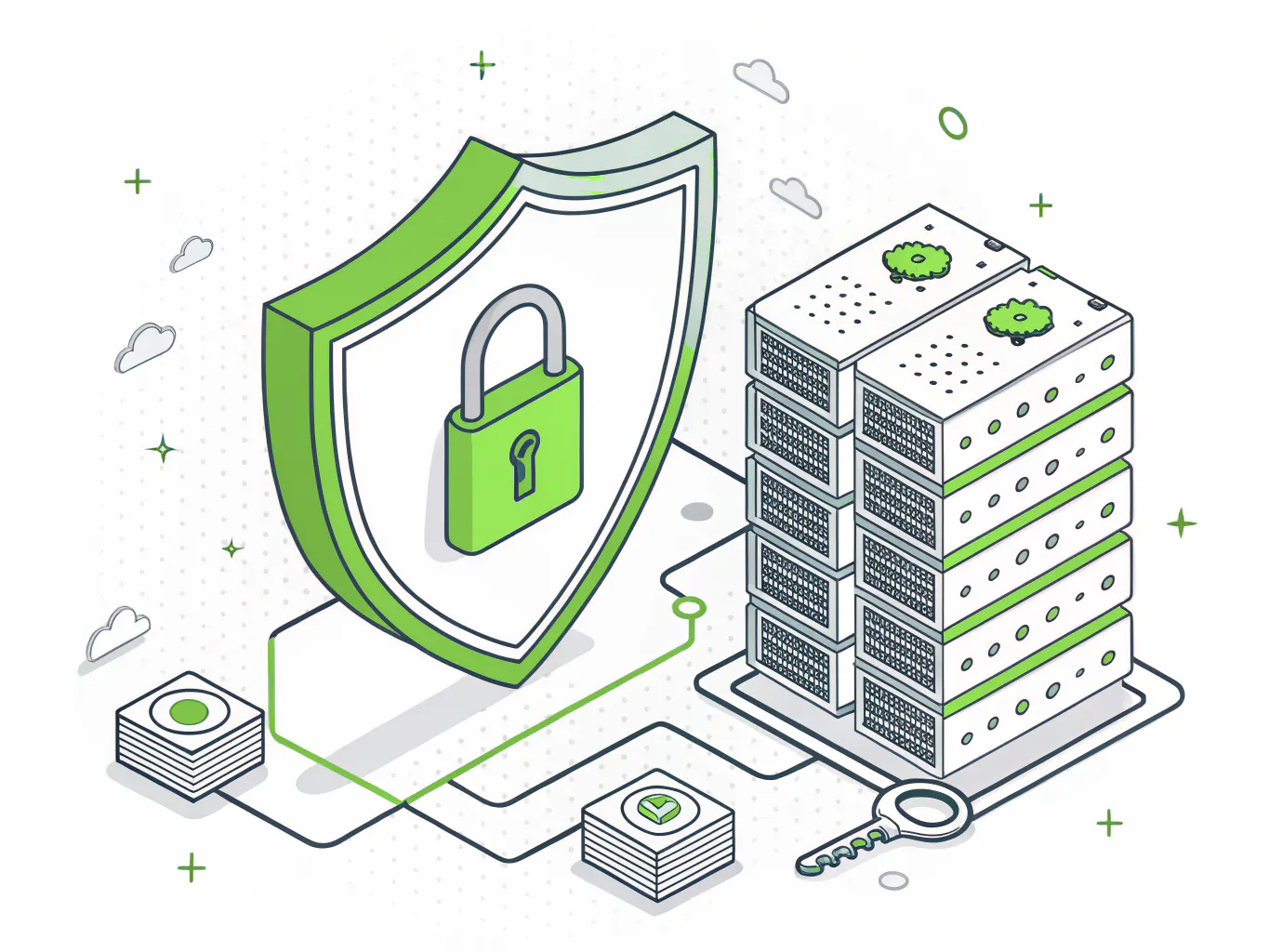
What Is Ransomware Protection?
Ransomware protection is the combined set of defenses, monitoring, and recovery systems that stop malicious encryption of your data and let you restore operations if an attack succeeds. It spans endpoint security, identity controls, email filtering, and immutable backups, managed as one program rather than a pile of disconnected tools.
Getting You Back Without Paying
Prevention buys you good odds. It doesn't buy certainty. Anyone who promises a 100 percent block rate is selling something.
So the real question isn't only whether you'll get hit. It's how fast you're running again if you do, and on whose terms. That answer lives entirely in your backups, and specifically in whether they survive the attack and actually restore.
The federal StopRansomware guidance is blunt about it. Backups have to be offline or immutable, and they have to be tested. We build recovery on the 3-2-1 rule and go a step further.
- 3 copies of your data, on 2 different media, with 1 kept off-site. The baseline, and where a lot of setups stop.
- Immutable and air-gapped. At least one copy can't be altered or deleted, even by an admin account, even with stolen credentials.
- Restores you've actually watched happen. We run recovery drills so the first real restore isn't the first time anyone tries it.
- A recovery-time target that matches your business. A distributor losing order entry for a day has a different tolerance than a back office.
One thing we see a lot. The backup was running fine for three years. Green checkmarks every morning. Nobody had ever restored from it, and when the day came, half of it was incomplete. Green checkmarks are not a recovery plan.
Who This Is For, and Who It Is Not
You're a strong fit if you're one of these.
- A California business between 15 and 500 users, with a core sweet spot around 50 to 250, where a day of downtime has a real dollar cost.
- A manufacturer, distributor, food processor, real estate manager, or professional services firm that runs on systems you can't afford to lose.
- Already carrying cyber insurance, or applying, and being asked to prove MFA, EDR, and immutable backups.
- Holding sensitive data or contracts where an attacker leaking your files is as bad as encrypting them.
You're probably not the right fit if you want one of these.
- A one-time cleanup after an attack and no ongoing management. We build programs, not band-aids.
- A healthcare-focused partner. It isn't our focus, and you deserve someone who specializes there.
- The cheapest antivirus renewal and nothing more. That's a real budget choice, just not what this is.
Full disclosure. We're a managed security provider, so we benefit when you work with us. We'd still rather you leave with tested backups and MFA turned on than nothing at all, even if you set them up yourself.
What Usually Comes Up Before You Decide
"We already have backups. Aren't we fine?"
Maybe. But that's exactly the assumption attackers count on. If your backups sit on the same network, reachable by an admin login, they're a target, not a safety net. The fix isn't more backup software. It's backups an intruder can't touch, and restores you've tested.
"Isn't this expensive?"
Compared to what. Industrial ransomware downtime runs up to $125,000 an hour by IBM's count, and that's before lost orders, breach notification, and the insurance premium hike that follows. Managed protection is a predictable monthly cost. An incident is a number you don't control.
"Will you actually pick up when it matters?"
That's the right thing to press on. Our security operations team runs 24/7, and containment starts on our side, not after you've left three voicemails. We're upfront that no one prevents every attack, which is the whole reason recovery is built in from the start.
"We're not technical enough to manage this."
You don't need to be. That's the point of a managed program. You tell us what the business can't afford to lose. We handle the controls, the monitoring, and the recovery design, and we explain it in plain language.
Most businesses find out their defenses have a gap when an attacker finds it first. By then the options are limited and expensive. Setting up protection and tested recovery is the controlled version of that discovery. Same lesson, very different outcome.
Every hour of downtime during an attack can cost an operation like yours more than the ransom itself. The businesses that come through it clean are the ones that got ready before anything happened, not during. That part is entirely in your control.
Common Questions About Ransomware Protection
How fast can you contain a ransomware attack?
Containment starts the moment our monitoring flags it, often within minutes of the first abnormal behavior. We isolate affected machines from the network before encryption can spread across your environment. Speed in that first hour is what limits the damage, which is why 24/7 coverage matters more than any single tool.