Why Generic MSPs Fail Manufacturing Environments
Most MSPs don’t fail manufacturing environments because they’re careless or underqualified.
Table of Contents
They fail because their operating model was built for offices, not production floors.
And in manufacturing, that mismatch doesn’t just cause frustration. It causes downtime, scrap, missed shipments, and real revenue loss.
The Hidden Assumption That Breaks Most MSP Models
Generic MSPs usually start with an assumption that quietly shapes everything they do.
Manufacturing IT behaves like office IT.
That assumption is wrong.
Office IT tolerates delay. Manufacturing does not.
If email goes down in an office, productivity slows. People complain. Meetings get rescheduled.
If IT fails in a manufacturing plant, production can stop entirely.
Lines sit idle. Materials spoil. Operators wait. Every minute compounds the loss.
Manufacturing environments don’t get the luxury of “we’ll look at it tomorrow.”
Why “we support manufacturing too” is usually untrue
Many MSPs claim manufacturing experience because they support one or two plants among dozens of other clients. But their tools, staffing model, and escalation paths are still designed for horizontal support:
- Ticket queues shared across industries
- Engineers rotating between unrelated environments
- Remote-first response models
- Generic SLAs that look good on paper
That model breaks down the moment a plant-floor incident occurs.
Downtime Is Not an IT Problem. It’s a Revenue Problem.
This is where the conversation often goes off track. Generic MSPs talk about uptime. Manufacturers live with throughput.
What one hour of downtime actually costs
Downtime isn’t just lost production. It’s a stack of compounding impacts:
- Lost revenue from halted output
- Scrap from interrupted processes
- Overtime to recover schedules
- Missed customer commitments
- Penalties and reputational damage
Yet many MSPs still frame incidents as “tickets” instead of business events.
Why generic MSP SLAs don’t protect production
A four-hour response SLA does not mean a four-hour recovery.
It doesn’t guarantee:
- On-site presence
- Vendor escalation authority
- Spare parts availability
- Familiarity with the specific line or system
Manufacturing doesn’t care how fast someone responds. It cares how fast production resumes.
OT and IT Are Not the Same Thing (And Treating Them That Way Causes Outages)
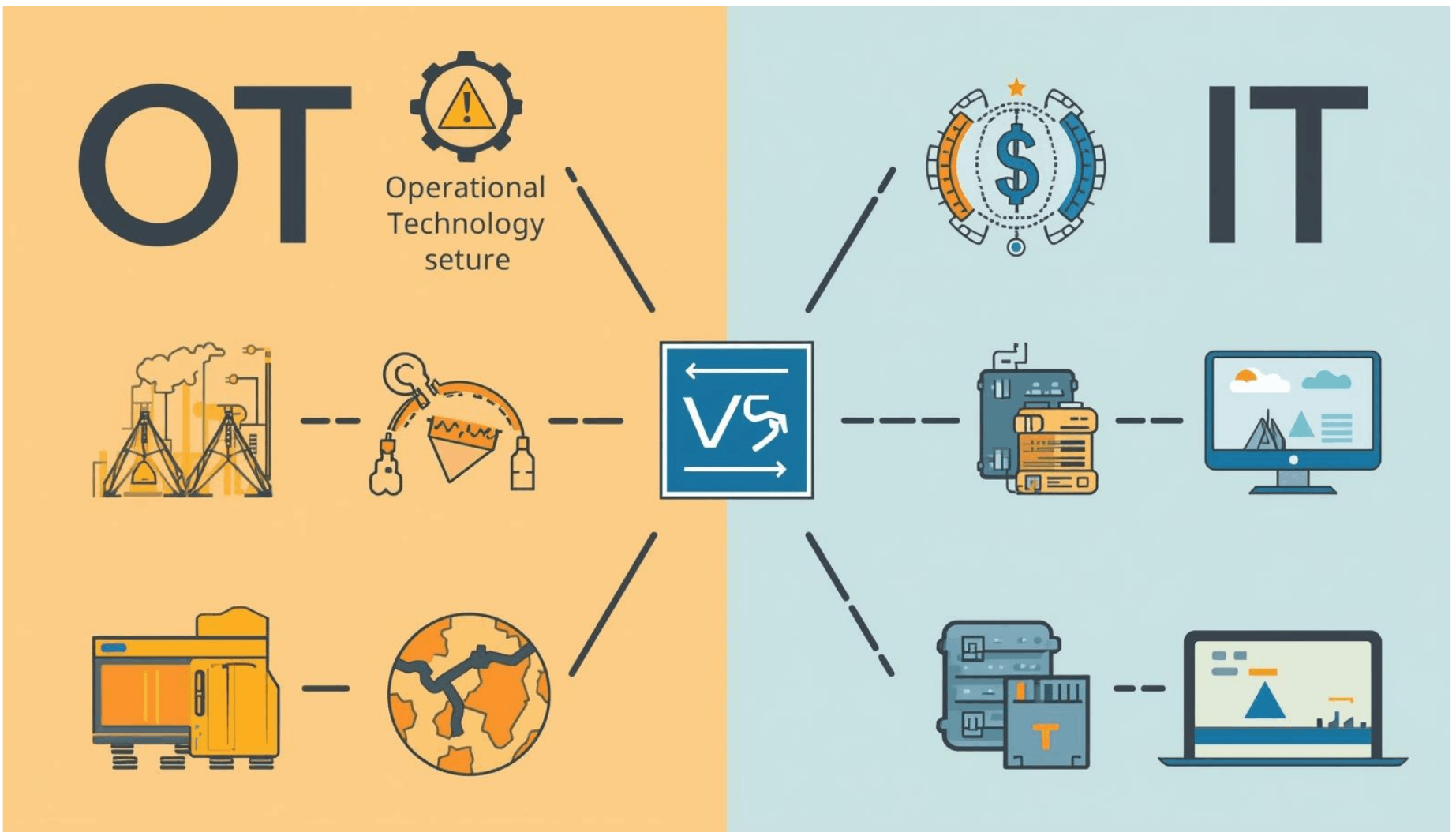
This is one of the most common failure points. And one of the least understood.
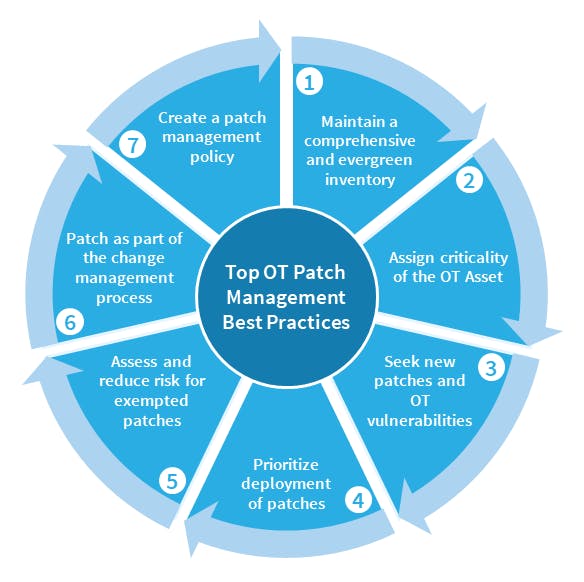
Why OT systems can’t be patched like laptops
Office IT follows predictable cycles. Patch. Reboot. Move on. Operational technology doesn’t work that way.
OT systems depend on:
- Vendor-certified firmware
- Specific version dependencies
- Controlled testing windows
- Production schedules that can’t shift easily
Applying generic patch policies to OT systems is how outages get introduced, not prevented.
How generic change management creates plant-floor risk
Many manufacturing incidents trace back to “approved” changes that were never production-safe.
The change wasn’t malicious. It was misaligned.
Generic MSPs optimize for consistency across clients. Manufacturing requires precision within environments.
The On-Site Reality Generic MSPs Don’t Plan For
Remote tools are powerful. They are not sufficient.
When remote support isn’t enough
Some problems can’t be solved through a screen:
- Physical network failures
- Industrial switch issues
- Environmental damage
- Cabling and power anomalies
When production is down, waiting hours for on-site escalation is not acceptable.
Why escalation speed matters more than ticket priority
Manufacturing leaders don’t care if an issue is tagged “P1” in a system.
They care about:
- Who is showing up
- How fast
- With what authority to act
If escalation paths aren’t engineered ahead of time, response becomes improvisation. And improvisation during downtime is expensive.
Why Manufacturing MSP Failures Repeat (Even With Good Intentions)
Most failures aren’t one-offs. They’re patterns.
Tool sprawl and shallow expertise
Generic MSPs rely on broad toolsets designed to scale across industries. That breadth comes at the cost of depth. OT environments demand specialists who understand:
- Industrial protocols
- Plant network design
- Vendor ecosystems
- Operational constraints
Generalists struggle when systems behave differently than expected.
Burnout and turnover inside generic MSPs
Manufacturing environments require context.
When engineers rotate frequently or leave, knowledge walks out the door. Each incident becomes a relearning exercise.
That’s not resilience. It’s risk accumulation.
What Actually Works in Manufacturing Environments
There is a better model. And it looks very different from generic managed services.
Manufacturing-specific MSP capabilities that matter
Manufacturing environments need MSPs that are built for them, not adapted after the fact.
That means:
- OT-aware monitoring and alerting
- Engineered change control tied to production schedules
- Vendor coordination and escalation authority
- Documented plant-floor procedures
- Defined on-site response plans
Supporting manufacturing vs being built for it
Supporting manufacturing is incidental. Being built for manufacturing is intentional. It shows up in staffing, documentation, escalation paths, and accountability for uptime.
Why This Keeps Happening
From a CEO perspective, most MSP failures in manufacturing don’t come from negligence. They come from misaligned incentives.
Generic MSPs are rewarded for:
- Closing tickets quickly
- Standardizing environments
- Scaling engineers across many clients
Manufacturing leaders are accountable for:
- Throughput
- Uptime
- Safety
- Revenue continuity
Those priorities collide during real incidents. When they do, manufacturers discover something uncomfortable. Their MSP optimized for efficiency. The plant needed resilience. That gap is where downtime lives. At Consilien, we’ve learned that manufacturing environments require fewer assumptions and more engineering. Less promise. More preparation.
A Simple Test to See If Your MSP Is a Risk
Ask your MSP these seven questions:
- How do you handle OT patching?
- What happens if production goes down at 2 a.m.?
- Who has authority to escalate with OEM vendors?
- How quickly can you be on-site if remote access fails?
- How do you test changes without risking production?
- What documentation exists for our specific plant?
- How do you measure success beyond ticket closure?
If the answers are vague, that uncertainty is already a warning sign.
For Manufacturing Leaders Responsible for Uptime
If you’re responsible for production and unsure whether your MSP could handle a real plant-floor incident, that uncertainty alone is a risk.
Consilien offers a Manufacturing IT Assessment designed specifically for production environments. It evaluates:
- Downtime exposure by system and line
- OT and IT change-control alignment
- Incident response readiness
- On-site escalation capability
- Vendor dependency risk
It’s not a sales pitch.
It’s an operational reality check.
If nothing else, you’ll walk away knowing where your biggest risks actually are.
Reach out to our team today to get started.
FAQs: MSP Manufacturing
What is an MSP for manufacturing?
An MSP for manufacturing is a managed service provider built to support production environments, including OT systems, plant-floor networks, controlled change windows, and rapid on-site escalation when downtime threatens operations.
Why do generic MSPs struggle in manufacturing environments?
Generic MSPs are optimized for standardized office IT. Manufacturing environments require OT expertise, production-aware change control, and response models focused on recovery time, not ticket metrics.
How is manufacturing IT different from office IT?
Manufacturing IT is the term for the systems that are directly related to production, safety, and revenue.Each minute of loss of production is a direct loss of operational profit, which is why any repair works must be very well planned in accordance with the production schedule and the suppliers.
What should manufacturers look for in an MSP?
Manufacturers should look for OT experience, engineered change control, defined on-site escalation plans, vendor coordination authority, and accountability tied to uptime.
Can a generic MSP be adapted for manufacturing?
Sometimes, but it requires structural changes to staffing, tooling, escalation models, and documentation. Many MSPs claim manufacturing capability without making those changes.
How do I know if my current MSP represents a risk?
If your MSP is unable to clearly articulate how they manage OT patching, vendor escalation, after hours incidents, and on-site response during downtime, then they are probably a risk.