What Is a SOC (Security Operations Center)?
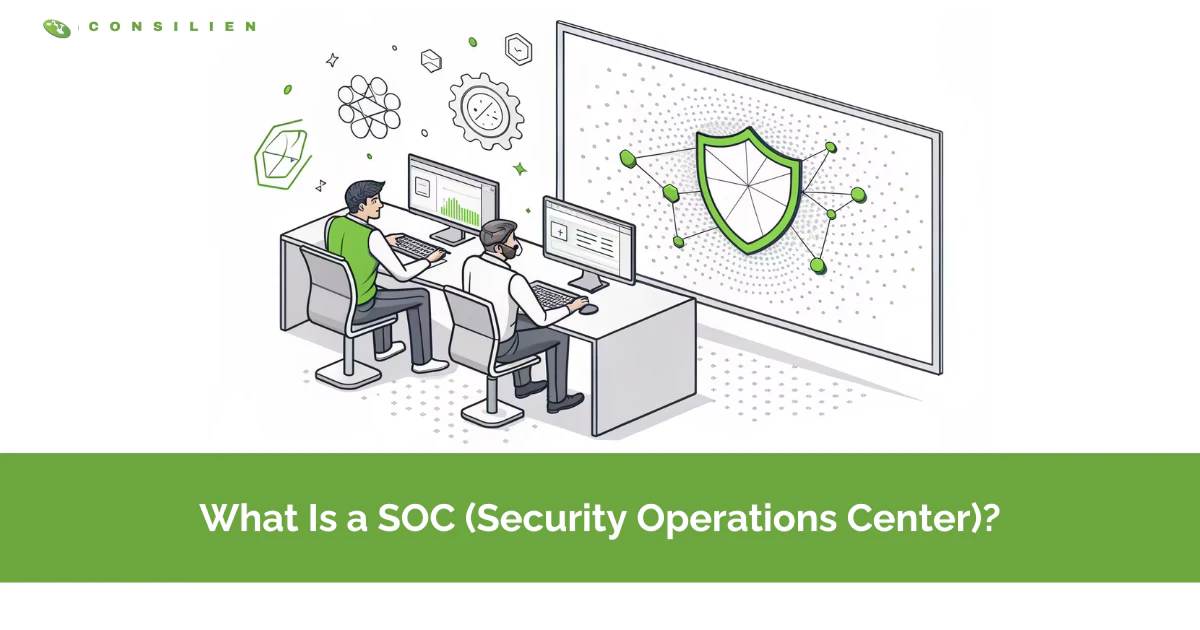
A security operations center (SOC) is a team of security analysts, backed by monitoring tools, that watches your IT environment around the clock to detect, investigate, and respond to cyber threats before they become breaches.
Table of Contents
Here is the part most definitions skip. A SOC is not a product you buy or a room full of glowing screens. It's people and process, with software doing the heavy lifting underneath. And before you go any further, one warning. A SOC is not the same thing as SOC 2. Same three letters, completely different meaning, and confusing the two costs companies real money. We'll clear that up in a minute. If you already know you want this handled for you, managed cybersecurity with a 24/7 SOC is where that path leads.
Most small and mid-sized companies in California think about a SOC the wrong way. They picture something built for banks and hospitals, priced accordingly, and quietly file it under the heading of problems they'll deal with later, once they're bigger, once there's budget, once somebody forces the issue. Then a phishing email lands at 2 a.m. on a Saturday. Nobody's watching. That gap, the quiet hours when no one is looking at the logs, is exactly what a SOC exists to close.
What a SOC Actually Does
A SOC monitors your systems continuously, day and night, weekends and holidays included, spots the suspicious activity buried inside ordinary traffic, works out whether it's a real threat or a false alarm, and responds fast enough to keep a small problem from turning into a headline. Detect, decide, contain. That's the whole job in three words.
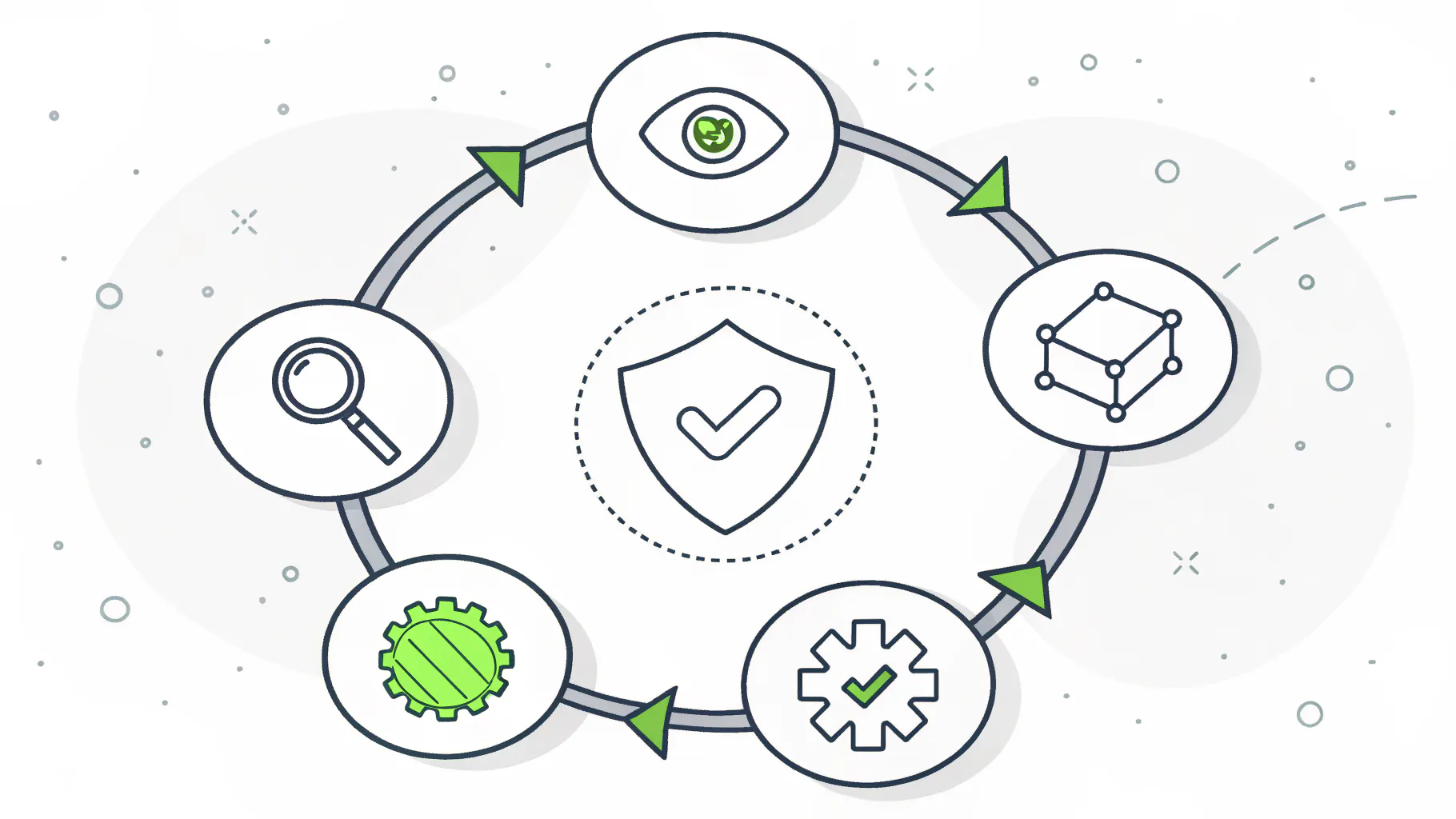
The longer version has five moving parts, and they run in a loop that never really stops. Watch everything. Catch the odd signal. Figure out if it's real. Act on it. Learn from it. According to Microsoft Security, that means monitoring identities, endpoints, servers, databases, applications, and cloud workloads, all at once, all the time.
Why does the timing matter so much? Because dwell time is where breaches get expensive. Every extra day costs. IBM's Cost of a Data Breach research found that incidents contained in under 200 days cost far less than the ones that drag past that line, and organizations leaning on strong detection and automation saved roughly $1.9 million per breach compared to the ones running blind. The US average breach now sits at a record $10.22 million. A SOC exists to shrink the window between something getting in and someone catching it. Nothing more complicated than that.
Think of it less like a security guard and more like a smoke detector wired straight to a fire crew. The alarm is useless on its own. What makes it worth anything is the crew that shows up while the fire is still small. Small being the whole point.
SOC vs SOC 2, Clear This Up First
A SOC is a team that watches your systems. SOC 2 is an audit report that proves you handle data responsibly. One is an active defense. The other is a piece of paper an accountant signs. They're not interchangeable, and neither one replaces the other.
This trips people up constantly, and it's an honest mistake. As IS Partners lays out, SOC 2 comes from an AICPA framework and gets issued by a CPA firm after they examine your controls. A Security Operations Center is an operational function that runs every day. You can have a SOC and never pursue SOC 2. You can pass a SOC 2 audit and have no live monitoring worth the name.
They do overlap in one spot, though. Having a real SOC makes a SOC 2 audit noticeably smoother, because continuous monitoring is exactly the kind of active control an auditor wants to see evidence of, and walking into that review with your logs and response records already in hand shortens the whole exercise considerably. That's the overlap. If compliance is driving your interest here, that's worth knowing early, and our SOC 2 and other compliance frameworks work assumes the two go hand in hand. Different tools. Same goal of proving you're actually protected.
Who and What's Inside a SOC
Every SOC runs on two things working together. People who investigate, and tools that feed them signal. Both, or neither. Strip away either one and you don't have a SOC. You have a dashboard nobody reads, or a room full of smart people flying blind.
The people are usually organized in tiers. Three levels, mostly. And the structure is simpler than the acronyms make it sound.
- Tier 1 analyst. First eyes on every alert. Triages the flood, clears the noise, escalates anything real.
- Tier 2 analyst. Takes the escalations, digs in, scopes how far it spread, and drives containment.
- Tier 3 analyst. The senior hands. Hunts for threats nobody flagged yet and tunes the system so it catches more next time.
- Threat hunter. Assumes something already slipped past the alerts and goes looking for it on purpose.
- Incident response lead. Runs the show when something is confirmed, coordinating containment, recovery, and who needs to know.
- SOC manager. Owns the whole operation, the staffing, the metrics, and the relationship with the rest of the business.
Behind those people sit three core technologies. You'll see the acronyms everywhere, so here's what each one is in plain terms.
- SIEM pulls logs from across your environment and connects the dots. Splunk describes it as the correlation engine, the thing that notices a failed login in one place lines up with a weird file transfer somewhere else.
- EDR lives on the endpoints, your laptops and servers, and can isolate a machine the moment it starts behaving like ransomware. It's the layer that stops one infected laptop from taking the whole network down.
- Then there's SOAR, which automates the boring, repeatable parts of a response so a human doesn't have to click through the same forty steps at 3 a.m.
People confuse these with the service models too, which is fair, because the letters all blur together. Alphabet soup, basically. If you're trying to sort out how MDR, MSSP, and SIEM differ, that's a separate rabbit hole worth its own read.
SOC vs NOC, Two Different Night Shifts
Security threats are the SOC's job. A NOC, or network operations center, watches for outages and performance problems instead. One asks whether someone is attacking you. The other asks whether everything is still up and running. You need both, and they're not the same team.
The distinction matters because the skills don't transfer. Per Exabeam, a NOC is staffed by network engineers chasing uptime and SLAs, while a SOC is staffed by security analysts chasing attackers, and the overlap gets tricky precisely because a network slowdown and an active intrusion can look identical from the outside until someone digs into why. A slow server and a breach. Same symptom, different cause. Telling them apart is the job.
- What they watch for. A SOC tracks cyber threats and attacks. A NOC tracks outages and performance.
- Who staffs them. Security analysts run the SOC. Network engineers run the NOC.
- The core question. The SOC asks whether you are under attack. The NOC asks whether everything is up and fast.
- How they win. The SOC wins by catching threats early. The NOC wins by maximizing uptime.
Do You Actually Need a SOC?
If you handle sensitive customer data, face compliance requirements, or have already been burned once, then yes, you need SOC-level monitoring in some form. If you're a tiny shop with nothing regulated and nothing worth stealing, then maybe not yet. It comes down to one honest question, the same one every risk decision comes down to in the end, which is what you stand to lose in a genuinely bad week and how fast that loss compounds while nobody's watching the door. Weigh that first.
Bias disclosed. Consilien sells managed cybersecurity built around a SOC, so read the next line with that in mind. Not every company needs to rush into this. If you're twenty people, no compliance pressure, and no data that would hurt a customer if it leaked, you can wait. The math changes the moment any of that stops being true.
A few signals tell you the moment has arrived:
- An enterprise client sends you a security questionnaire, or asks flat out whether you monitor your systems 24/7.
- You're pursuing a framework like NIST, CMMC, PCI, or SOC 2, all of which expect continuous monitoring.
- Your business runs on data that other people trust you with, which describes most manufacturers, distributors, and professional services firms we work with.
- Something already happened. A close call counts. Most companies get serious about this right after the scare, not before, and that's the expensive way to learn.
Notice what's missing from that list. Company size. A 60-person aerospace supplier working under defense contracts carries far more real exposure than a 400-person business selling something nobody has any reason to steal, and that inversion catches leaders off guard almost every time we walk them through it. Risk isn't headcount. It's what you'd lose, and who wants it.
Build One, or Buy the Capability? The Real Math
For almost every company under 500 employees, building and staffing your own around-the-clock SOC makes no financial sense once you run the real numbers on salaries, tooling, and the turnover that quietly eats whatever's left. A do-it-yourself, 24/7 operation runs well over $1 million a year. Buying the same coverage from a provider runs a few thousand a month. The gap isn't close.
Here's the uncomfortable number. To keep a single seat staffed around the clock, you don't hire one analyst. You hire a small team. Expel's breakdown puts it at 8 to 12 analysts once you account for nights, weekends, holidays, sick days, paid time off, training, and the plain reality that good security analysts burn out fast and leave for the next offer. Add tooling on top of that. A minimum viable in-house SOC lands somewhere between $1.5 million and $2.86 million a year. For a company doing $30 million or $40 million in revenue, that's not a line item. That's a decision that reshapes the budget.
- Build in-house. Roughly $1.5 million to $2.86 million a year. Best for large enterprises with unique infrastructure or strict data-residency rules.
- Buy managed, SOCaaS or MSSP. Roughly $24K to $60K a year, about $2K to $5K a month. Best for most SMBs and mid-market companies that want enterprise-grade coverage now.
- Hybrid. Cost varies. Best for firms with a small internal team that needs after-hours and specialist backup.
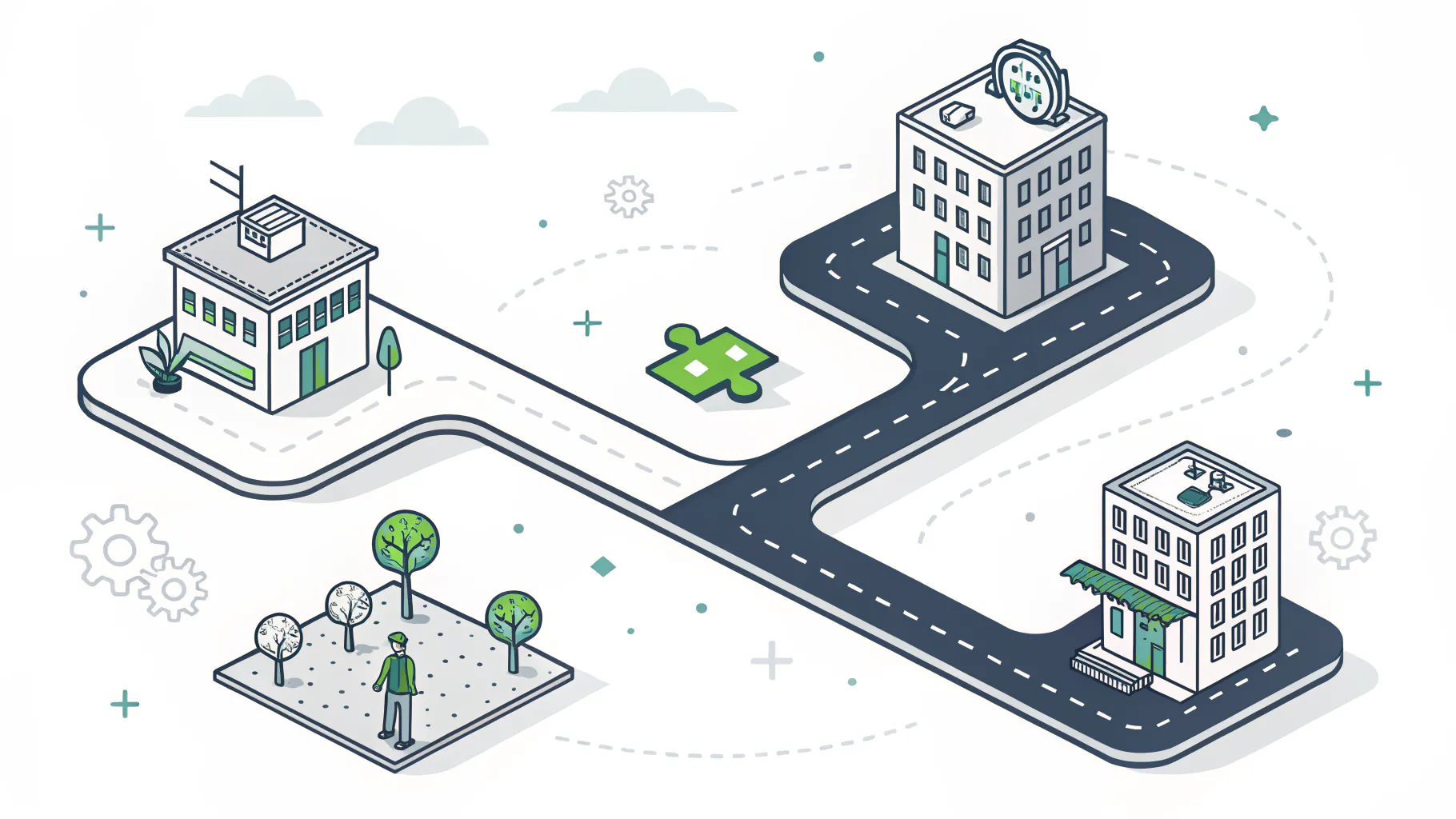
The managed route wins for most of the companies we talk to, and not just on price. A provider watching hundreds of environments across dozens of industries tends to recognize a fresh attack pattern weeks before your lone in-house analyst ever could, simply because they're seeing the same intrusion attempt play out over and over in real time. That's the edge. Shared visibility is the quiet advantage nobody prints on the quote. This is the model behind our US-based managed SOC, and it's why the buy option keeps beating build for businesses your size.
One caveat, because we're overstating slightly. In-house still wins in narrow cases. Defense contractors with data that legally can't leave certain hands. Companies with such unusual infrastructure that no outside team could learn it fast enough. Those exist. They're rare. Most people reading this aren't one of them.
What a SOC Looks Like in 2026
The modern SOC is fighting a volume problem, and AI is how it's fighting back. Too much noise. Analysts are drowning in alerts, the talent pool is short by millions of trained people, and automation is quietly taking over the repetitive first pass of triage so the humans can spend their hours on the incidents that actually need a brain behind them. Something had to give.
And the raw numbers are rough. Industry reporting pegs the typical SOC at thousands of alerts a day, most of them never investigated, with a majority of analysts reporting burnout. Meanwhile the global cybersecurity workforce sits roughly 3.5 million people short. You can't hire your way out of that. The math doesn't allow it.
So the role is shifting. Agentic AI now handles a lot of the Tier 1 triage, the clearing of obvious noise, and the human analyst moves up a level to supervise, interpret, and handle the weird stuff a machine can't reason through. Does that make the human optional? No. It makes them more valuable, aimed at the 10% of the work that was always the point. The robot reads the logs. The person decides what they mean.
What Happens When the SOC Finds Something
Detection is only half the value. The other half is what happens in the next few minutes. The clock's already running. A SOC that spots a threat and then fumbles the handoff has done the easy part and skipped the hard one.
This is where a SOC hands off to a plan. The analysts confirm the threat, contain it, and trigger the playbook that decides who gets called, what gets shut down, and how you recover. No playbook, no payoff. If that plan doesn't exist, the detection was almost wasted. A written incident response plan is what turns a caught threat into a contained one. We've watched companies detect an intrusion within minutes and still lose an entire day of operations because nobody in the building knew who actually had the authority to pull the plug on a production system. Detection without a decision is just an expensive alarm.
The Bottom Line
Strip a SOC down and it's two things stacked together. Eyes on your environment around the clock, and a plan to act the second those eyes catch something. Strip it down and that's all it is. Watch, then move.
For most companies in Southern California, the smart play isn't building the room. It's buying the capability, folding it into the IT you already run, and getting the same enterprise-grade monitoring the big players have without carrying a seven-figure security payroll that would swallow your margin. That fits a 50 to 250-person business. And it closes the 2 a.m. gap without breaking the budget.
If you're weighing whether your business needs round-the-clock security monitoring, start with a straight conversation about your actual risk, not a sales pitch. Call Consilien at 866-680-3388 for a no-pressure security discovery session, or read how our managed cybersecurity service puts a US-based SOC behind your systems.