Top IT Services for Manufacturing Companies in California
Manufacturing companies in California depend on certain IT services to keep production running, reduce downtime, and manage risk.
Table of Contents
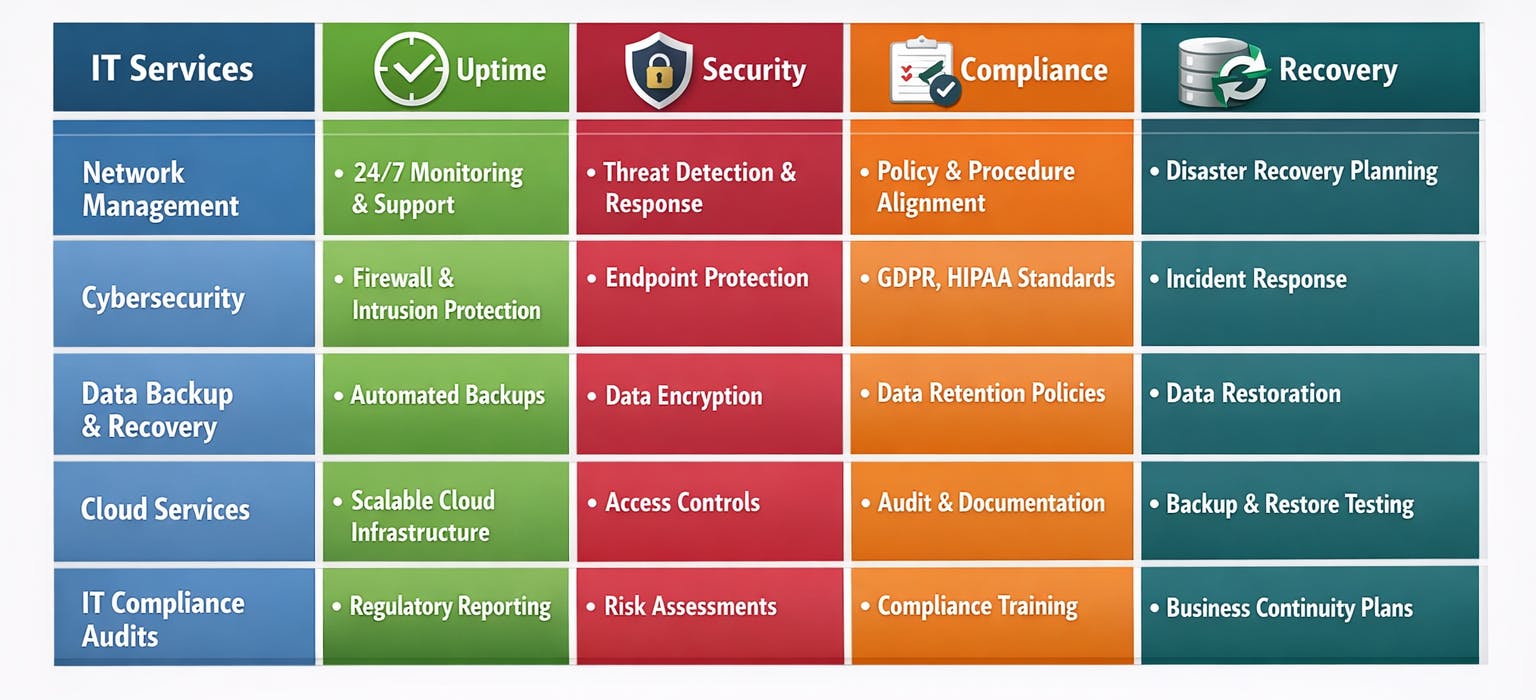
The most critical services include:
- Managed IT services designed around uptime and production schedules
- Co-managed IT services that support lean internal IT teams
- Cybersecurity and OT security focused on ransomware and operational resilience
- Backup, disaster recovery, and business continuity planning
- Cloud and hybrid infrastructure services for ERP and production systems
- Network and connectivity services for plants, warehouses, and multiple sites
- Compliance and risk management IT services
- Strategic IT leadership and roadmapping (vCIO)
- Selective use of AI and automation to improve visibility and response
These services work best when they are integrated, prioritized, and aligned with how manufacturing actually operates in California.
Manufacturing IT is more about keeping lines running, protecting production systems, and avoiding surprises than chasing new technologies.
Industry data consistently shows manufacturing as one of the most targeted sectors for ransomware. Sophos reports that manufacturing remains among the most frequently attacked industries, with a majority of incidents driven by exploited vulnerabilities and compromised credentials rather than advanced attacks (https://www.sophos.com/en-us/content/ransomware-trends). This makes uptime-focused IT services a business requirement, not an IT preference.
California manufacturers face added pressure from regulatory requirements, labor shortages, regional disruptions, and a threat landscape that increasingly targets operational environments.
This guide breaks down the IT services that matter most, why they matter, and how they fit together in real manufacturing environments.
Why IT Services Look Different in Manufacturing Than in Other Industries
Manufacturing exposes the gap between office IT and operational reality.
Recent breach and ransomware reporting continues to highlight manufacturing as a high-impact target. Verizon’s Data Breach Investigations Report shows ransomware and vulnerability exploitation as leading attack patterns in manufacturing environments. This reinforces why preventive services matter more than reactive fixes.
Downtime doesn’t mean lost productivity. It means stopped production, missed shipments, and real revenue impact. Systems can’t always be patched on demand. Reboots aren’t harmless. And availability often matters more than perfection.
That’s why manufacturing IT services have to be designed around operations, not just support tickets.
In California, this gets more complex. Power instability, wildfire risk, seismic planning, and compliance expectations all raise the stakes. IT decisions that might be inconvenient in another industry can become operational failures on the plant floor.
Managed IT Services That Keep Manufacturing Operations Running
Managed IT services form the foundation of manufacturing stability.
Done right, they focus on prevention, not reaction. Systems are monitored continuously. Issues are addressed before they become outages. And changes are planned around production schedules, not business hours.
In manufacturing environments, managed IT services typically include:
- Proactive monitoring of servers, networks, and critical applications
- Help desk support for both office and plant staff
- Patch management coordinated around production windows
- Vendor coordination for ERP systems, automation vendors, and equipment providers
The goal isn’t faster ticket closure. It’s fewer tickets in the first place. A reliable managed IT model reduces noise, lowers stress on internal teams, and creates predictability. And in manufacturing, predictability is everything.
Co-Managed IT Services for Manufacturers With Lean Internal Teams
Many manufacturers don’t want to outsource IT entirely. They want backup.
Co-managed IT services support internal IT teams by filling gaps instead of replacing them. This model works especially well for manufacturers running lean, where one or two internal staff can’t reasonably cover infrastructure, security, projects, and after-hours support.
Co-managed IT services often provide:
- Escalation support for complex or after-hours issues
- Additional coverage during production hours
- Security and infrastructure expertise without adding headcount
- Shared responsibility and clear role definition
This approach keeps institutional knowledge in-house while reducing burnout and risk.
And when production runs outside standard business hours, that coverage matters.
Cybersecurity and OT Security Services for Manufacturing Environments
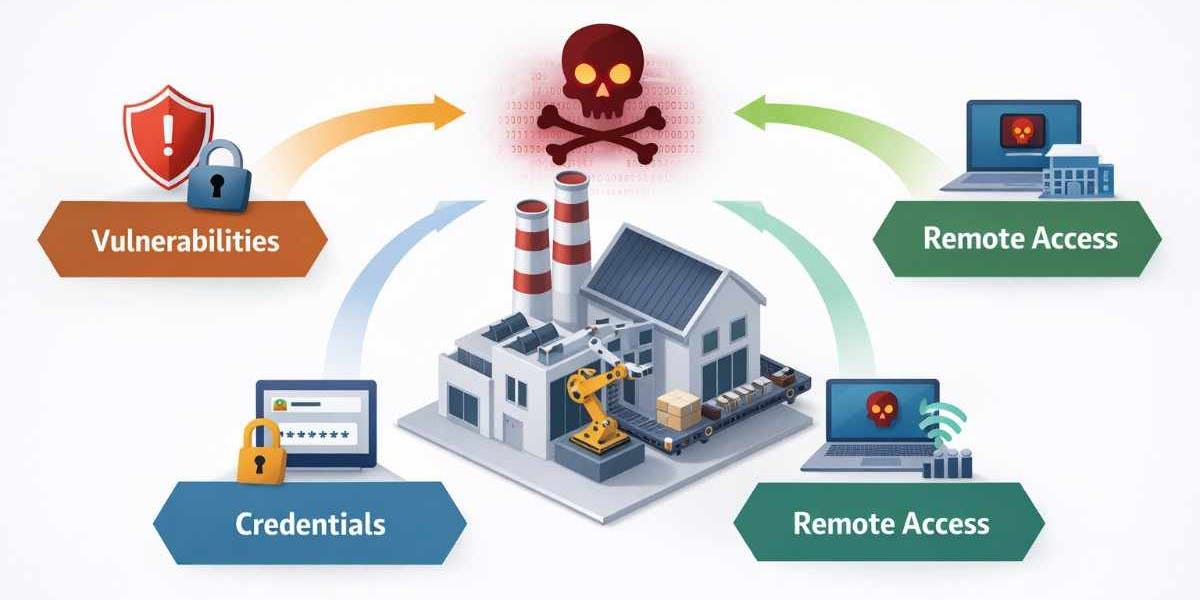
Manufacturing is a prime target for ransomware because downtime creates leverage.
Security research consistently shows that exploited vulnerabilities and credential misuse remain leading entry points in manufacturing ransomware incidents. Sophos reports that over 30% of manufacturing ransomware attacks begin with exploited vulnerabilities, followed closely by credential abuse and phishing.
Cybersecurity services in manufacturing have to account for both IT systems and operational technology. Office security tools alone aren’t enough. OT environments operate under different constraints, and security has to work within those limits.
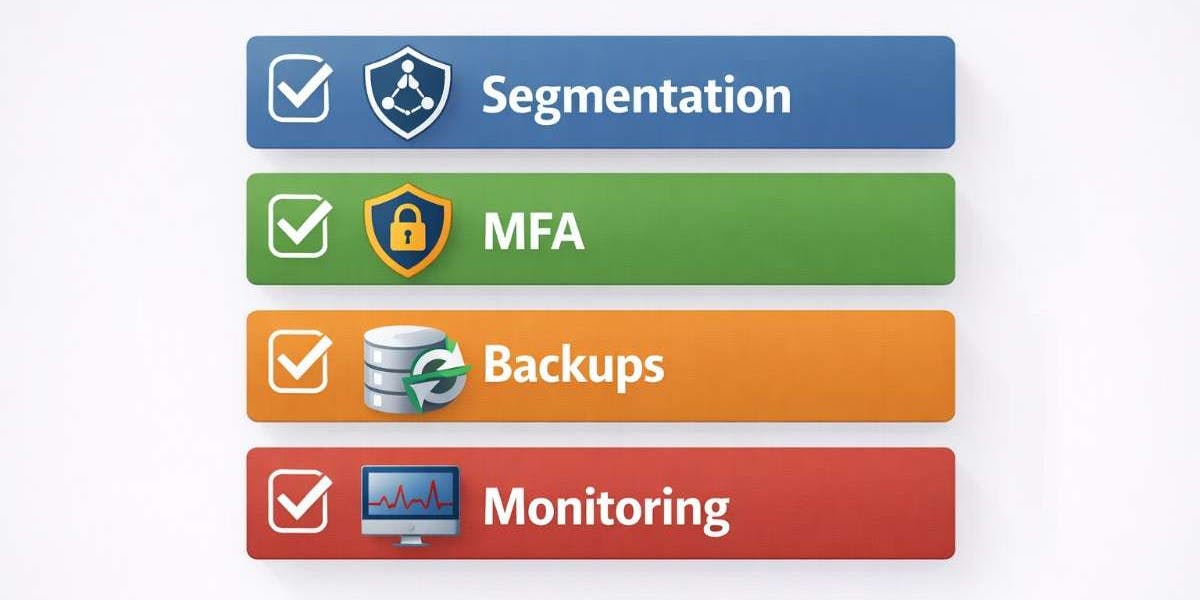
Effective manufacturing security services focus on:
- Network segmentation between office and production systems
- Identity and access controls that limit lateral movement
- Endpoint protection designed for mixed environments
- Continuous monitoring and incident response planning
The mistake many organizations make is forcing plant environments to behave like office IT.
Security works best when it respects how production actually runs.
Backup, Disaster Recovery, and Business Continuity for California Manufacturers
Backups don’t equal recovery.
Industry breach cost analyses show that the global average cost of a data breach reached $4.45 million in IBM’s Cost of a Data Breach Report, with operational disruption cited as a major cost driver. For manufacturers, recovery time often matters more than recovery method.
Manufacturers need to know how quickly systems can be restored, what data is prioritized, and whether recovery plans have been tested under real conditions.
In California, disaster recovery planning has to consider more than cyber events. Power outages, wildfires, and regional disruptions are part of the operating environment.
Strong business continuity services include:
- Defined recovery time and recovery point objectives
- Isolated and immutable backups
- Regular recovery testing
- Clear roles during an incident
When recovery plans are vague or untested, downtime lasts longer than anyone expects.
Cloud and Infrastructure Services That Actually Make Sense for Manufacturing
Manufacturing environments rarely move entirely to the cloud. And that’s not a failure.
Hybrid infrastructure is common because it balances control with flexibility. Production systems stay stable. Business systems gain scalability. And change happens deliberately.
Cloud and infrastructure services for manufacturers focus on:
- Supporting ERP, MES, and line-of-business applications
- Secure remote access for engineers and leadership
- Performance and reliability over novelty
- Cost control and lifecycle planning
The right question isn’t what can move to the cloud. It’s what shouldn’t.
Network and Connectivity Services for Plants, Warehouses, and Multiple Sites
Networks are often the silent failure point.
Plant floors, warehouses, and remote sites depend on reliable connectivity. When networks are fragile or poorly segmented, small issues cascade into production problems.
Manufacturing-focused network services address:
- Plant floor networking and industrial equipment connectivity
- Wireless coverage for scanners, tablets, and mobile systems
- Redundancy and failover between sites
- Secure site-to-site communication
When networks are designed around operations, problems surface early instead of during production.
Compliance and Risk Management IT Services
Compliance pressure keeps increasing, even for manufacturers that don’t consider themselves regulated.
Frameworks like NIST, CMMC, and ISO introduce technical and documentation requirements that quickly become IT responsibilities.
Risk management services help by:
- Aligning technical controls with compliance requirements
- Maintaining documentation over time
- Identifying gaps before audits
- Reducing last-minute remediation
Compliance becomes a crisis only when it’s treated as an afterthought.
Strategic IT Leadership Services (vCIO and IT Roadmapping)
Technology decisions don’t happen in isolation.
Strategic IT leadership services help manufacturers translate technical issues into business risk and long-term planning. This includes budgeting, lifecycle management, and aligning IT decisions with production goals.
The value isn’t in managing day-to-day operations. It’s in avoiding bad decisions made under pressure.
When IT planning is proactive, fewer surprises make it to the executive team.
Where AI and Emerging Technologies Actually Fit in Manufacturing IT
AI has a role in manufacturing IT today, just not where the hype suggests.
Industry research points to AI delivering the most value in detection, monitoring, and response. IBM reports that organizations using AI and automation for security reduced breach lifecycle costs, while also warning that unmanaged AI usage increases risk and governance gaps.
Its strongest impact shows up behind the scenes.
Practical uses include:
- AI-enhanced monitoring to detect failures earlier
- Smarter threat detection in cybersecurity
- Faster root-cause analysis during incidents
- Automation of routine IT tasks
These uses improve visibility and response without disrupting production.
Problems arise when AI tools spread without oversight. Governance matters more than experimentation.
How to Decide Which IT Services Your Manufacturing Business Needs Right Now
A few signals usually show up first.
- Recurring downtime or performance issues
- Security gaps that rely on luck instead of controls
- Internal IT stretched thin
- Projects that never seem to finish
Prioritization matters more than coverage.
Stability, security, and recovery come before transformation. And services should be added deliberately, not all at once.
Manufacturing IT works best when it stays boring. Systems run. Issues are handled quietly. And leadership stays focused on production instead of outages.
That’s not accidental. It’s the result of choosing the right services, in the right order, with the right priorities.