What Is a Cyber Threat Assessment? How to Spot Risks Before They Hit
A cyber threat assessment is a structured process that identifies who would realistically attack your business, how they would get in, and what breaks if they succeed. It answers those questions before an incident, not in the postmortem. Think of it this way. A vulnerability scan tells you which doors are unlocked. A threat assessment tells you which doors a burglar would actually try, and what they take when they get inside. The first is a checklist. The second is a decision tool, and it is the foundation of any serious cybersecurity risk assessment.
Table of Contents
Most companies do this backward. They buy the tools, run a scan, and assume they are covered. Then a phishing email lands, an employee clicks, and they learn that the thing they protected was not the thing that mattered.
The short version: A cyber threat assessment evaluates the specific threats facing your organization, the likelihood each one materializes, and the business impact if it does. The output is a prioritized list of what to fix first, ranked by risk to your operations and revenue, not by how scary the threat sounds in a headline.
What a cyber threat assessment actually is
At its core, a threat assessment maps three things against each other: your assets, the threats that target them, and the likelihood and impact of each threat being realized. It is not a single tool or a one-time scan. It is an analysis that produces decisions.
The work pulls from threat intelligence, your own environment data, and a clear-eyed view of what your business cannot afford to lose. A manufacturer's crown jewels might be production scheduling and CAD files. A distribution company's might be order entry and the systems that move freight. A professional services firm lives and dies on client data and email. The threats that matter are the ones aimed at those specific functions, by attackers who have a reason to come after them.
That last point is where most generic security advice falls apart. You don't defend against every threat in existence. You defend against the ones with the motive, the capability, and a clear path into your environment. A threat assessment is how you tell those apart.
Threat vs. vulnerability vs. risk, and the distinction most companies blur
These three words get used interchangeably, and the confusion costs money. They are not the same thing, and a good assessment treats them as separate inputs.
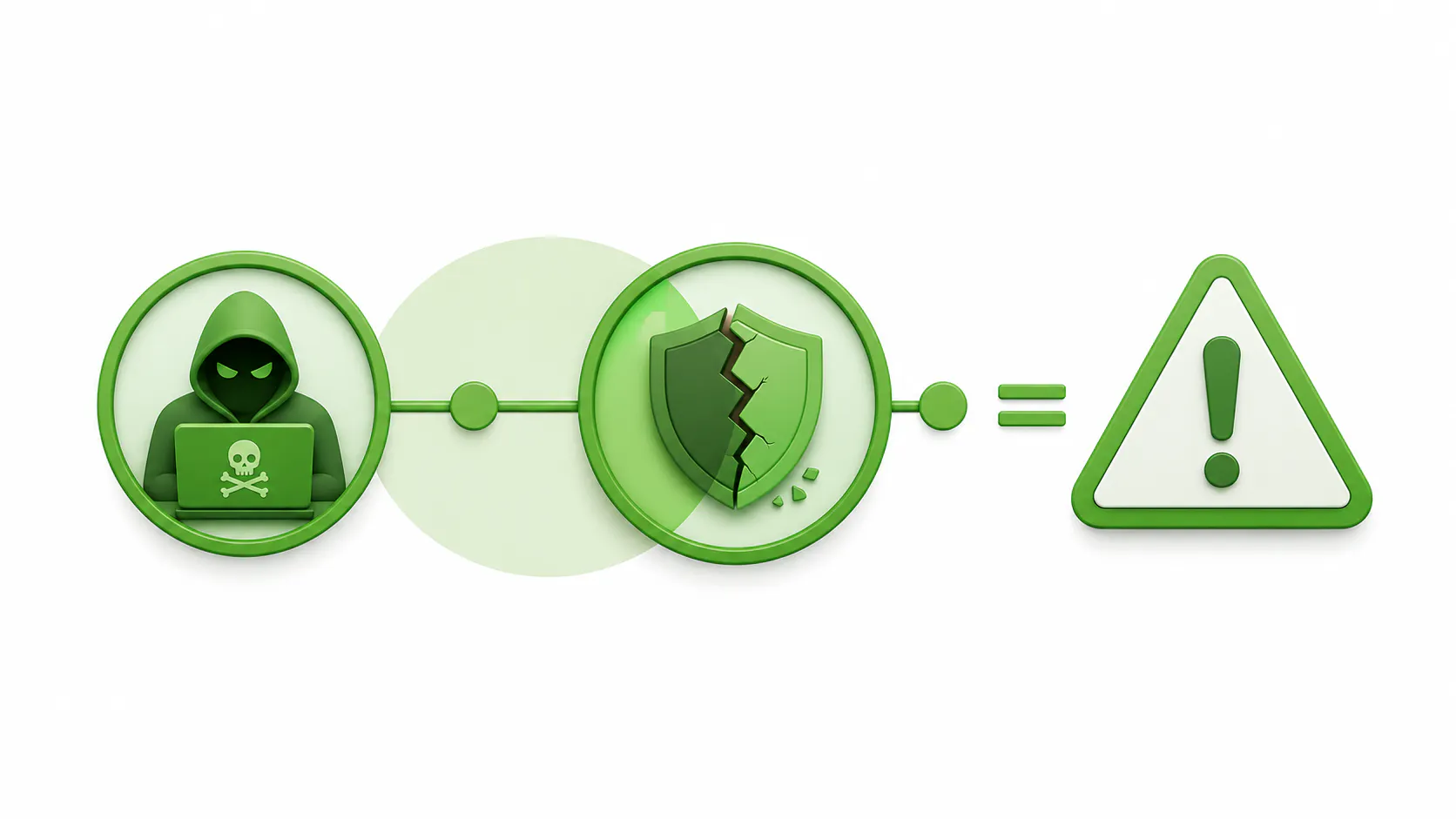
- Threat: who or what could cause harm, such as a ransomware crew targeting mid-market manufacturers.
- Vulnerability: how exposed you are, such as an unpatched VPN appliance facing the internet.
- Risk: how bad it gets when the threat meets the vulnerability, such as production halted for nine days and contracts missed.
Put simply, risk is the likelihood that a threat exploits a vulnerability, multiplied by the damage it does. A vulnerability with no threat behind it is low priority. A serious threat with no path into your network is noise. Risk lives where the two intersect, and that intersection is exactly what a threat assessment is built to find. The team at SentinelOne frames it the same way: vulnerability is a measure of exposure, risk is a measure of consequence.
Why this matters more in 2026
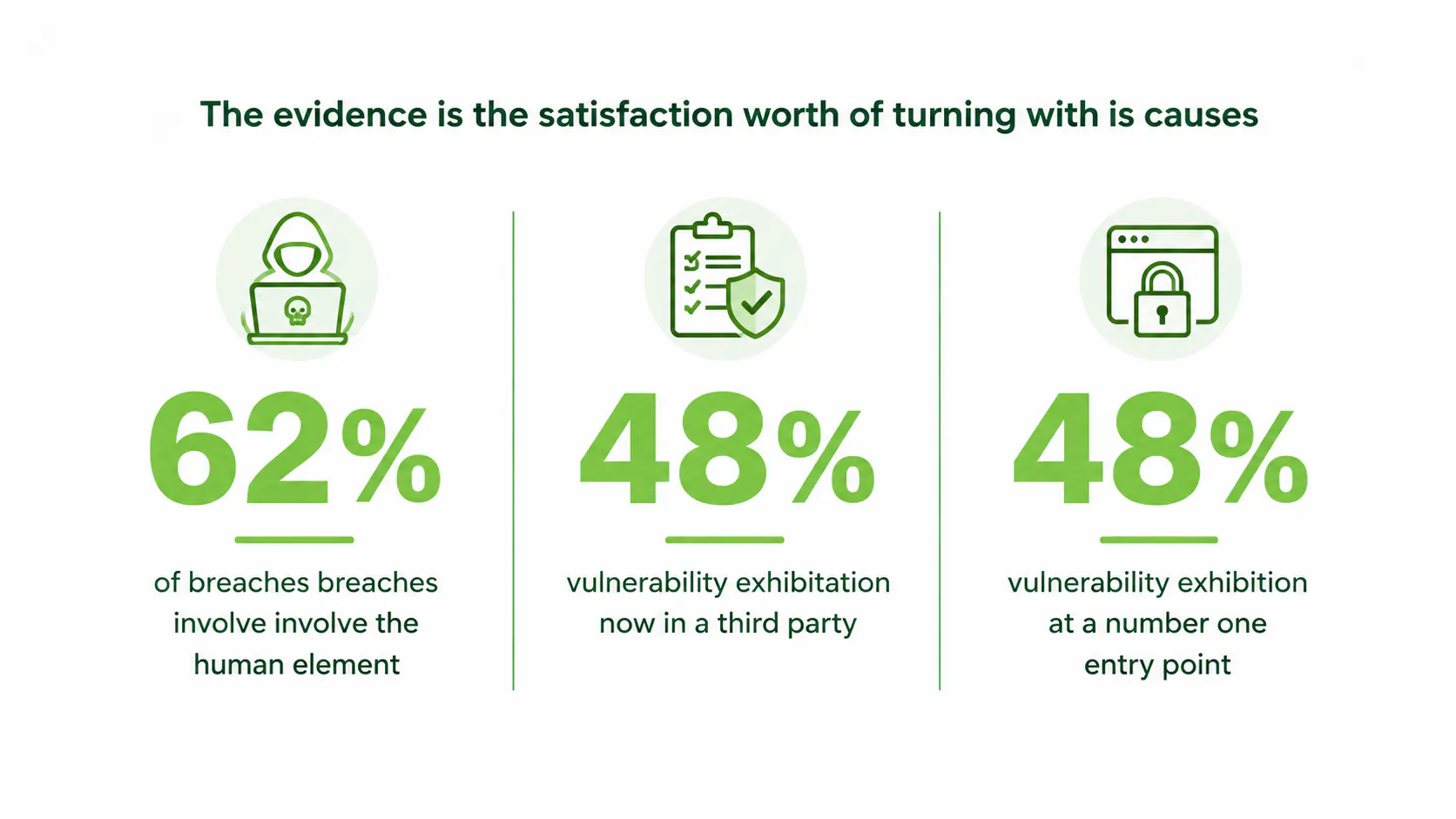
The threat landscape did not get gentler. According to the Verizon 2026 Data Breach Investigations Report, the human element was a factor in 62% of breaches, and software vulnerability exploitation overtook stolen credentials as the single most common way attackers get their initial foothold. Translation: attackers are walking through unpatched front doors and tricking your people in roughly equal measure.
Two shifts make this harder than it was even a year ago. First, third-party exposure is climbing fast. The same report found 48% of breaches involved a third party, a 60% jump from the prior year. Your vendors, your contractors, and the SaaS tools your team signed up for without telling IT are now part of your attack surface. Second, the gap between assessment and reality keeps widening. As security researchers covering external attack surface management put it, autonomous scanning tools now probe the entire internet continuously, and the time between a new asset appearing online and an attacker finding it is measured in hours.
You can't close that gap with an annual checkbox. You close it by knowing your real exposure and watching it. That is the practical case for treating threat assessment as an ongoing discipline rather than a project, and it is why managed cybersecurity increasingly bundles continuous monitoring with periodic assessment.
The 5 steps of a cyber threat assessment
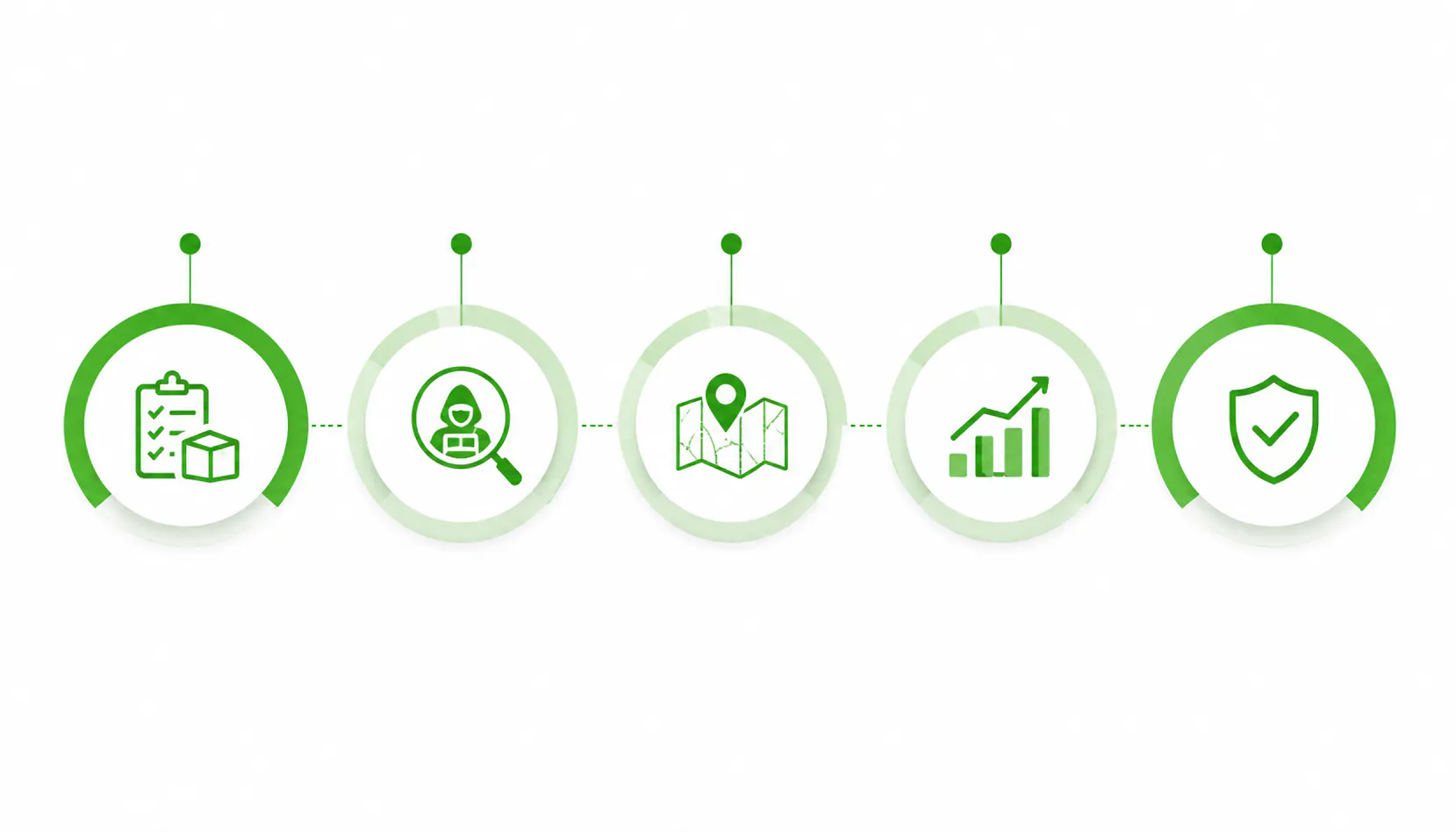
A credible assessment follows a repeatable process. The methodology below maps to NIST SP 800-30, the federal guide for conducting risk assessments, which is the most widely adopted baseline for this work.
1. Inventory what you are actually protecting
You can't protect what you haven't counted. Start with the assets that carry the business: customer data, financial systems, production scheduling, payroll, intellectual property, email, and the identities that access all of it. Note where each one lives, who touches it, and what it would cost you per day if it went dark. This is the un-glamorous work, and it is the step most companies rush. Skip it and every later step inherits the blind spot.
2. Identify the threats that target you, not the headlines
Now match real threats to those assets. Ransomware, business email compromise, credential theft, insider mistakes, and third-party compromise are the usual suspects for most mid-market companies. The FBI logged more than $2.7 billion in losses from business email compromise alone in a single year, per CISA. But your industry shapes the list. A manufacturer faces operational technology threats a law firm never will, which is why manufacturing cybersecurity is its own discipline. The goal is a threat list grounded in your reality, not a generic top-ten.
3. Map your exposure: vulnerabilities and attack surface
With assets and threats defined, find the paths in. This is where vulnerability scanning and attack surface discovery do their work: unpatched systems, exposed services, weak or missing multi-factor authentication, misconfigured cloud storage, and forgotten internet-facing assets nobody remembers spinning up. CISA offers free vulnerability scanning for small and mid-sized businesses, which is a reasonable place to start if you have never done this. A formal IT assessment goes deeper across your whole environment.
4. Rate likelihood and impact
Here is where the analysis earns its keep. For each threat-vulnerability pair, score two things: how likely it is to happen, and how badly it hurts if it does. NIST SP 800-30 builds risk from exactly this pairing. A low-likelihood, high-impact event and a high-likelihood, low-impact event are not the same problem, and they do not get the same budget. The output is not a gut feeling. It is a ranked risk register you can defend to a board.
5. Prioritize, then feed it into decisions
The assessment is worthless if it ends as a PDF in a shared drive. The final step turns findings into action: patch this first, enforce MFA here, train these users, segment that network, fix the vendor with no MFA on their cloud account. This is also where the assessment informs bigger calls, from insurance to compliance readiness for NIST, CMMC, PCI, and SOC 2. A threat assessment is not an academic exercise. It exists to feed decisions.
Where the intelligence comes from
A threat assessment is only as good as the intelligence behind it. That intelligence comes in three layers, and a mature program uses all three. CrowdStrike and others define them this way:
- Strategic: the big picture. Which threat actors target your industry, what their motives are, and where the trends point. This informs executive decisions and budget.
- Operational: the campaigns and actors active right now, their tactics, and who they are hitting. This shapes how you prioritize.
- Tactical: the technical signals. Malicious IPs, file hashes, and domains your tools use to detect and block in real time.
Most small teams have tactical intelligence baked into their tools and almost no strategic view. That imbalance is why so many companies are technically busy and strategically blind. Filling the strategic gap is often where a vCIO or vCISO advisory relationship pays for itself.
How often should you run one?
For most small and mid-sized businesses, a full threat assessment once a year is the floor, not the goal. Regulated or high-risk operations should reassess quarterly or semi-annually. But the calendar is only half the answer. Specific events should trigger an assessment regardless of when you last ran one:
- You adopted new technology, moved to the cloud, or rolled out a major system.
- You went through a merger, acquisition, or significant restructuring.
- You onboarded a vendor with deep access to your data.
- You had a security incident, or a near miss that got your attention.
The principle is simple. Your environment changes constantly, and so does the threat landscape. An assessment is a snapshot. Take new ones when the picture changes.
Signs you need a threat assessment now
Set the calendar aside for a moment. How do you know if you're overdue? If any of these are true, the answer is yes:
- You can't name your top five cyber risks off the top of your head.
- Your last assessment is more than a year old, or you've never had one.
- You aren't sure which vendors can touch your data.
- MFA is not enforced everywhere, and you aren't certain where the gaps are.
- You're pursuing a contract or certification that requires proof of a security program.
None of these are exotic. They are the ordinary blind spots that turn a manageable incident into a business-ending one. The companies that survive a breach almost always share one trait. They did the analysis first, then bought the technology. Not the other way around.
A threat assessment is how you stop guessing. It tells you, in plain terms, where you're exposed and what to do about it, before someone else finds out for you.