Cyber Security Training for Employees: How to Build a Program That Actually Changes Behavior
Cyber security training for employees is the structured, ongoing practice of teaching your people to recognize and respond to the attacks aimed at them, then measuring whether their behavior actually changes. That last part is where most programs fall apart. Training teaches what people know. A real program is judged by what they do at 4:55 on a Friday when an email says the CEO needs a wire transfer right now.
Table of Contents
Why employee cyber security training matters now
People are the most targeted part of your environment, and the numbers are not subtle. The Verizon 2025 Data Breach Investigations Report found the human element involved in roughly 60% of breaches. Not a server misconfiguration. A person, clicking, approving, or handing over a credential.
The cost lands hard. The IBM Cost of a Data Breach 2025 report puts the global average breach at $4.44 million, and the U.S. average at $10.22 million. In that same report, phishing became the most common initial attack vector. The cheapest control you have against the most expensive problem you have is whether your people can spot the attack and report it.
And the attacks got easier to launch. Generative AI cut the time to write a convincing phishing email from hours to minutes, so the volume and the polish both went up. Your people are now facing more attacks, written better, more often. Annual training built for 2018 does not hold up against that.
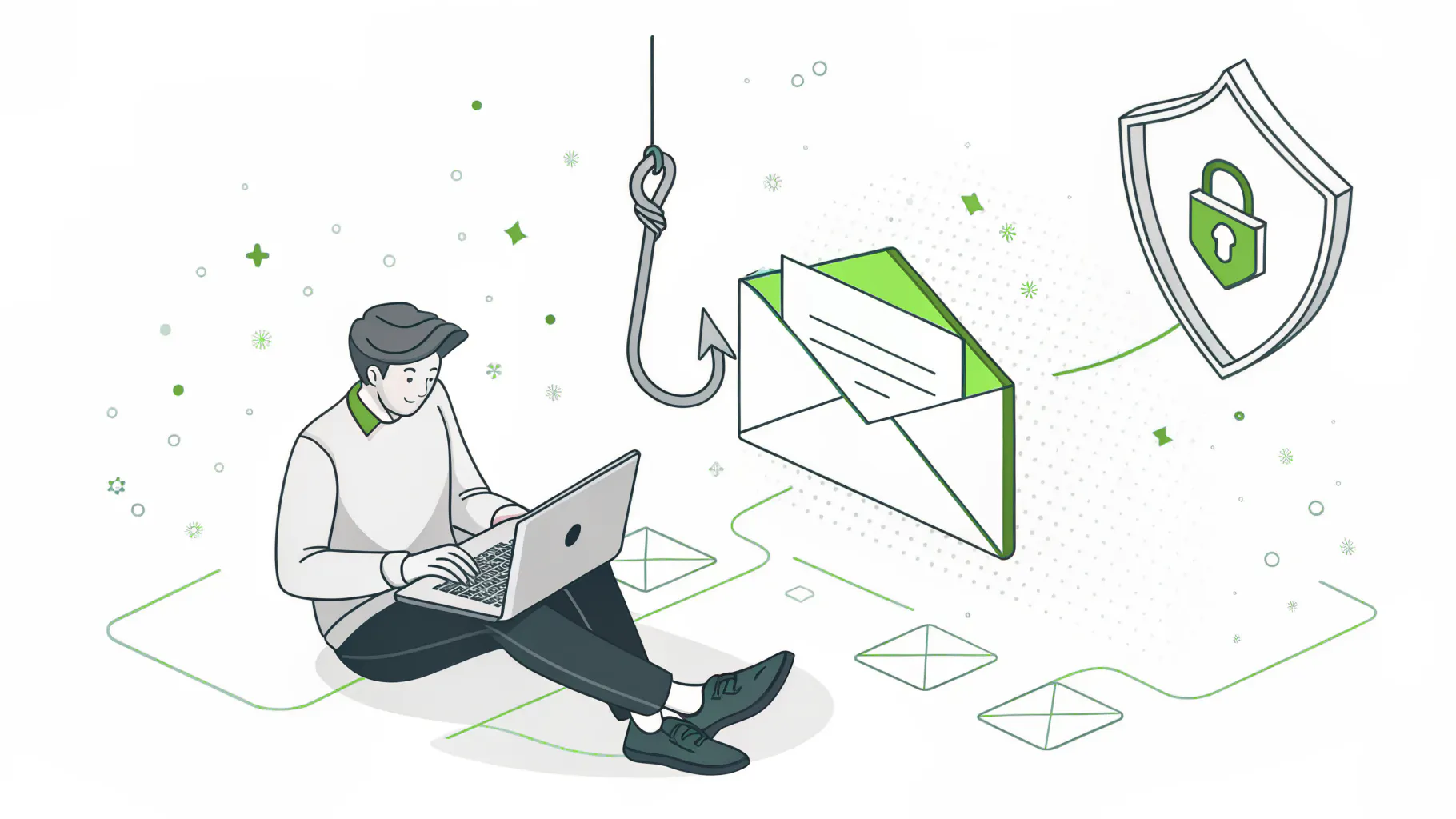
Why most security awareness programs fail
Before the build steps, name the failure modes. If you skip this, you will rebuild the same broken program with a nicer logo.
- It runs once a year. One long module in Q1 is forgotten by Q2. Recognition is a habit, and habits need reps, not an annual lecture.
- It measures completion, not behavior. A 100% completion rate tells you people clicked next. It tells you nothing about whether they would click a real malicious link.
- It is generic. The same content goes to the warehouse, the finance team, and the systems admin, even though each faces a completely different threat.
- It is built to pass an audit. Check-the-box training satisfies a control on paper and changes nothing in practice.
- It only covers email. Meanwhile the attacks moved to text, voice, and deepfake calls, and the training never followed.
The shift the strong programs are making is from awareness to human risk management. The distinction is simple. Awareness training focuses on what people know. Human risk management focuses on what they do, and uses real behavior data to target the people and habits creating actual risk. Build for the second one.
How to build a cyber security training program for employees
This is the seven-step structure we use when we stand up or repair a program. Work them in order. Each one feeds the next.
1. Set a behavioral baseline before you train anyone
You cannot show improvement you never measured. Start with a baseline phishing simulation against the whole company before a single training module goes out. That gives you a phish-prone percentage, the share of employees who click or hand over credentials on a simulated attack.
Expect that number to sting. The industry baseline tends to sit around one in three untrained employees interacting with a phishing simulation. That is your starting line, and it is the single number that proves the program is working later. Capture it before you do anything else.
2. Get executive buy-in and define the outcome
A program without leadership weight behind it becomes optional, and optional security training gets ignored. Secure sponsorship from the top, then define what success actually is in business terms. Not everyone completes training. Something like cut phish-prone percentage below 5% and lift threat reporting above 70% within 12 months.
Outcomes drive everything downstream: budget, cadence, content, and the metrics you report to the board. Decide them up front. A program is not an academic exercise. It exists to reduce a specific, measurable risk.
3. Make the training role-based
Your CFO and your shop-floor staff do not face the same attacks, so they should not get the same training. Finance is the target for invoice fraud and wire-transfer scams. Executives get impersonated. IT admins hold the keys to everything. Front-line staff are the entry point for credential phishing.
Role-based training is not just good practice, it is a compliance requirement. CMMC Level 2 control AT.L2-3.2.2, built on NIST SP 800-171, requires that managers, system administrators, and users are trained on the security risks tied to their specific activities. Map your content to roles, and you satisfy the framework and the threat at the same time.
4. Train continuously, not annually
Frequency is where programs win or lose. The research is consistent: short, frequent training beats long, rare training by a wide margin. Five to ten minute micro-learning modules delivered monthly hold attention and build the recognition habit. Bite-sized lessons have been shown to lift retention substantially over the once-a-year marathon.
Set a rhythm and keep it. Monthly micro-learning, paired with a phishing simulation people actually expect, turns security from an annual event into a normal part of how the company operates. That cadence is also what moves the numbers, which brings us to the proof.
5. Simulate the threats your people will actually see in 2026
Email phishing is still the front door, so run regular phishing simulations and use the misses as teaching moments, not punishment. But email is no longer the whole game.
Attackers now call employees with AI-cloned voices. A common 2026 play is a deepfake IT support call during a fake password reset, talking an employee into reading out their multi-factor code. Voice phishing, or vishing, has climbed to one of the top initial breach vectors. Executive voice cloning for urgent wire transfers needs only seconds of public audio from an earnings call or a conference talk.
Your simulations have to follow the threat across channels: email, text, and voice. Pair the simulations with practical social engineering awareness training so people understand the manipulation underneath every one of these tactics, not just the format it arrives in.
6. Measure behavior, not attendance
Completion rates are a vanity metric. Track the numbers that map to real risk:
- Phish-prone percentage. The share of employees who fail simulations. You want this trending down toward the low single digits.
- Reporting rate. The share of suspicious messages people actually report. A strong program targets 70% or higher. This is the metric that turns staff into a sensor network.
- Time to report. How fast a reported threat reaches your team. Faster reporting shrinks the attacker's window.
- Repeat clickers. The small group failing again and again, who need targeted attention.
Report these to leadership on the same cadence you report any other risk. When the board sees phish-prone percentage falling and reporting rate climbing, the program stops being a cost and starts being evidence.
7. Tie the program to your compliance obligations
If you carry CMMC, NIST, SOC 2, or PCI obligations, employee training is not optional, it is a named control. NIST SP 800-171 requires awareness training at hire and annually after. SOC 2 expects you to communicate security knowledge and prove the training happened. Build the program so it produces that evidence as a byproduct: completion logs, simulation results, and dated records.
Do it right and one program serves two masters. It reduces real risk, and it satisfies the auditor. If compliance is a driver for you, align the build with your broader compliance readiness work from the start rather than bolting it on later.
What good looks like: program benchmarks
Use these as a rough target for a mature program against a starting point. The figures draw on published industry benchmarks, including KnowBe4 analysis showing security training cuts phishing click rates by roughly 86% over 12 months.
- Phish-prone percentage. Untrained, around one in three employees fail a phishing simulation. A mature 12-month program drives that under 5%.
- Threat reporting rate. Untrained, roughly 30% of suspicious messages get reported. A mature program lifts that past 70%.
- Training cadence. Weak programs run once a year. Mature programs run monthly micro-learning.
- Simulation channels. Weak programs test email only. Mature programs test email, text, and voice.
- Primary measure. Weak programs track completion. Mature programs track behavior change.
Common mistakes to avoid
- Punishing people who fail. Shame drives behavior underground. People stop reporting because they are afraid of looking foolish. Treat every miss as a coaching moment.
- Set-and-forget content. Threats change quarterly. Training built two years ago is teaching your people to fight last decade's attacks.
- One simulation a year. A single annual phishing test is a pop quiz, not a program. It catches people off guard and teaches nothing durable.
- Ignoring the repeat clickers. A small group usually drives most of the risk. General training will not fix them. They need direct, targeted follow-up.
- Treating training as the whole defense. Training is one layer. It works alongside technical controls, not instead of them.
Where most teams need help
Building this in-house is doable, but the maintenance is what wears teams down. Someone has to write the simulations, refresh content as threats change, chase down non-completers, analyze the results, and turn them into a board report, every month, on top of their day job. That is usually where good intentions quietly die.
This is the work we fold into a managed program, so the cadence never slips and the reporting is always ready. If you want to see how the pieces fit, our managed cybersecurity team runs employee training as part of a layered defense rather than a standalone checkbox.
Build the program around behavior
The companies that get this right share one trait. They stopped measuring whether training happened and started measuring whether behavior changed. They set a baseline, ran the program every month, simulated the attacks their people would really see, and watched the numbers move. Not with a single tool. With a habit.
If you want help standing up a program that does that, or fixing one that has stalled at the completion-rate stage, our team can build it with you. Learn more about security awareness training with Consilien.