Best Cloud Backup Solutions for SMBs in 2026: 8 Platforms Ranked and Scored
The best cloud backup for most SMBs is Cove Data Protection, scoring 8.78/10 because immutability is on by default and storage is included in the price. Veeam Data Platform (8.61) leads on workload coverage. Acronis Cyber Protect Cloud (8.44) bundles backup with endpoint security. Six weighted criteria, applied identically to every platform.
Table of Contents
Quick Picks
- Best overall: Cove Data Protection
- Best for virtualized and mixed environments: Veeam Data Platform
- Best all in one: Acronis Cyber Protect Cloud
- Best for instant failover: Datto SIRIS
- Best you can buy today without a provider: IDrive
- Best for cloud only recovery: Axcient x360Recover
- Best for controlling storage costs: MSP360 Backup
- Best for simple laptop backup: Backblaze Business Backup
Picking the best cloud backup for a business between 20 and 500 users used to be a storage question. How many terabytes, how much per month. That question is mostly settled now. Storage got cheap. The one that decides whether your company survives a bad Tuesday is different: when your backups are the thing being attacked, does the copy hold, and what does getting it back actually cost you?
Attackers went after backup repositories in 96% of ransomware incidents last year and succeeded in 76% of those attempts. Read that again. Three quarters. Backup stopped being a storage product somewhere around then. It became a security control.
This ranking scores eight platforms on six criteria, weighted and published below. Two of those criteria, immutability and what a restore costs you, are the ones most comparison articles skip entirely. Odd, given they're the two that separate these products once you get past the feature grid.
How We Ranked These Platforms
Rankings come from a Confidence Score methodology: six independently researched criteria applied the same way to every platform. No vendor paid for placement. No vendor submitted their own data. Consilien publishes this ranking and doesn't appear on it.
Here is the weighting.
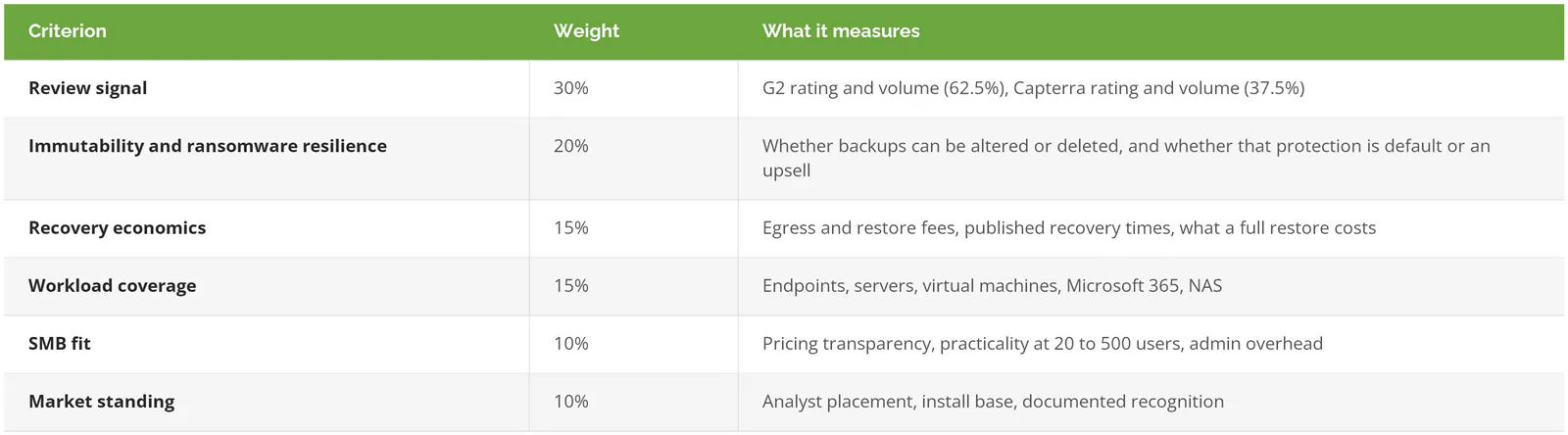
Ratings were pulled live on August 12, 2026 from G2 and Capterra. G2 publishes on a 0 to 10 scale, converted here to stars. Review volume is scored logarithmically, so the jump from 4 reviews to 40 counts for far more than the jump from 400 to 4,000. Why? A platform serving thousands of small businesses will always out-review one selling through 200 partners, and that gap says nothing about which recovers your file server faster.
Two decisions worth explaining, because both look like omissions.
NinjaOne carries 4,954 G2 reviews, more than any other product in the backup category. It isn't on this list. Those reviews are for its remote monitoring platform, where backup is one module among many. Scoring a backup comparison on RMM reviews would tell you how much technicians like the dashboard, not how well the product restores a domain controller.
Backblaze is scored on Business Backup, not B2 Cloud Storage. B2 rates higher, 4.6 with 114 reviews. But B2 is object storage, not a backup application. It shows up in this article anyway, because half these platforms use it as their storage target.
Why drop years in business? It doesn't discriminate. Acronis launched in 2003, Veeam in 2006, Backblaze in 2007. All grown up. Longevity is table stakes here, so it earns no points.
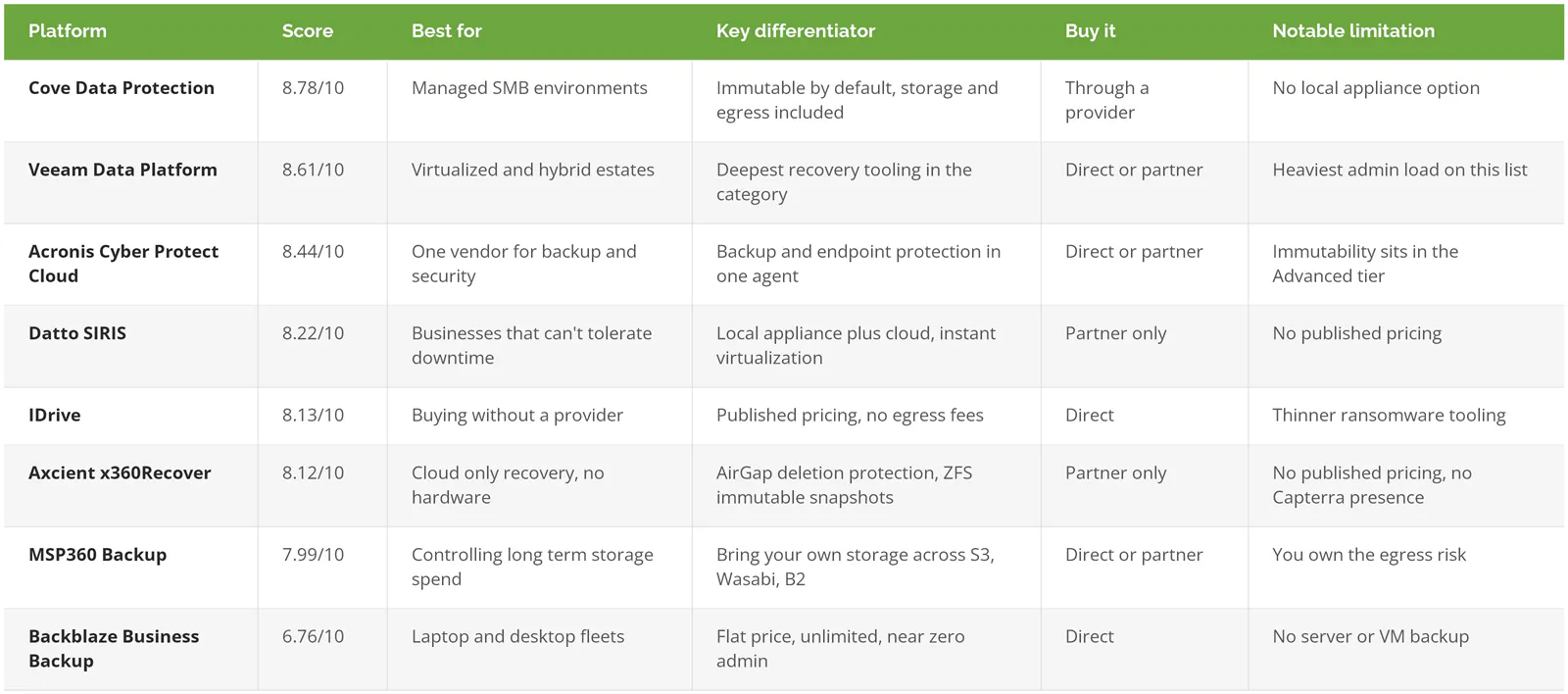
Cloud Backup Platforms at a Glance
The 8 Best Cloud Backup Solutions for SMBs
1. Cove Data Protection: Immutable Without Being Asked
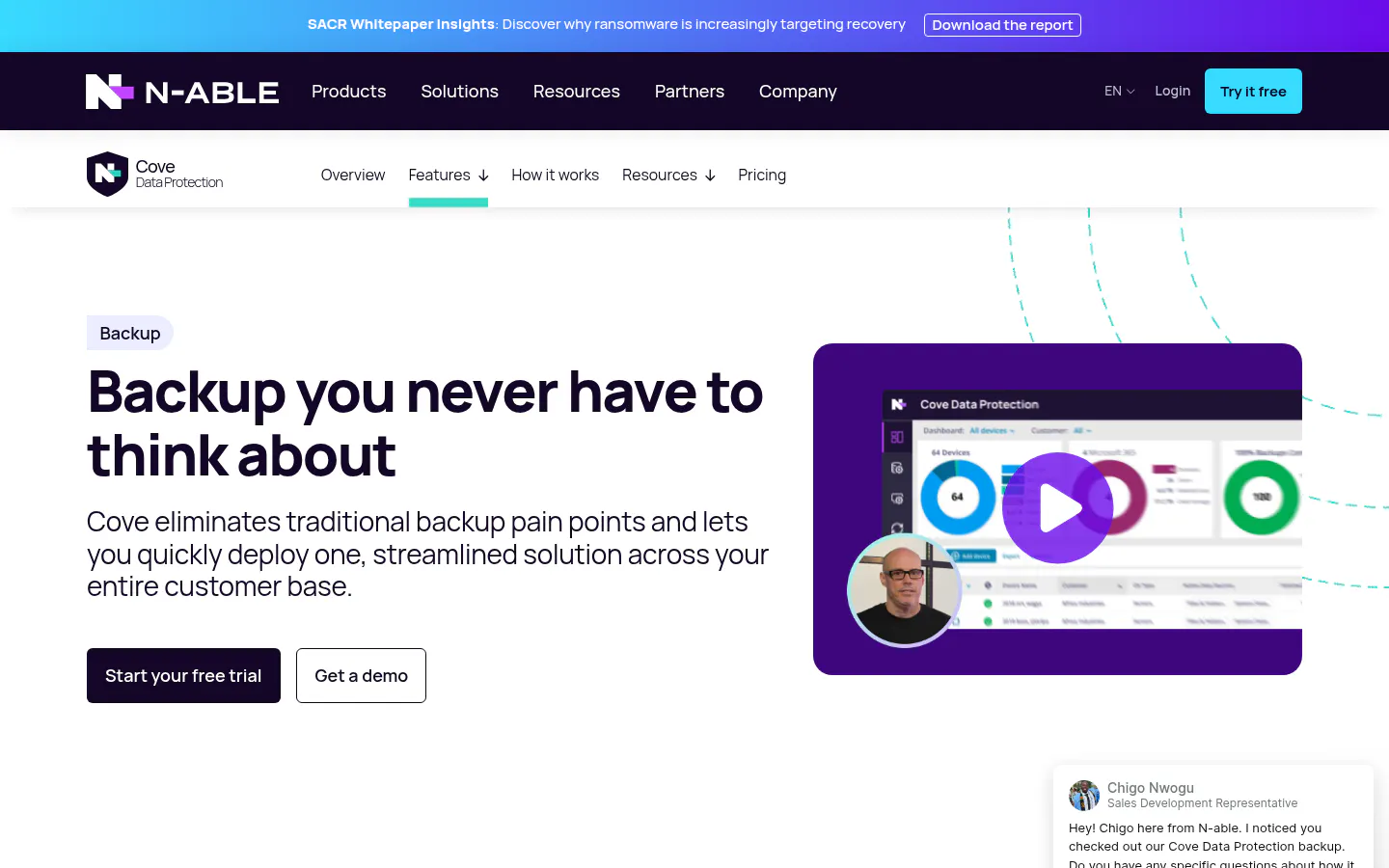
Score: 8.78/10
Cove wins this list without leading a single headline category. Not the highest rated. Not the broadest. Not the biggest name. It ranks first because of what happens when you do nothing.
Cove's cloud backups are immutable by default. No tier upgrade. No configuration checkbox. No separate storage bucket to provision. That matters more than it sounds. On most platforms immutability is available, which isn't the same as being on, and the gap between those two words is where a lot of companies discover, usually at the worst possible moment and usually with an auditor or an insurer watching, that their retention policy was never actually applied to anything.
Key Strengths
- Immutability is the default state, not an option a technician has to remember
- TrueDelta moves up to 60x less data per job, which makes 15 minute backup intervals realistic on ordinary business broadband
- Cloud storage and archiving are included in the per device price, so a full restore doesn't generate a second invoice
- LocalSpeedVault keeps an optional local copy on an existing network share, giving LAN speed recovery without buying an appliance
- 4.5 on G2 across 428 reviews and 4.6 on Capterra across 375, which is unusually consistent for a product sold entirely through partners
The tradeoff. There's no appliance. If your recovery plan depends on spinning up a failed server on hardware sitting in your own rack, Cove is the wrong shape, and Datto or Axcient will fit better. You also can't buy it directly. Cove reaches businesses through managed service providers, which means your experience of the product is largely your provider's experience of it. Good provider, good outcome. Weak provider, and the best default settings in the category won't save you. Worth knowing before you shortlist it.
Best For: Companies between 20 and 500 users who already work with a managed provider and want ransomware resilient backup without managing storage infrastructure.
Not Ideal For: Businesses that want to buy, configure, and run backup themselves, or environments needing on premise failover hardware.
Why It Ranks #1: Cove takes the two decisions most likely to be made wrong, whether immutability is enabled and where the storage bill lands, and removes them from the table. Nothing else here does both. The scoring model rewards that heavily because those are the two failure points that show up after an incident, when it's too late to change the answer.
2. Veeam Data Platform: The One With Everything
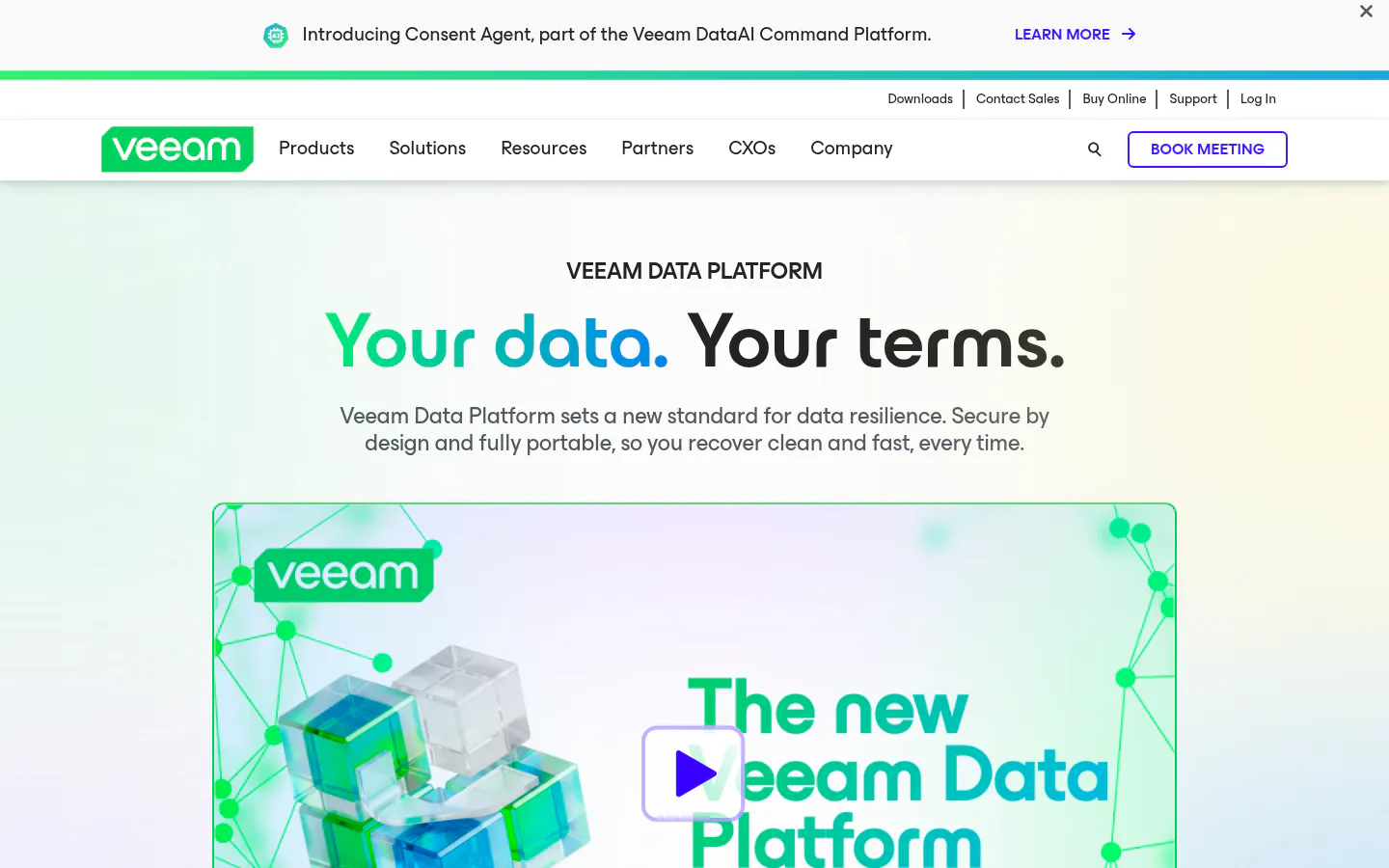
Score: 8.61/10
Is your environment genuinely complicated? Then Veeam is the answer and the rest of this list is a distraction.
Gartner named it a Leader in the 2026 Magic Quadrant for Backup and Data Protection Platforms, its tenth consecutive year, placing highest in Ability to Execute for the seventh straight time. Analysts describe it as the dominant player in midmarket backup. The reviews agree: 4.6 on G2 across 704 reviews, 4.8 on Capterra.
Key Strengths
- Instant Recovery brings a machine back from backup storage in minutes rather than restoring it first, which is still the fastest recovery path on this list
- Native immutability plus hardened repositories, with Object Lock support on S3 compatible targets including Backblaze B2 and Wasabi
- Physical servers, virtual machines, cloud workloads, Microsoft 365, endpoints. One console for all of it
- Ten straight years as a Gartner Leader is the strongest independently verified recognition on this list
Worth knowing: Veeam asks more of you than anything else here. Licensing is genuinely complex. The platform assumes someone on the other end understands repositories, retention chains, and immutability windows, and it will let that person configure something that looks fine and protects nothing. Storage is also yours to supply, which means egress is your storage provider's policy, not Veeam's. Point it at Amazon S3 and a 5TB restore carries roughly $450 in egress. Point it at Backblaze B2 and that number is zero. Same software. Same backup. Veeam doesn't warn you which one you picked.
Best For: Companies running mixed physical, virtual, and cloud workloads with in house IT or a provider who knows the platform well.
Not Ideal For: A 30 person business with no dedicated IT staff and no provider.
Why It Ranks #2: It loses to Cove on defaults, not capability. Veeam can do everything Cove does and considerably more, but every one of those things is a decision someone has to make correctly. Capability you have to configure is worth less than protection that's already on.
3. Acronis Cyber Protect Cloud: Backup That Also Watches the Endpoint
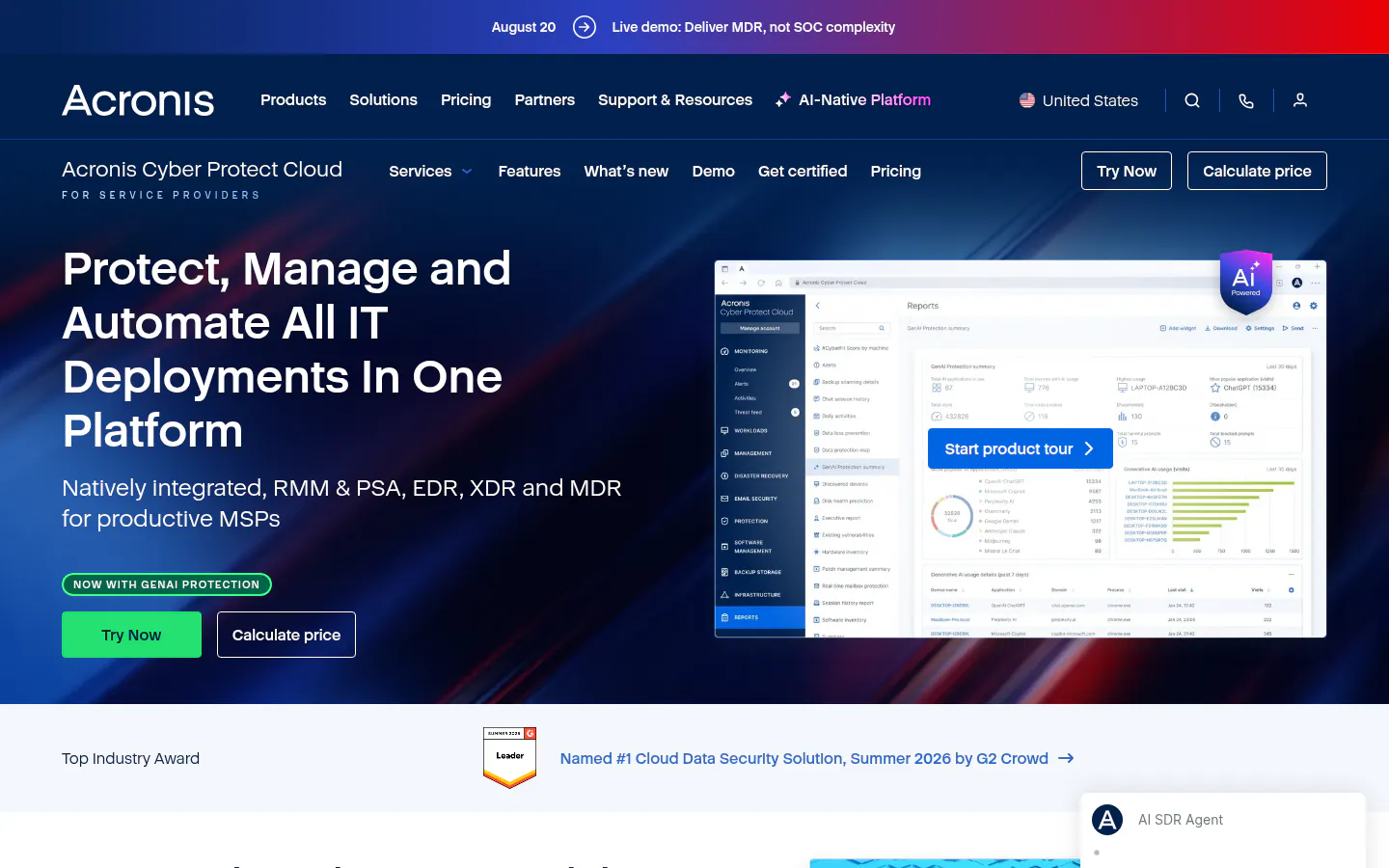
Score: 8.44/10
Acronis holds the strongest review record in this comparison. 4.7 stars across 1,374 G2 reviews, the highest rating and second highest volume on the list.
Consolidation is the pitch. One agent handles backup, anti malware, patching, and vulnerability assessment, which for a business already paying for four separate security tools plus a backup product means removing three line items from the stack and three sets of alerts from somebody's inbox.
Key Strengths
- Widest workload coverage here: endpoints, servers, virtual machines, Microsoft 365, Google Workspace, NAS, and mobile
- Backup and endpoint protection share an agent, cutting both licensing sprawl and the number of things that can silently stop running
- Integrated anti ransomware can detect an encryption attempt and roll affected files back from cache
- 4.7 on G2 across 1,374 reviews, the best rated product in this comparison
The catch sits in the tier structure. Immutable storage lives in the Advanced tier, not the base package, so the protection that this ranking weights at 20% is an upsell rather than a starting condition. Capterra reviewers are also noticeably cooler than G2's. 4.1 across 77 reviews, with a recurring theme around support responsiveness and console complexity. Two platforms, two very different pictures. Read both before signing.
Best For: Businesses consolidating vendors who want backup and endpoint security under one contract and one console.
Not Ideal For: Buyers on the base tier who assume immutability is included. It isn't.
Why It Ranks #3: Best reviews, widest coverage, and it still lands third because immutability costs extra and the Capterra record is meaningfully weaker than the G2 one.
4. Datto SIRIS: When Downtime Is the Actual Emergency
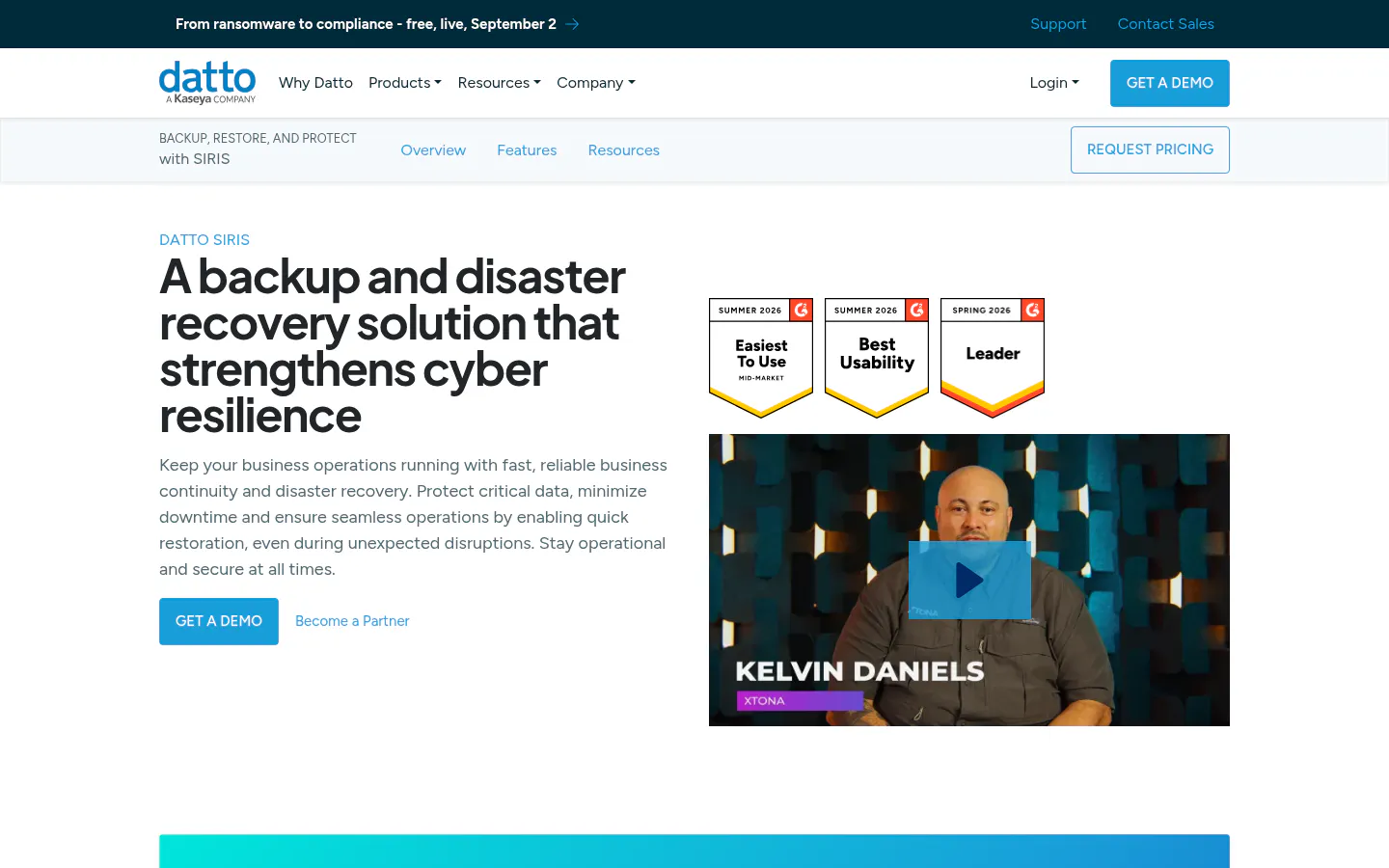
Score: 8.22/10
SIRIS is built around a scenario the other platforms treat as an edge case. The server is gone. People are standing around. Nobody is working.
A local appliance holds recent backups and can virtualize a failed machine on the spot, with the cloud copy as the second line. Recovery is measured in minutes because the workload never leaves the building. Reviews back it up, 4.6 on G2 across 281 and 4.5 on Capterra across 91, with immutable cloud storage and Cloud Deletion Defense guarding the offsite copy.
Key Strengths
- Local appliance virtualization turns a dead server into a running one without waiting on a download
- Immutable cloud retention plus Cloud Deletion Defense, which preserves backups even after a deletion request
- One line item. Hardware, cloud storage, and retention all fold into it
- The most widely deployed BCDR brand in the MSP channel, which matters when you need a provider who has already deployed it
Two things to weigh. Datto publishes no pricing at all, so comparing it against IDrive or Backblaze means requesting a quote and waiting. Then waiting some more. And it's partner only. You can't buy SIRIS directly no matter how much you want it, which is deliberate: the platform assumes someone is testing restores on your behalf.
Best For: Operations where an hour of downtime has a real dollar figure attached. Manufacturing lines, distribution, professional services firms billing by the hour.
Not Ideal For: Companies wanting to compare prices on a website, or fully cloud native businesses with no on premise servers left to protect.
Why It Ranks #4: Recovery speed is excellent and the ransomware story is solid. Opacity on pricing and hardware dependence pull it below the three platforms above it.
5. IDrive: The One You Can Actually Buy This Afternoon
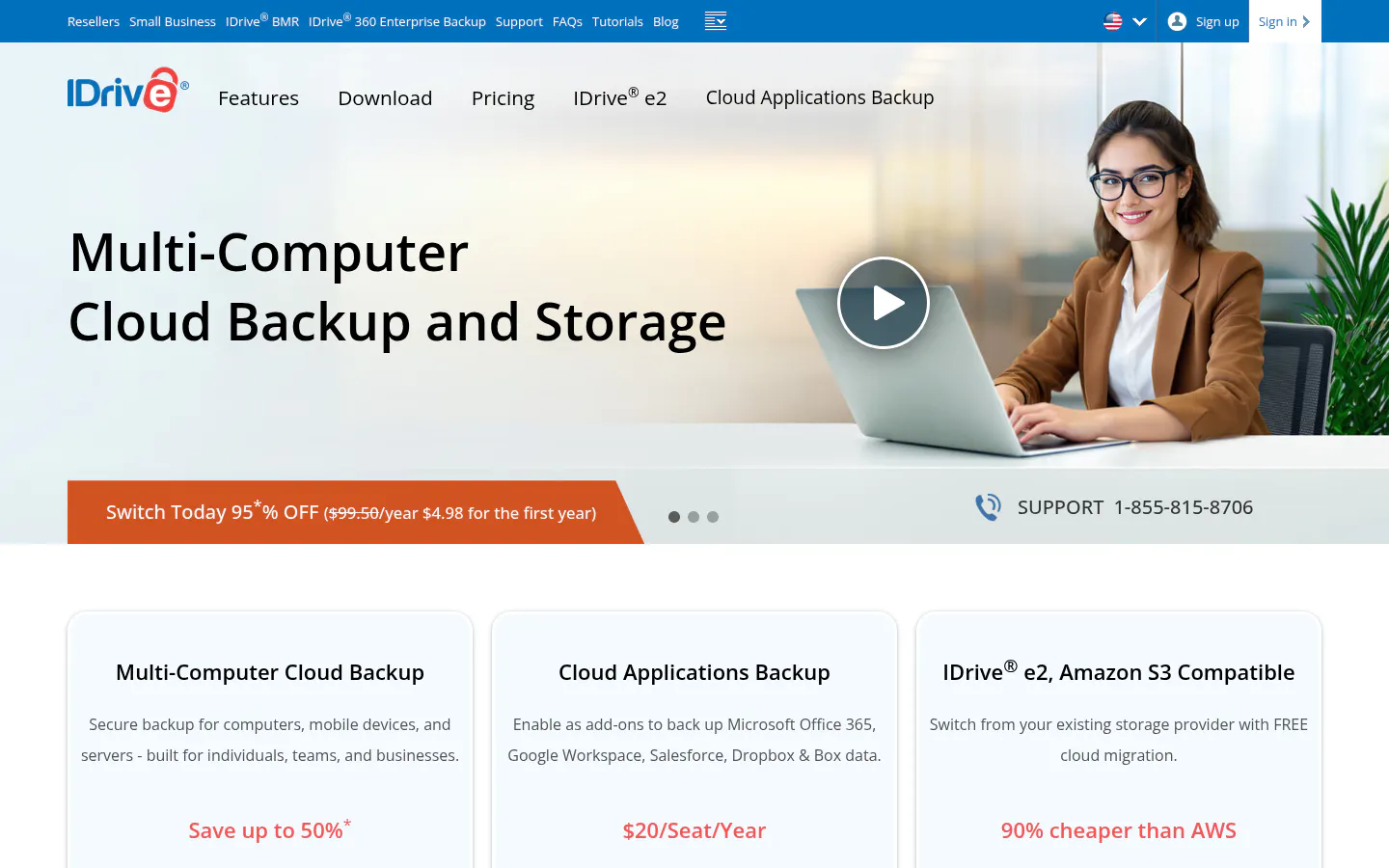
Score: 8.13/10
Every platform ranked above IDrive has something it does better. IDrive has something none of them have. A price on a page, and a signup button that works without a phone call.
Faint praise? Not really. Three of the eight platforms here can't be purchased directly at all.
Key Strengths
- 1,979 G2 reviews and 1,201 on Capterra, by far the largest verified review base in this comparison
- Published pricing with no egress or restore fees on IDrive cloud storage
- IDrive Express ships a physical drive for large restores at no additional charge, which removes bandwidth from the recovery equation entirely
- Covers workstations, servers, Microsoft 365, Google Workspace, and S3 compatible object storage under one account
Where it gives ground is ransomware tooling. Object Lock is available on IDrive e2, but the protection is thinner and more manual than what Cove, Veeam, or Axcient provide, and there's no equivalent to AirGap or Cloud Deletion Defense. The 4.4 G2 rating is also the lowest of the seven scored above 8.0. Volume, not enthusiasm, is what carries it.
Best For: Businesses without a managed provider who need real backup running this week.
Not Ideal For: Companies whose cyber insurance renewal hinges on demonstrating immutable, air gapped retention.
Why It Ranks #5: Accessibility and restore economics are genuinely strong. Ransomware resilience is where it falls behind, and that's the criterion carrying the second heaviest weight.
6. Axcient x360Recover: Immutability at the Filesystem
Score: 8.12/10
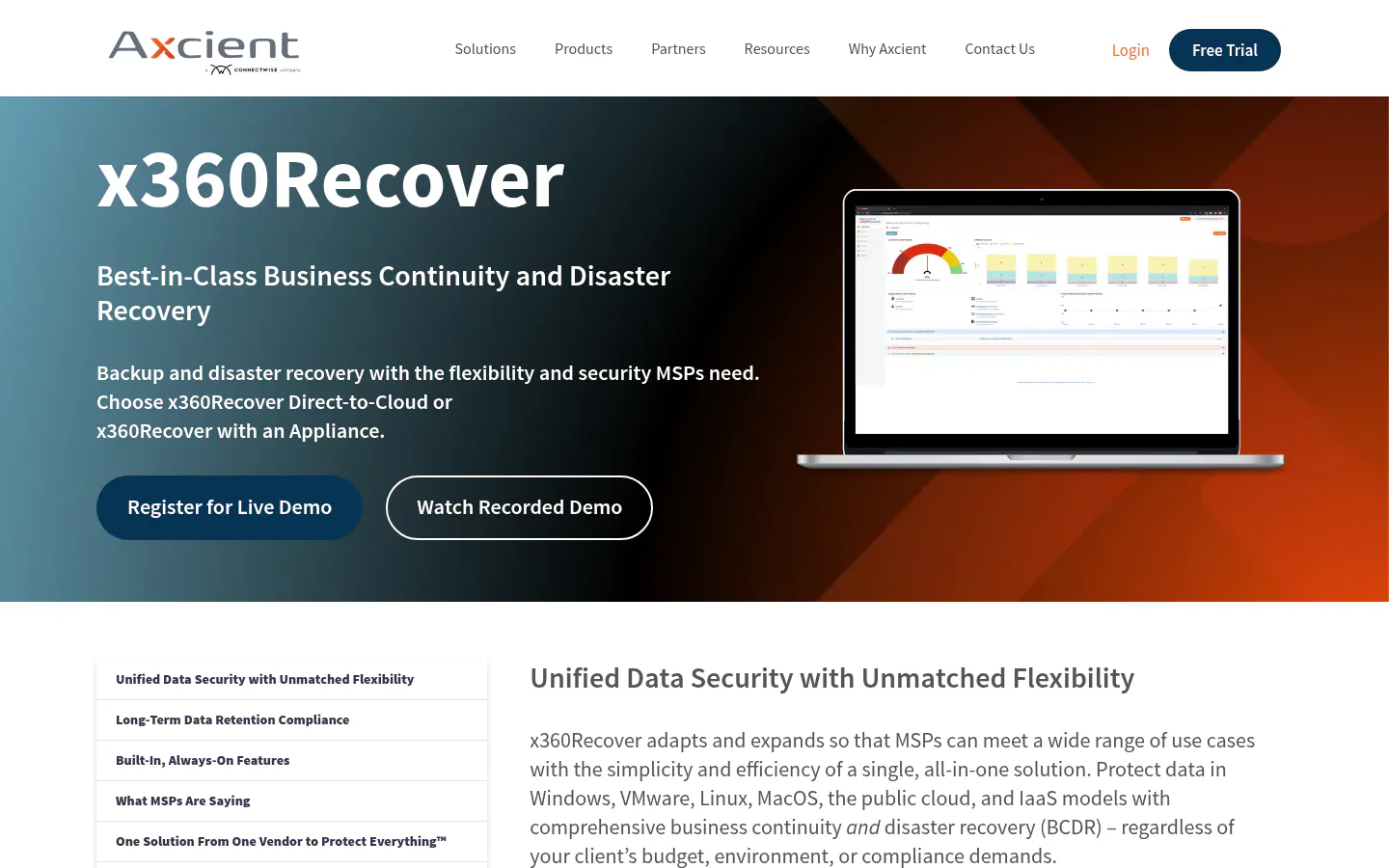
Axcient's approach to immutability is the most structurally interesting one here. Recovery points are frozen inside ZFS snapshots, immutable at the filesystem level rather than enforced by a policy layer above it. AirGap then separates deletion requests from the actual deletion mechanics, so a compromised admin account can't destroy history by asking nicely.
Chain free backups mean no incremental chain to corrupt or consolidate. Recovery runs direct to cloud in as little as 15 minutes, no appliance required.
Key Strengths
- AirGap plus native ZFS snapshot immutability, an unusually strong pairing at this price point
- Chain free architecture removes the incremental chain corruption problem outright
- Pooled storage under a flat fee, so per client storage growth doesn't produce surprise invoices
- 4.6 on G2 across 129 reviews
Visibility is the problem. Axcient has no Capterra rating at all, and 129 G2 reviews is the second smallest sample on this list. One platform. That's the whole evidence base. Pricing is unpublished and it sells only through partners, same as Datto. For a buyer trying to evaluate independently, there isn't much to read.
Best For: Companies that want fast recovery without buying and housing an appliance.
Not Ideal For: Buyers who want a broad independent review record before committing.
Why It Ranks #6: The ransomware architecture would justify a higher position. A thin review record and no pricing transparency hold it here.
7. MSP360 Backup: Bring Your Own Storage
Score: 7.99/10
MSP360 separates the backup software from the storage underneath it, which is either the best or worst thing about it depending on who is running it.
Object Lock now works across Amazon S3, Wasabi, Backblaze B2, and IDrive e2, and version 8.6 extended that coverage to Forever Forward Incremental, SQL Server, and legacy format backups. Reviews are good and steady: 4.5 on G2 across 534, 4.6 on Capterra across 251.
Key Strengths
- Choose your storage provider and change it later without changing backup software
- Object Lock immutability across four major storage backends, recently widened to cover SQL and FFI jobs
- Windows, Mac, Linux, servers, SQL, Microsoft 365, and Google Workspace all covered
- Pricing is published, and the licensing model stays predictable as you grow, which is rarer on this list than it ought to be
Storage flexibility means egress liability is yours. The same 5TB restore runs about $450 on Amazon S3 and $0 on Backblaze B2, and MSP360 will happily let you configure either. The software isn't the risk. The bucket someone picked two years ago is.
Nobody documents that decision. That's the problem.
Best For: Organizations with technical staff who want to control long term storage economics deliberately.
Not Ideal For: Teams who would rather not think about object storage pricing tiers ever.
Why It Ranks #7: Solid product, honest pricing, good immutability support. Recovery economics depend entirely on a decision made outside the product, and that unpredictability is what the score reflects.
8. Backblaze Business Backup: Excellent at One Thing
Score: 6.76/10
Backblaze finishes last. The reason is scope, not quality.
Unlimited backup per computer at a flat annual price, no storage tiers, no per gigabyte math, restores by download at no charge. For backing up 40 laptops it's close to unbeatable. The low ranking isn't a warning.
Key Strengths
- Flat unlimited pricing per computer, with no storage calculation to perform or revisit
- Free restores by download, plus B2's egress allowance of up to 3x stored data per month
- Runs quietly with essentially no administration once deployed
- Backblaze B2 underpins immutable storage for several platforms on this list, including Veeam and MSP360
Its limits are structural. No servers. No virtual machines. Business Backup covers workstations and stops there, which is why workload coverage scores 4.0 against Acronis and Veeam at 9.5. Object Lock exists on B2 but isn't exposed through the Business Backup product, so the immutability that makes B2 valuable to other vendors isn't available to you here. Its B2B review record is also thin, 37 reviews on G2 and 4 on Capterra, which reflects a product businesses buy without deliberating rather than one they dislike.
Best For: Distributed workforces where the data worth protecting lives on laptops.
Not Ideal For: Any business with a file server, a line of business application, or a cyber insurance questionnaire asking about immutable backups.
Why It Ranks #8: It's the best endpoint backup here and it isn't competing in the same category as the seven above it. A ranking that weights server coverage and immutability at 35% combined will place it last, which is the model working correctly rather than a verdict on the product.
Buying Direct or Buying Through a Provider
Look at the "Buy it" column again. Cove, Datto, and Axcient are partner only. Three of the eight platforms on this list, including the one that ranked first, can't be purchased directly at any price.
That isn't a distribution accident. It's a statement about what the vendors think the product actually is.
Datto sells exclusively through providers on the reasoning that BCDR requires someone configuring retention, verifying restores, and running failover tests. Axcient made the same choice. N-able built Cove for managed delivery from the start. All three concluded that backup software handed to a business with no one testing it produces a false sense of security, which is arguably worse than no backup at all, because nobody plans around a backup they know they don't have.
The numbers support them. 90% of organizations say they're confident they could recover from a cyber incident. Only 28% of ransomware victims fully recovered their data, and 44% got back less than three quarters of it. Ninety versus twenty-eight. That gap isn't a product gap. Every platform on this list is capable of a clean restore. The gap is operational: retention nobody reviewed, a server added last spring that was never added to a backup job, a restore test scheduled quarterly and last run in 2024.
So the real question isn't which of these eight is best. It's which column you're buying from.
Buy direct if you have technical staff who own backup as a named responsibility, you can commit to testing restores on a schedule, and you can answer an insurance questionnaire about immutable retention without checking. IDrive, Backblaze, MSP360, Veeam, and Acronis are all available to you.
Buy through a provider if backup is currently nobody's actual job, or if it's technically someone's job alongside eleven other things. That opens the full list, including the top ranked platform, and moves restore testing to a party contractually obligated to perform it.
Consilien delivers managed backup and disaster recovery for companies between 20 and 500 users nationwide and is a provider in that second category. It doesn't appear in this ranking, because ranking your own delivery capability against eight software platforms is a category error, not a comparison.
Whichever column you land in, the deliverable is the same: a documented restore, tested on a schedule, with retention that holds when an administrator account is compromised. Read the backup and disaster recovery overview for how that's structured in practice, or the top backup and disaster recovery providers comparison if you're evaluating providers rather than platforms.
How to Choose a Cloud Backup Platform
Start with what you have to protect and what an outage costs per hour. Two numbers. They eliminate most of this list before you look at a single feature.
Servers or no servers is the first fork. If you run file servers, a domain controller, an ERP instance, or virtual machines, Backblaze Business Backup is out and you're choosing among the other seven. If everything already lives in Microsoft 365 and on laptops, you can stop reading earlier than expected and save real money.
Then ask what an hour of downtime costs. Not a feeling. An actual figure: staff who can't work, orders that can't ship, hours that can't be billed. Under a few hundred dollars an hour, cloud restore is fine and Cove, IDrive, or MSP360 will serve. Over a few thousand, you need local virtualization. That means Datto SIRIS or an Axcient appliance. Downloading 2TB before anyone can work again isn't a recovery plan.
Immutability is the third question, and increasingly it gets asked by someone other than you. Insurers have converged on 3-2-1-1-0: three copies, two media types, one offsite, one immutable, zero unverified restores. Answering "no" to the immutable column raises premiums or ends the conversation. Renewal inside six months? Weight this above almost everything else, and check the cyber insurance requirements checklist against your current setup before the questionnaire arrives.
Then the question nobody asks until it's expensive. What does a full restore cost? Not the monthly fee. The restore. Pull 5TB out of Amazon S3 and egress is roughly $450 on top of your subscription, on the worst day your company has had. Cove and Datto include it. Backblaze B2 and Wasabi charge nothing. MSP360 and Veeam depend entirely on where you pointed them. Ask during evaluation. In writing. You won't enjoy discovering the answer mid incident.
One more, and it separates a backup product from actual protection. Who tests the restore, and how often? A backup nobody has restored from is a hypothesis. Put a name and a date on that test. Restore testing is the difference between the 90% who feel covered and the 28% who were.
The Short Version
Cove Data Protection ranks first at 8.78/10 because it makes the two most consequential decisions for you: immutability is on by default, and storage and egress are in the price, so recovery never generates a second bill. Veeam Data Platform (8.61) is the stronger choice for complex virtualized estates where someone competent owns the configuration. Acronis Cyber Protect Cloud (8.44) makes sense if consolidating backup and endpoint security under one vendor is worth more than having immutability included at the base tier. If you can't buy through a provider, IDrive at 8.13 is the most complete platform you can purchase and deploy yourself this week.
Which platform you choose matters less than whether anyone is verifying it works. Speak to a backup and recovery expert about what your current setup would actually restore.