Identity and access management (IAM) is the security practice that controls who can reach which systems, and under what conditions. Consilien runs IAM as a managed service. We deploy multi-factor authentication, single sign-on, and privileged access controls across Microsoft Entra ID, Okta, and Duo, then govern them with vCISO oversight. Most breaches now start with a valid login. IAM is how you shut that door.
Identity & Access Management (IAM) Services
Stop the attackers who log in instead of hacking in. We deploy, monitor, and govern every identity across your business, so the right people get in and no one else does.
The breach doesn't kick the door in anymore. It signs in.
Here is what changed. Attackers stopped breaking through firewalls and started using passwords that already work.
The Verizon 2025 Data Breach Investigations Report puts stolen credentials among the top ways intruders get in. Not malware. Not some zero-day. A username and a password someone bought or phished. Once they are in, they do not look like an attack. They look like your controller checking email.
That is the problem identity and access management is built to solve.
Most companies we talk to have some pieces of it. MFA on email, maybe. A password policy nobody enforces. What they do not have is a way to answer a simple question. Who can touch our financial system right now, and should they? For a 40-person manufacturer or a 300-seat distribution firm, that answer is usually a shrug.
Consilien delivers IAM as a governed, managed service across your Microsoft 365 environment and connected apps. Not a one-time install. An ongoing practice, run against your security strategy, with the same vCISO oversight that anchors our managed cybersecurity program. We serve companies with 20 to 500 users nationwide, mostly in manufacturing, distribution, food processing, real estate, and professional services.
One thing we see a lot. The company thinks its risk is the network. The real exposure is a folder of shared admin passwords in a spreadsheet.
Verify every login, not just the first one
Start with the front door. If a stolen password is enough to get in, you have already lost.
Multi-factor authentication fixes most of that, and the data is not subtle. Microsoft's 2025 Digital Defense Report found that MFA blocks more than 99% of identity-based attacks, and that 97% of identity attacks are just password attacks. Turn on MFA correctly and the automated stuff mostly bounces off.
The catch is that word. Correctly.
We deploy MFA through Microsoft Entra ID and Duo with Conditional Access rules that actually think. A login from a managed laptop in your office gets waved through. The same account signing in from a new device in another country at 3 a.m. gets challenged, or blocked. Phishing-resistant methods where the risk justifies them. We tune it so security goes up and the daily friction for your team stays low.
"We already have MFA" is the line we hear most. Usually it is on email and nothing else. The ERP, the file server, the VPN, the admin consoles, all wide open to a single password. Half the job is closing those gaps you did not know were open.
One identity, and access that fits the role
Ask a new hire how many logins they have. Then ask who removes them when that person leaves.
Access sprawl is quiet and it compounds. Someone changes departments and keeps their old permissions. A contractor's account stays live 14 months after the project ended. Nobody is malicious. It is just that no one owns the cleanup.
Single sign-on collapses that mess into one governed identity. Your team signs in once through Entra ID or Okta and reaches the apps they are cleared for, nothing more. Behind it, we build a least-privilege model, so a warehouse supervisor and a finance manager get very different keys. Role-based access, mapped to what people actually do.
This is where the boring work pays off. Fewer passwords means fewer things to phish. Tighter roles means a compromised account cannot wander. And when someone leaves, one switch cuts every door at once instead of a frantic hunt across a dozen systems.
That is the difference between having identity tools and governing identity.
Lock down the accounts that can hurt you most
Not all logins are equal. A domain admin account is a master key to the building.
This is the part most managed IT skips, and it is the part that gets expensive. IBM's 2025 Cost of a Data Breach report pegs breaches that start with compromised credentials at $4.67 million on average, and they take roughly 246 days to find and contain. Eight months of someone quietly holding a key you handed out and forgot about.
Privileged access management is the fix. We inventory every account with elevated rights, strip the ones that do not need it, and put the rest behind stronger controls. Just-in-time elevation, so admin power turns on when it is needed and off when it is not. Session monitoring on the accounts that matter. Vaulted credentials instead of a shared password in a sticky note or a spreadsheet tab.
Couple of reasons this matters more than it sounds. One breached standard user is a problem. One breached admin is a very bad quarter.
Prove who has access, on demand
At some point an auditor, a customer, or a cyber-insurance form is going to ask you to show who can access what. Most companies cannot. Not quickly, anyway.
We build that answer in from the start. Access reviews on a schedule, so permissions get re-checked instead of accumulating forever. A real joiner-mover-leaver process, so accounts get created, changed, and killed on time. Reporting that maps your identity controls to the frameworks you answer to.
If you carry compliance obligations, that mapping matters. Consilien handles NIST, CMMC, PCI, and SOC 2 readiness through our compliance program, and IAM is one of the load-bearing controls in every one of them. Worth being clear on one thing. Compliance is a separate Consilien offering, not something baked into managed IT. IAM strengthens your compliance posture, but the compliance engagement stands on its own.
Here is where it gets more useful than most people expect. The same access data that satisfies an auditor also tells you where your real risk is. You usually find three or four accounts that should have been shut off months ago.
What managed IAM actually includes
IAM is not one product. It is a set of controls that work together, run and watched over time. Here is what we put in place and keep tuned.
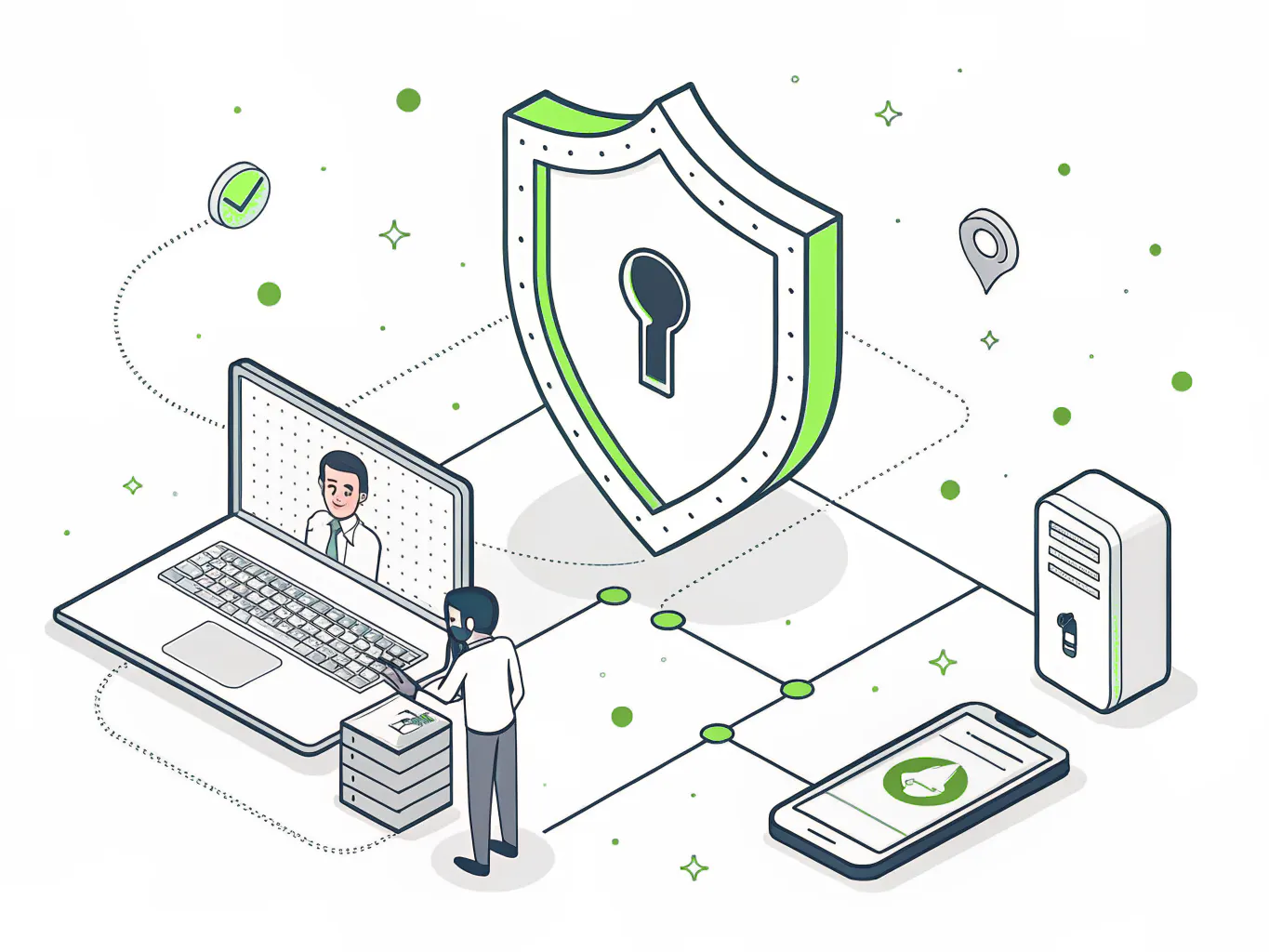
What is identity and access management?
Identity and access management is the framework of policies, processes, and technologies that verifies who a user is and controls what they are allowed to do inside an organization's systems. It covers authentication (proving identity, often with MFA), authorization (granting the right level of access), and lifecycle governance (creating, changing, and removing access over time). Done well, it enforces least privilege, so every person and account has exactly the access they need and nothing more.
Who this is for, and who it is not
You're a strong fit if any of this sounds familiar.
- A company with 20 to 500 users running on Microsoft 365, where access has grown faster than anyone can track it.
- A manufacturer, distributor, food processor, real estate firm, or professional-services company that has to prove access controls to auditors, customers, or a cyber-insurance carrier.
- A business that already got the turn-on-MFA advice and now realizes MFA on email alone is not the same as governed identity.
- An IT leader who knows there are privileged accounts and orphaned logins out there but does not have the time to hunt them down.
You're probably not the right fit if any of this is you.
- You run a sub-10-person shop that just wants a one-time Duo install and no ongoing governance. A tool vendor is cheaper and fine for that.
- You have a mature in-house IAM team and only want staff augmentation. We run the practice, we do not rent you hands.
- You're shopping purely on price and see identity as a checkbox. We are not the cheapest, and that is on purpose.
Before you decide, the questions everyone asks
Fair concerns. Here are the ones that come up in almost every sales conversation, answered straight.
Isn't this going to slow my people down?
Done right, most employees notice less friction, not more. Single sign-on means fewer passwords to juggle, and Conditional Access only challenges logins that look risky. The warehouse tablet on your network at 9 a.m. does not get bothered. The unknown device in another country does.
We already spend on IT. Why is this separate?
Because most managed IT treats identity as a setting, not a discipline. There is a gap between someone flipping on MFA and someone governing every privileged account, running access reviews, and cutting orphaned logins on a schedule. That gap is exactly where the $4.67 million credential breaches happen.
Is compliance included?
No, and we want to be clear about it. Compliance is a separate Consilien offering. IAM is one of the strongest controls inside a compliance program, so the two work together, but the compliance engagement is scoped and priced on its own.
Full disclosure. We are an IT and security firm, and we make money when you hire us for this. So take the numbers from Verizon, Microsoft, and IBM, not from us. They point the same direction independently. If a stolen password can reach your financial system today, that is worth fixing regardless of who fixes it.
Common Questions About Identity and Access Management
What is the difference between IAM and MFA?
MFA is one control inside IAM, not the whole thing. Multi-factor authentication verifies a login with a second factor. Identity and access management is the broader practice that also decides what each verified user can reach, manages privileged accounts, and removes access when it is no longer needed. Turning on MFA is a good first move. It is not identity governance.
Speak to an IAM expert about your identity gaps
Every week a stolen password sits usable is a week an attacker could already be inside. Find out where your identity gaps are before someone else does.