Cybersecurity for Semiconductor and Electronics Manufacturers

The semiconductor and electronics industry has been the #1 cyberattack target for 5 consecutive years. Your production lines, your IP, and your contracts depend on security that actually works.

27.7%
Manufacturing accounted for 27.7% of all cyberattacks in 2025. Fifth year running as the most targeted sector. Source: IBM X-Force Threat Intelligence Index, 2026.

Cybersecurity for electronics manufacturers protects production systems, intellectual property, and compliance posture against threats specifically targeting semiconductor, PCB, and EMS environments. It isn't general-purpose IT security applied to a factory. It's security built for environments where OT and IT converge, design files are the most valuable asset, and a single ransomware incident can halt production at $100K-$500K per hour.

Electronics manufacturing has a different threat surface than a law firm or a hospital. The attackers know it. The question is whether your security program reflects that.
Why Attackers Are Targeting Electronics Manufacturers

IBM's 2026 X-Force Threat Intelligence Index confirmed what the industry has been feeling for half a decade. Manufacturing represented 27.7% of all cyberattacks tracked in 2025, more than finance, healthcare, or energy. The fifth consecutive year at the top ( IBM X-Force, 2026).

That's the broad number. The electronics-specific picture is worse.

40% of those manufacturing attacks involved intellectual property theft. For a semiconductor supplier or PCB fabricator, that means Gerber files, IC designs, test procedures, and BOM data. The kind of information that competitors or nation-state actors can use to replicate your product, undercut your pricing, or compromise your supply chain.

The attack list reads like an industry directory. Microchip Technology hit by Play ransomware in 2024. Advantest, the semiconductor test equipment giant, disclosed a ransomware breach in February 2026. Trio-Tech International, a California-based semiconductor testing company, reported a breach to the SEC in March 2026. Foxconn's semiconductor subsidiary has been attacked four separate times since 2020, most recently by the Nitrogen ransomware group in May 2026.

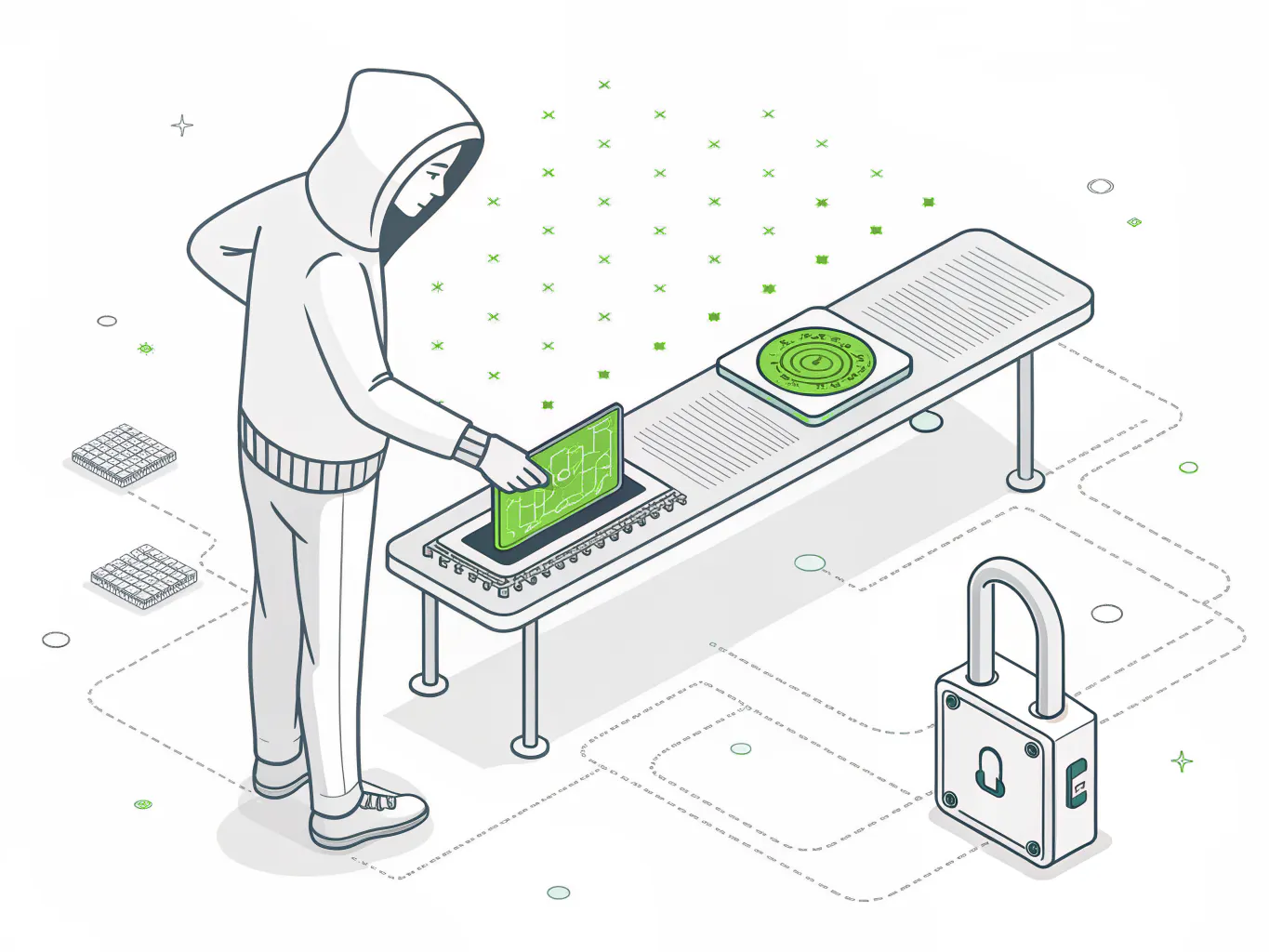
Line illustration of a hooded figure reaching toward a semiconductor wafer on a conveyor belt beside an open padlock

These aren't small companies with weak defenses. They're well-resourced enterprises with dedicated security teams. And they still got hit.

SEMI's May 2026 "Breaking Point" report described the semiconductor sector as entering a new era of exposure, where the old model of isolated networks and specialized equipment can't keep pace with adversaries who understand exactly how much halted production costs ( SEMI, May 2026).

A mid-market electronics manufacturer with 1-2 IT people doesn't have a chance without structured security behind them.

The Threat Surface Your IT Team Probably Isn't Covering

Not all of it, anyway. Here's what makes electronics manufacturing security different from standard corporate IT security.

OT/IT convergence on the production floor

Your pick-and-place machines, reflow ovens, AOI systems, MES platforms, and PLCs increasingly connect to the same network infrastructure as your ERP, email, and file servers. That convergence creates lateral movement paths that attackers use to pivot from a phishing email into production-critical systems. Network segmentation between OT and IT isn't a suggestion anymore. SEMI E187 makes it a baseline requirement for fab equipment cybersecurity, and your OEM customers are starting to ask about it.

Intellectual property exposure

Gerber files. Schematics. Test procedures. BOM data. Firmware source code. These are sitting on shared drives, in cloud storage, on engineering workstations. Access controls that haven't been reviewed since the last IT person set them up. I've seen companies where 6 former employees still had VPN access to the design file server. That's not an edge case.

Supply chain pressure cascading from OEMs

Your largest customers are tightening their cybersecurity requirements and pushing them onto the supply chain. If you can't demonstrate that your environment meets NIST SP 800-171, CMMC Level 2, or SEMI E187 standards, you're not getting the next PO. Doesn't matter how good your boards are.

Nation-state targeting

This isn't hypothetical. Proofpoint documented China-aligned TA415 running spear-phishing campaigns against Taiwanese semiconductor manufacturers, designers, and supply chain entities between March and June 2025. The U.S. semiconductor supply chain is not immune. If you're manufacturing components for defense or aerospace electronics, you're a target for state-sponsored actors, not just criminal gangs.

Legacy equipment with no security story

Half the machines on your production floor are running operating systems that haven't been patched in years. Some are running Windows XP or embedded Linux with no vendor support. They were never designed to be connected to the internet, but Industry 4.0 initiatives put them on the network anyway.

What Managed Cybersecurity Covers in Electronics Manufacturing

Is it endpoint protection? Yes. But that's maybe 20% of what actually needs to happen.

Cybersecurity for semiconductor and electronics manufacturers requires a layered approach that addresses both the corporate IT environment and the production floor, without disrupting operations that can't tolerate unplanned downtime.

Here's what Consilien's IC24 Managed Cybersecurity covers for electronics manufacturing clients.

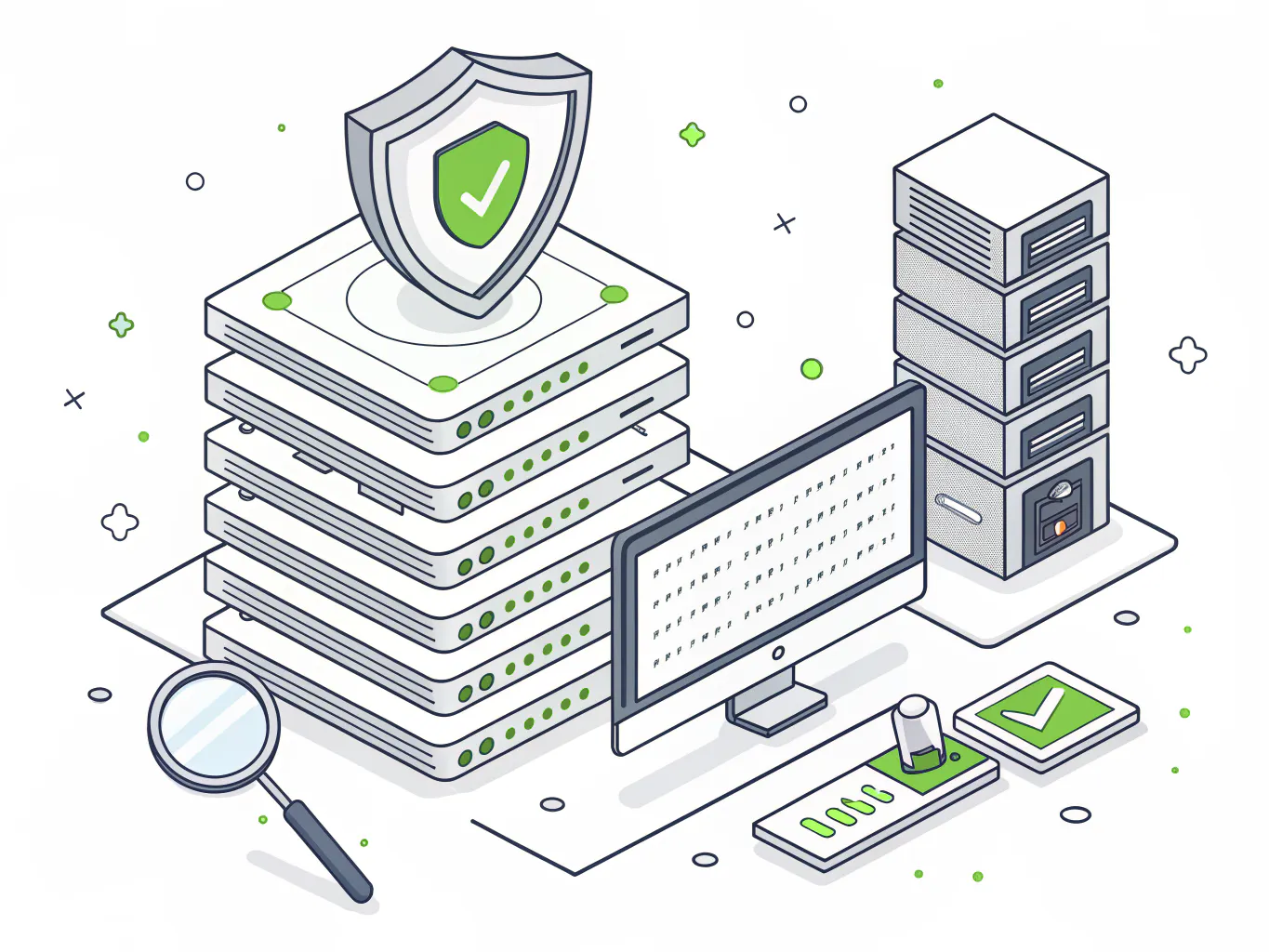
Line illustration of layered shield plates above a server rack with a monitoring screen and a magnifying glass

What Cybersecurity Looks Like With and Without a Plan

No structured security program With Consilien Managed Cybersecurity
Threat monitoringNobody watching after hours24/7/365 SOC with real analysts
Network architectureFlat network, OT and IT on same segmentSegmented zones, controlled access
Incident responseCall someone and figure it outDocumented plan, tested procedures
Patch managementWhen someone remembersScheduled, coordinated, production-aware
IP protectionShared drives, stale access controlsEncryption, least-privilege, audit logging
Compliance readinessScramble before auditsContinuous governance, evidence-ready
Recovery timeDays to weeksHours, with validated backups

The Compliance Layer You Can't Separate From Security

Compliance and cybersecurity aren't two different projects in electronics manufacturing. They're the same work.

If you're in the defense electronics supply chain, CMMC Level 2 requires you to implement 110 NIST SP 800-171 controls and pass a third-party assessment. Those controls cover access management, incident response, media protection, and 11 other security families. That's not a checkbox exercise. It's a cybersecurity program.

ITAR adds another layer. Every person accessing controlled technical data needs to be a U.S. person. Every system needs encryption, access controls, and audit trails. The Department of State doesn't send warnings. They send penalties.

And then there's SEMI E187 and IEC 62443. If you supply equipment or components into semiconductor fabs, your customers are asking about these standards now, not someday.

Consilien handles compliance readiness as part of the security engagement, not as a separate workstream. Gap assessments, remediation planning, ongoing governance. We support readiness and remediation. We don't promise certification. We make sure you're prepared when the assessor shows up.

How a Cybersecurity Engagement Starts

1

Discovery session (20-30 min)

We learn about your environment, your compliance obligations, and what's keeping you up at night. No pitch deck.

2

Security assessment (2-4 hours)

Network architecture review, endpoint inventory, access control audit, vulnerability scan, compliance gap analysis. You get a clear picture of where you stand.

3

Remediation roadmap

Prioritized findings. What to fix first, what can wait, what requires architectural changes. Tied to your compliance requirements, not just best practices.

4

Managed cybersecurity engagement

24/7 monitoring, managed SIEM/SOC, endpoint protection, vulnerability management, and compliance governance go live. Your IT team keeps doing what they do. We handle the security layer.

5

Continuous improvement

Quarterly reviews with your vCISO. Roadmap adjustments. New threat intelligence. Compliance updates. Security isn't a project. It's ongoing.

Addressing What We Hear From Electronics Manufacturers

We have firewalls and antivirus. Aren't we covered?

Firewalls and antivirus are the bare minimum. They don't detect lateral movement inside your network. They don't monitor for anomalous access patterns. They don't catch credential theft. And they don't help when an employee clicks a spear-phishing email that looks like a legitimate BOM request from your biggest customer. You need monitoring, detection, and response behind those tools.

We're too small to be a target.

Trio-Tech International reported $36M in revenue. They still ended up disclosing a material cybersecurity event to the SEC. Ransomware groups target mid-market manufacturers specifically because they have valuable IP, low tolerance for downtime, and weaker defenses than enterprise-scale companies. Being smaller doesn't make you invisible. It makes you easier.

Cybersecurity is too expensive for a company our size.

Compare the cost of managed cybersecurity against the cost of one ransomware incident. Aberdeen and Siemens put semiconductor and electronics manufacturing downtime at $100K-$500K per hour ( Aberdeen/Siemens, 2024-2026). Average ransomware recovery costs hit $3.58M in 2024 (Sophos). One incident pays for years of managed security.

Our production equipment is air-gapped.

Is it? When was the last time someone verified that? USB drives, vendor laptops, remote diagnostic connections, and MES integrations all create pathways that bypass air gaps. True isolation is rare in modern electronics manufacturing. And the systems you think are isolated may be one firmware update away from connecting.

Our Clients' Success

What Electronics Manufacturers Want to Know

What types of electronics companies do you work with?


PCB fabricators, semiconductor suppliers, EMS and contract electronics manufacturers, electronic component distributors, and defense electronics companies. Primarily 50 to 1,000+ employees. If you're making electronics and you have compliance obligations, we've probably seen an environment like yours.

Your Production Lines, Your IP, and Your Contracts Are All at Risk


Manufacturing has been the most targeted industry for cyberattacks 5 years straight. Electronics and semiconductor manufacturers carry the additional burden of high-value IP, OT/IT convergence, and a compliance environment that's getting more demanding every quarter. We're not a help desk that bolted on security. Security is how we start every engagement. It's built into the operating model.

Not ready for a conversation? Explore our approach to IT services for semiconductor and electronics manufacturers or read about managed security with SIEM and SOC.