AI Governance Services for Growing Businesses

Structured AI adoption, governance frameworks, upskills training, and cost management for companies that have outgrown ad-hoc. Built by a team that already manages your IT and security.

Ranked #1
Team members have presented at international AI symposiums. Our AI governance content has ranked #1 across Google, ChatGPT, and Perplexity.

Consilien's AI governance services help businesses adopt AI with structure instead of chaos, through readiness assessments, governance frameworks, employee training, cost controls, and ongoing advisory that ties directly into existing IT and compliance programs.

We work with companies across Southern California, primarily in manufacturing, distribution, professional services, and real estate management. The service runs through a three-layer delivery model: an AI Strategist handles executive-level planning and coaching, an AI Architect designs the governance framework and compliance alignment, and an AI Implementer builds and deploys the workflows. Everything connects back to the IT environment and security posture we already manage.

Four AI governance service components including assessment, framework, training, and cost management

Every executive we talk to right now says some version of the same thing. "We need AI." And when we ask what outcomes they're targeting, the room goes quiet.

That's the gap. It's everywhere. And it's getting expensive.

We're watching companies adopt AI the same way businesses adopted IT 20 years ago. No strategy. No coordination. No one asking who approved what, where the data is going, or what the monthly spend actually looks like. Departments grab whatever tools look interesting. Marketing is running one set of AI platforms nobody vetted. Operations wants to wire APIs into the ERP system. Sales is scraping data with no compliance review. And somewhere in the office, someone has been using a single chat thread for everything, research, drafts, data analysis, brainstorming, all in one place, for months. That person burned through the company's entire token budget in 3 weeks because nobody taught them how the platform actually charges.

We've written extensively about AI governance frameworks and why they matter. That content ranked #1 in Google and across AI platforms when we published it. But writing about governance and actually delivering it are different things. Now we do both.

The Ad-Hoc Adoption Problem

The pattern is predictable at this point. A company with 150 employees. No AI policy. No approved tool list. No training. Three or four departments all experimenting independently. Nobody reporting costs to finance. Nobody reporting data handling to compliance.

Sound familiar?

PagerDuty's 2026 Shadow AI Survey found that 66% of office professionals at large enterprises have used AI tools they believed weren't permitted under company policy. At companies with $1B+ in revenue, that number hits 72%. And according to Gartner, 25-35% of enterprise AI tool spending now happens entirely outside of IT visibility.

For a manufacturer in Los Angeles or a distribution company in Orange County, the numbers might look different. But the pattern doesn't. We've seen it at professional services firms, food processing operations, and real estate management companies across Southern California. The tools change. The problem is the same.

One thing we keep noticing. It isn't the AI itself that creates risk. It's the absence of any structure around how it gets used. When every team picks their own tools, sets their own rules, and handles data however seems reasonable at the time, you don't get innovation. You get sprawl. Budget overruns. Security gaps you don't find out about until an auditor does.

Same mess. Different decade. Except AI sprawl moves faster than IT sprawl ever did. And the regulatory environment around it is tightening, not loosening.
What AI Governance Covers

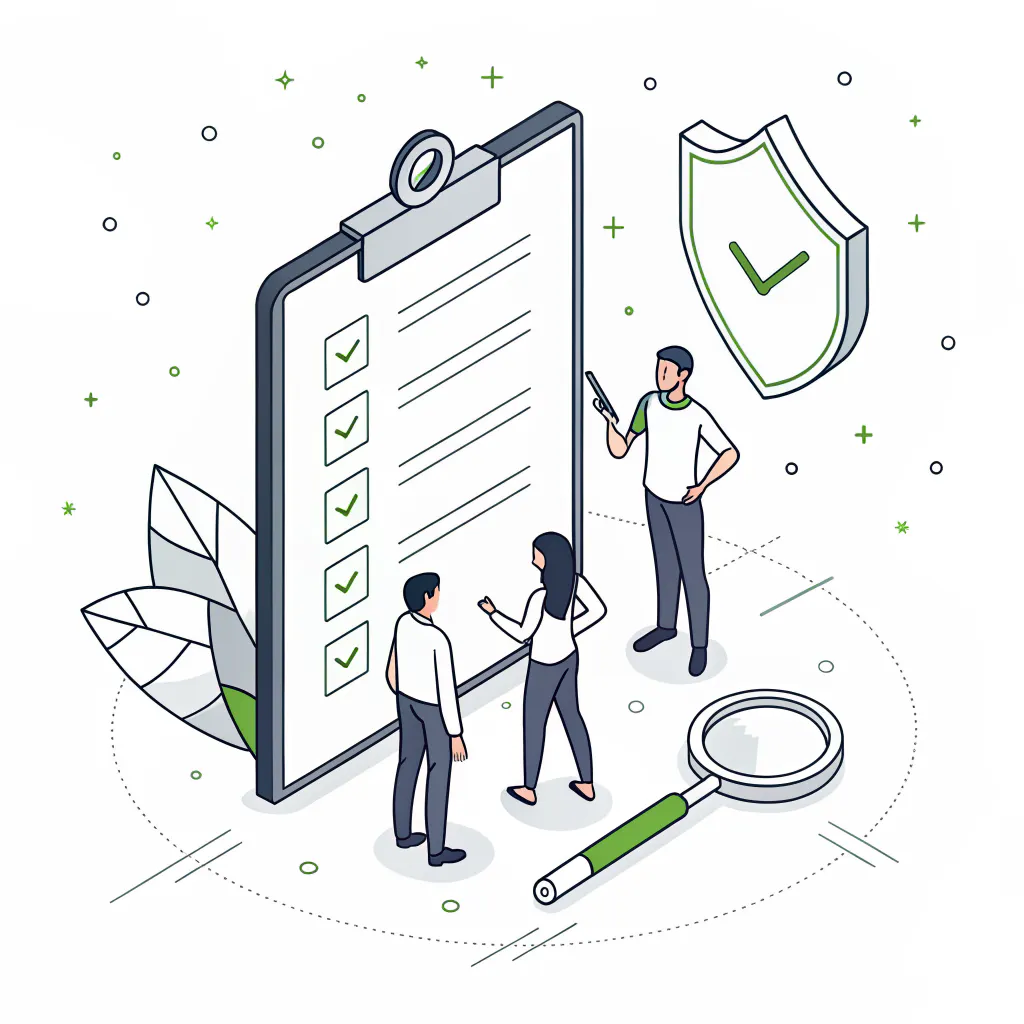
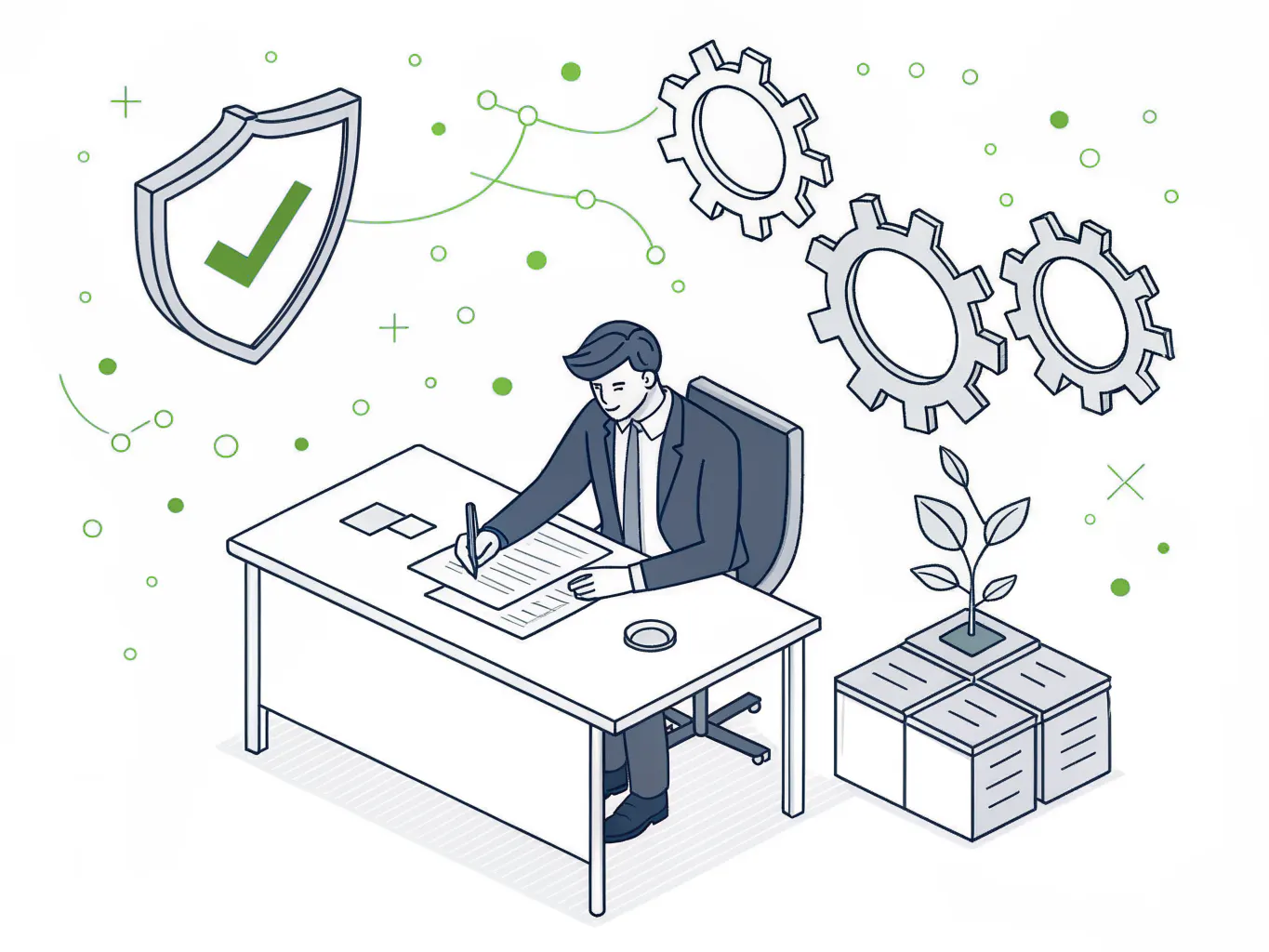
AI governance for business is a set of policies, training standards, cost controls, and oversight structures that determine which AI tools employees can use, what data can enter those systems, who approves new tools, and what happens when something goes wrong. It's not a whitepaper. It's an operating system for how your company uses AI.

Here's what Consilien's AI governance advisory includes.

AI adoption strategy and planning.

Before anyone picks a tool or builds a workflow, someone needs to sit down with the executive team and answer a basic question: what are you trying to accomplish? Not "we need AI because everyone else has it." What's the measurable outcome? What does success look like in 6 months? We start there.

Governance framework design.

Policies for tool approval, data classification, acceptable use, and vendor review. Who can approve a new AI platform. What data categories are off-limits. How output gets reviewed before it reaches a client or a regulator. This is the structure that turns "people are using AI" into "people are using AI within defined guardrails."

Upskills training and workshops.

Your team doesn't need a PhD in machine learning. They need to know how to use approved tools properly, write effective prompts, manage token costs, and understand what not to put into an AI system. We run workshops covering prompt engineering fundamentals, cost management, and responsible usage. Some of the biggest budget problems we see come from employees who are enthusiastic about AI but have never been taught the basics.

Cost management and token optimization.

AI platform costs are one of those expenses that starts small and compounds fast, especially when nobody's watching. We build spend visibility so finance and IT leadership can see what's being used, by whom, and what it costs at the platform level. We've seen a single employee run through an entire company AI budget in under a month. Not malice. Just no training on how the platform charges for usage.

Executive coaching on AI adoption.

Here's what we hear from CEOs and CFOs constantly: they know they should be doing something about AI. They're less clear on what. We work directly with executive leadership on AI strategy, connecting adoption decisions to business outcomes, compliance obligations, and operational reality.

AI readiness assessments.

Before building governance, you need to know what's already happening. Which tools are in use? Who's using them? What data are they handling? What's the current spend? What's exposed? The assessment gives you a baseline. Everything after it has context.

How the Delivery Model Works

So what does structured AI governance actually look like from an engagement standpoint?

We built it as a three-layer service because that's how the work breaks down in practice. Strategy, architecture, and implementation are different skills. Trying to collapse them into one generic "advisory" engagement is how you end up with a framework that sounds good on paper but doesn't connect to anything real.

Layer 1: AI Strategist.

Executive-level advisory. AI adoption planning, discovery, upskills training, coaching. This is the person who sits with your leadership team and figures out what you're actually trying to accomplish before anyone touches a platform.

Layer 2: AI Architect.

Compliance alignment, workflow design, governance framework architecture. This role connects AI governance to your existing compliance program, whether that's NIST, CMMC, SOC 2, PCI, or CPRA. Our AI Architect also serves as our Chief Compliance Consultant, which means governance and compliance aren't two separate conversations with two separate teams. Same person. Same conversation.

Layer 3: AI Implementer.

Platform builds, workflow deployment, complex automation. When the strategy and architecture are defined, the Implementer builds it. Not before.

That sequence matters. We've seen companies skip straight to implementation, buy a platform, start building workflows, and then realize 6 months later that nobody defined what data could go in, who owned the output, or what the monthly spend ceiling was. Starting with strategy costs less than starting over.

A common question executives ask at this stage: how is this different from hiring a standalone AI consultant? Couple of reasons.

Standalone consultants typically operate at layer 1 only. They hand you a framework document and move on. Enterprise firms like Deloitte and McKinsey cover all three layers but at $500k to over $1M per engagement, built for companies 10 times your size. We sit in the middle: all three layers, connected to the IT infrastructure and managed cybersecurity program we already run.

We're a managed IT provider. Of course we think AI governance should tie into the infrastructure it runs on. But the reason is practical, not self-serving. When the governance framework lives inside the same environment where your security controls, compliance documentation, and endpoint management already operate, enforcement actually works. It doesn't sit in a binder on someone's desk.

California Compliance and AI

If your business operates in California, AI governance isn't optional anymore. It's a compliance question.

The California AI Transparency Act took effect January 1, 2026. It requires businesses to disclose when AI systems are being used in certain interactions and decisions. CCPA and CPRA apply to any AI system that processes personal data tied to California residents, which means if your marketing team is feeding customer data into an AI platform, or your HR team is using AI for screening, or your operations team is running automation that touches client information, you already have obligations.

Most companies we talk to aren't aware of the specifics. They know "AI regulation is coming" but haven't connected it to their actual tool usage. That gap between awareness and action is where the risk sits.

Worth asking your team this week: do you know which AI tools your employees are using? Do you know what data those tools are processing? Can you confirm whether any of it falls under CCPA/CPRA?

If you can't answer those clearly, governance is the first step. Not a future project.

Consilien's compliance readiness practice already covers NIST, CMMC, SOC 2, and PCI. AI governance extends that into the AI-specific regulatory space. It isn't a separate program. It's a new layer on top of the compliance structure we've already built with you.

The Numbers Behind the Risk

66%

of office professionals at large enterprises have used AI tools they believed weren't authorized by company policy. At $1B+ companies, the number reaches 72%. (PagerDuty Shadow AI Survey, 2026)

$670,000

gets added to the average data breach cost when unauthorized AI use contributes to the incident. (IBM Cost of a Data Breach Report, 2025)

Only 36%

of companies have formal AI governance frameworks in place. 44% say they're "developing" one. The rest have nothing. (Aggregate industry data, 2026)

25-35%

of enterprise AI tool spending happens entirely outside IT visibility. Finance doesn't see it. IT doesn't manage it. Compliance doesn't know about it. (Gartner, 2025)

25+ years.

Consilien has been managing IT environments for businesses across Southern California since 2001. We've cleaned up the consequences of unstructured technology adoption before. AI governance is how you avoid repeating that cycle.

99%

customer satisfaction rate across managed IT, cybersecurity, and compliance engagements.

CRN Fast 150.

Named one of the 150 fastest-growing managed service providers in North America.

The Process

Four-step AI governance process from assessment through ongoing advisory

Common Concerns

"We're too small to need governance."

If your employees are using AI, you need governance. A company with 75 employees and 4 departments each using different AI tools has the same structural problem as one with 2,000. Smaller scale. Identical risk pattern. And the regulatory obligations under CCPA/CPRA don't have a minimum company size.

"Can we just write a policy and handle it internally?"

You can write a policy. But a policy without enforcement mechanisms, employee training, tool approval workflows, cost monitoring, and regular updates isn't governance. It's a document. We've walked into plenty of companies with AI acceptable use policies that nobody reads, nobody follows, and nobody enforces. The policy is maybe 10% of the work. The other 90% is making it operational.

"We already have an IT provider."

Fair point. Most IT providers don't offer AI governance. If yours does, that's worth evaluating. If they don't, that's a gap worth filling, whether with us or someone else. The difference with Consilien is that our governance ties directly into the IT infrastructure, security stack, and compliance program we already manage. Standalone AI consultants build frameworks in isolation. We operate the environment the framework sits on.

"Isn't this expensive?"

Compare it to the alternative. IBM's 2025 data shows that unauthorized AI use adds $670k to the average breach cost when it contributes to an incident. On the spend side, we've seen individual employees run through $10k+ in AI platform costs in a single month because nobody set guardrails or taught proper usage. Governance is a fraction of what unmanaged AI costs when things go sideways.

Our Clients' Success

Consilien vs. Enterprise Consultancy vs. DIY

 ConsilienEnterprise ConsultancyDIY / Internal
Best forGrowing businesses (50+ employees)Enterprise ($100M+ revenue)Any size
Typical costDiscovery call for scoping$500k-$1M+Staff time only
Delivery modelStrategy + Architecture + ImplementationStrategy + Framework (implementation separate)Varies widely
Compliance integrationBuilt into existing programSeparate workstreamManual
IT infrastructure connectionManages the environment governance sits onHands off framework documentDisconnected
Ongoing managementIncludedRetainer (additional cost)Internal burden
Time to first deliverableWeeksMonthsMonths to never
California regulatory knowledgeCCPA, CPRA, CA AI Transparency ActGeneral regulatorySelf-research

What Companies Ask Us About AI Governance

Do we actually need AI governance if we're not a large enterprise?


Yes, and here's why. 66% of office professionals use unauthorized AI tools at work regardless of company size (PagerDuty, 2026). The risk isn't proportional to headcount. It's proportional to how many people are using AI without guardrails. A 75-person company where everyone uses ChatGPT and nobody's been trained on data handling has real compliance exposure under CCPA/CPRA, especially if they're processing customer information or employee data.

Talk to our AI strategy team about what structured adoption looks like for your business.

Your employees are already using AI. Right now. Probably across multiple platforms, in multiple departments, with no coordination and no oversight.

That's not a technology problem. It's a governance problem. And every month it runs without structure, the cost of fixing it goes up. The regulatory exposure compounds. The spending gets harder to unwind.

We've cleaned up the consequences of unstructured technology adoption for 25 years. AI governance is how you avoid repeating that pattern.

Not ready for a conversation yet? Read our guide to AI governance frameworks for a deeper look at what governance involves and why it matters.